Featured Image
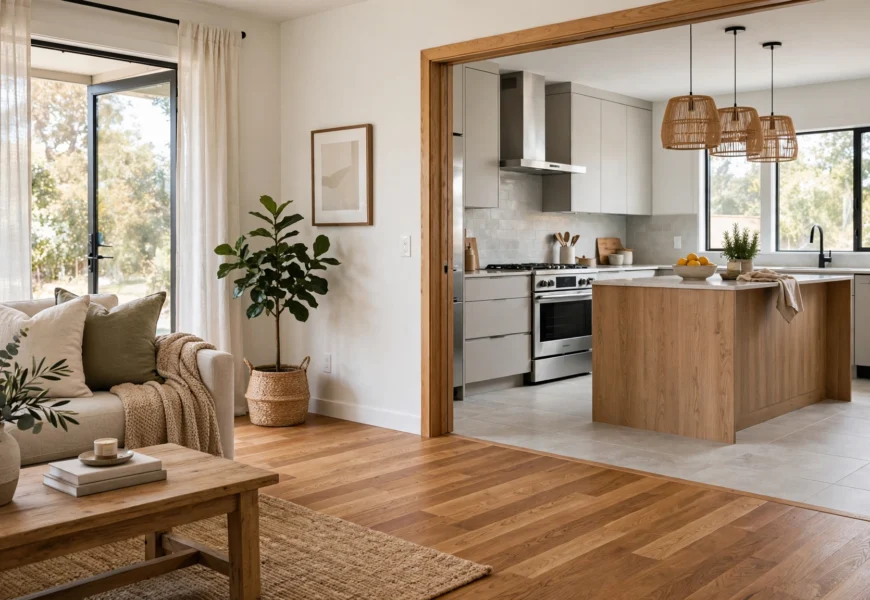
- Prompt: Bright open-concept home interior showing warm oak hardwood flooring in a living room transitioning through a doorway into a kitchen with light gray porcelain tile, natural daylight, realistic high-resolution interior photography style
- File Name: what-flooring-looks-good-next-to-hardwood-hero.webp
- Title: Flooring That Pairs Well With Hardwood
- Caption: Tile is one of the most popular choices to pair with hardwood, especially in kitchens and other moisture-prone spaces.
- Description: An open-concept home showing a seamless transition from warm oak hardwood to porcelain tile flooring between a living room and kitchen.
- Alt Text: hardwood flooring transitioning into tile flooring in open concept home
Open floor plans have made this question more common than ever: your living room has hardwood, but the adjoining kitchen or bathroom needs something more water-resistant — so what actually looks intentional next to it, rather than like two rooms that don’t belong together?
Quick Answer: Tile, luxury vinyl plank, natural stone, and low-pile carpet all pair well with hardwood, and the right choice depends on the adjoining room’s function. Tile and luxury vinyl work best in kitchens, bathrooms, and entryways where moisture resistance matters, while low-pile carpet or an area rug adds warmth in bedrooms and living rooms. The key to a cohesive look across any of these options is matching or intentionally coordinating the undertone of the new flooring with your hardwood’s dominant color, rather than choosing a flooring type in isolation.
Here’s a full breakdown of the best pairings, how to match color and tone correctly, and how to handle the transition where the two floors meet.
The Best Flooring Options to Pair With Hardwood
Tile
Tile is one of the most popular choices for areas next to hardwood, especially in kitchens, bathrooms, and entryways where moisture resistance is a priority. Porcelain and ceramic tile in neutral tones — beige, gray, or off-white — tend to blend well with most hardwood colors, while tile with subtle stone-look patterns can echo hardwood’s natural, organic feel rather than competing with it. If you’re deciding between tile options for a wet-prone room specifically, our guide on good bathroom floor materials covers how porcelain and ceramic compare for that use case.
Luxury Vinyl Plank (LVP) or Tile (LVT)
Modern luxury vinyl is one of the easiest ways to achieve a nearly seamless transition, since it can be manufactured to match hardwood’s exact height, minimizing the need for a bulky transition strip. LVP in a wood-look finish can closely echo your existing hardwood in a nearby wet area, while LVT in a stone-look finish offers a complementary contrast. Our guide on luxury vinyl plank vs. luxury vinyl tile breaks down which format fits which look and room.
Natural Stone
Marble, slate, and travertine bring a sense of luxury that pairs beautifully with hardwood’s warmth, creating an elegant contrast between the two natural materials. This combination tends to work especially well in higher-end kitchens, entryways, or bathrooms where the stone’s cool, smooth texture balances hardwood’s organic grain.
Carpet or Area Rugs
For bedrooms, living rooms, or any space where comfort matters more than moisture resistance, a low-pile or cut-pile carpet in a color pulled from your hardwood’s existing tones creates a soft, cohesive transition. If a full carpet installation feels like too big a commitment, a well-chosen area rug can define a space within a larger hardwood room without a permanent flooring change — our guide on the difference between a carpet and a rug can help you decide which approach fits your space. If you do go with wall-to-wall carpet, our guide to the best carpet for a high-traffic family room covers fiber and color choices that pair well with adjoining hardwood.
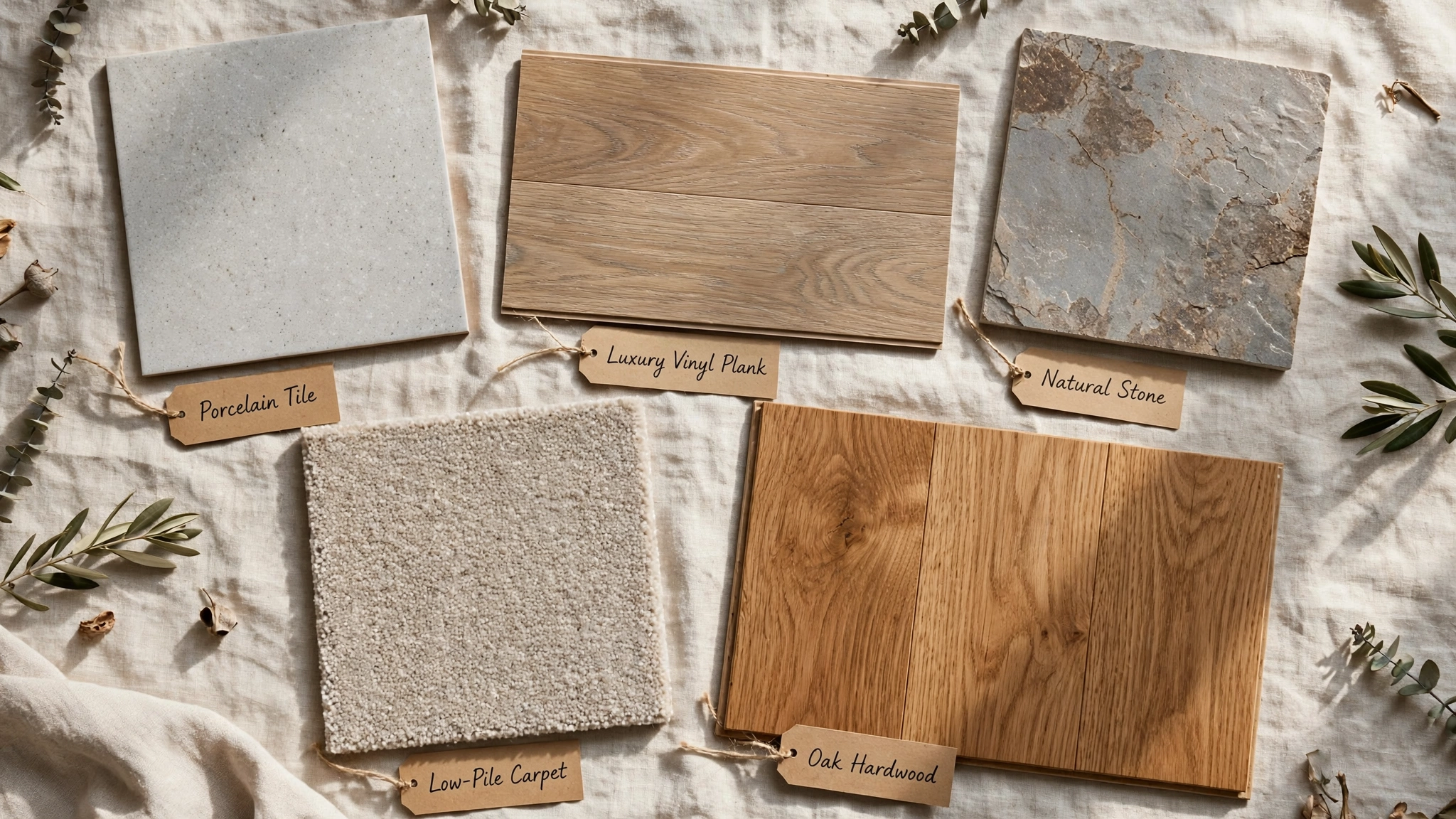
Tile, luxury vinyl, natural stone, and low-pile carpet each offer a different way to complement adjoining hardwood flooring.
Matching Color and Undertone Is the Real Key
Choosing the right flooring type is only half the equation — getting the color and undertone right is what actually makes two different materials feel intentional together rather than mismatched:
- Warm-toned hardwood (reds, golds, honey tones) pairs well with warm-toned materials like terracotta tile, warm beige stone, or carpet in similar warm neutrals.
- Cool-toned hardwood (grays, ash, weathered finishes) pairs well with cooler materials like slate, concrete-look tile, or certain shades of gray porcelain.
- Avoid colors that are close but don’t quite match. According to The Flooring Design Center, flooring tones that are almost — but not quite — the same shade can end up looking like a mistake rather than a deliberate choice. A more noticeable, intentional contrast (a lighter tile next to a darker hardwood, for example) often reads as more cohesive than a near-miss match.
- View samples in your actual room’s lighting before committing, since natural and artificial light can shift how a color reads compared to how it looked in a showroom.
How the Two Floors Meet: Transition Options
How you handle the seam between hardwood and the new flooring matters just as much as the materials themselves:
- Flush transition — The two materials meet at exactly the same height with a thin grout line or color-matched caulk marking the seam. This creates the most seamless, modern look, but requires precise installation and works best with engineered hardwood, which offers more dimensional stability than solid wood.
- T-molding or threshold strip — A transition strip bridges the seam where the two floors meet at different heights, which is the more common and forgiving option for most home renovations.
- Layout direction change — When transitioning between two wood-look materials, laying the new flooring in a different direction or pattern than the adjoining hardwood can make the shift feel like an intentional design choice rather than a mismatch.
According to America’s Floor Source, a flush, transition-strip-free look is best reserved for contemporary or high-end designs with a very stable subfloor, since it isn’t well-suited to situations where significant hardwood expansion and contraction is expected.
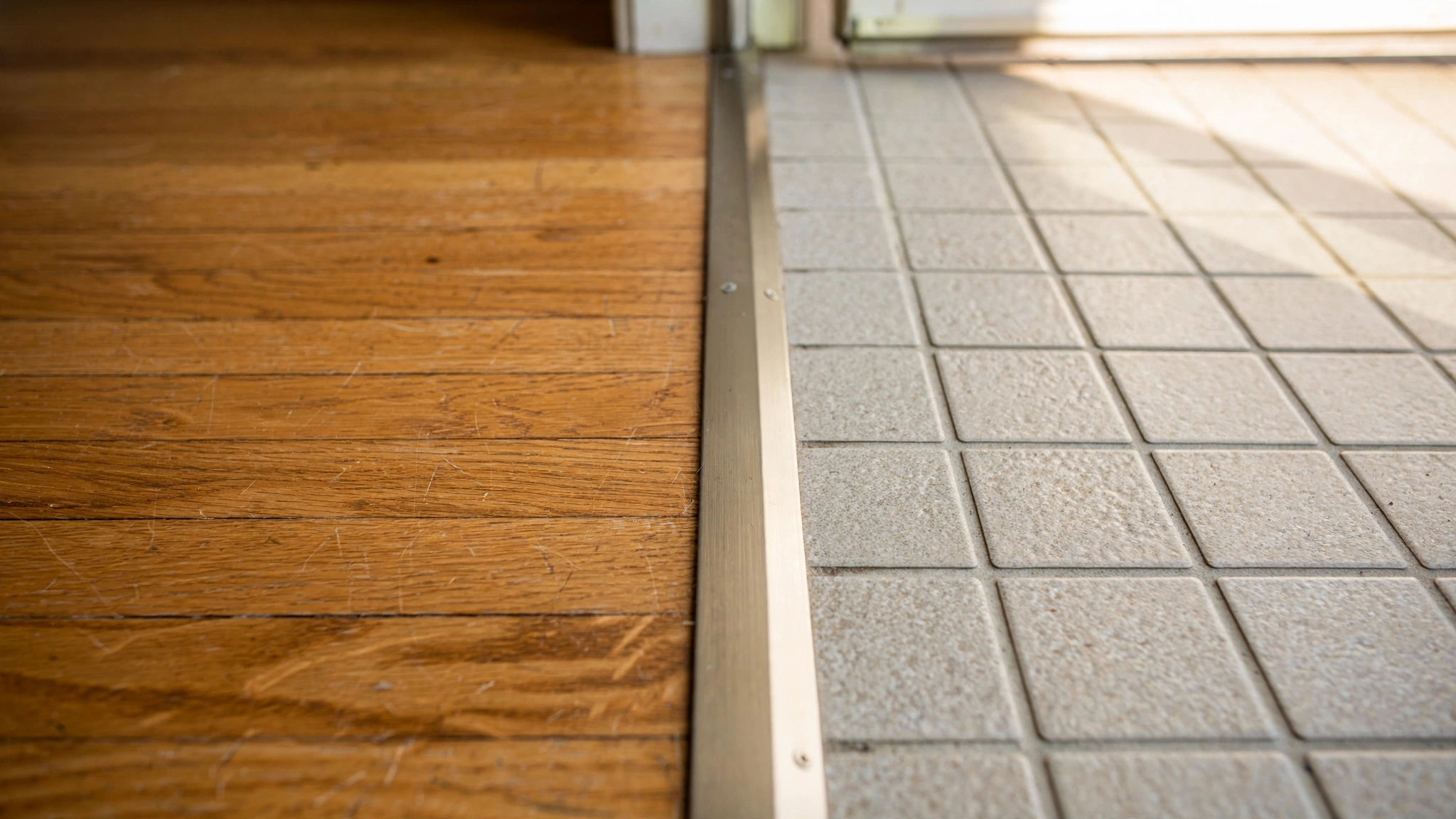
A transition strip bridges the seam where hardwood meets a different flooring type, especially when the two materials sit at different heights.
Matching Flooring to the Adjoining Room’s Purpose
- Kitchens: Tile, luxury vinyl, or stone — all handle spills, foot traffic, and moisture better than carpet or unprotected hardwood extensions.
- Bathrooms: Tile is almost always the right call here, given the constant moisture exposure.
- Entryways and mudrooms: Tile or luxury vinyl for durability against dirt, moisture, and heavy foot traffic.
- Bedrooms: Carpet or an area rug for comfort and warmth underfoot.
- Home offices adjoining a hardwood living space: Low-pile carpet or LVP, depending on whether comfort or easy chair-caster movement matters more.
Common Mistakes to Avoid
- Choosing a flooring color that’s almost, but not quite, the same as your hardwood — near-misses tend to look accidental rather than intentional.
- Ignoring height differences between the two materials, which can create a tripping hazard if not addressed with a proper transition strip.
- Skipping the in-room lighting test, since a color that looked right in a showroom can shift noticeably under your home’s actual lighting.
- Defaulting to whatever’s cheapest without considering the adjoining room’s actual functional needs — a beautiful carpet choice next to hardwood in a kitchen, for example, ignores the practical reality of spills and moisture in that space.
Frequently Asked Questions
What flooring transitions best with hardwood in a kitchen?
Tile, luxury vinyl plank, or natural stone are the best choices for a kitchen adjoining hardwood, since all three handle moisture, spills, and heavy foot traffic significantly better than extending hardwood or carpet into that space.
Should new flooring match hardwood exactly or contrast with it?
Either can work, but it’s best to commit fully to one approach. A near-match that’s slightly off in tone often looks like a mistake, while either a close match or a deliberate, noticeable contrast tends to read as intentional.
Do I need a transition strip between hardwood and tile?
Usually, yes, especially if the two materials sit at different heights. A flush, strip-free transition is possible but requires precise installation and works best with engineered hardwood rather than solid wood.
What’s the easiest flooring to match with hardwood height?
Luxury vinyl plank is often the easiest to match, since it can be manufactured at a height very close to hardwood, minimizing the need for a noticeable transition strip.
Is carpet a good choice next to hardwood floors?
Yes, especially in bedrooms and living rooms where comfort matters. Low-pile or cut-pile carpet in a color that pulls from your hardwood’s existing tones creates the most cohesive transition.
Planning a flooring project across multiple rooms? Explore our guides on vinyl vs. laminate flooring and good bathroom floor materials, or browse more flooring guides on Ayaan Home Decor.
Last modified: August 13, 2026