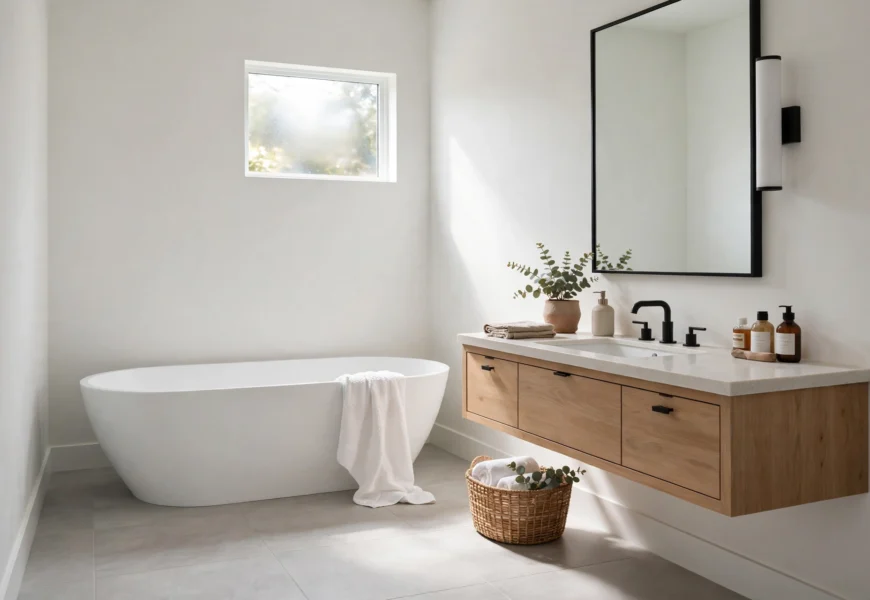
Bathroom floors deal with a level of daily abuse that no other room in the house sees — constant moisture, temperature swings, wet bare feet, and cleaning chemicals. Picking the wrong material doesn’t just look bad over time, it can warp, crack, or turn into a slip hazard. Here’s how to choose a floor that actually holds up.
Quick Answer: Porcelain tile is generally considered the best overall material for a bathroom floor because it’s highly water-resistant, extremely durable, and available in slip-resistant finishes. Ceramic tile, luxury vinyl plank (LVP), and natural stone are also strong options, while solid hardwood and unsealed wood-look laminate are best avoided in wet, high-splash areas.
Below is a full breakdown of each material, how they compare on water resistance and cost, and which one fits your specific bathroom.
What Makes a Material “Good” for a Bathroom Floor?
Before comparing options, it helps to know what you’re actually testing a material against. Four factors matter most in a bathroom:
- Water resistance — Can it handle standing water, splashes, and humidity without warping or growing mold?
- Slip resistance — Wet bathroom floors need enough traction to be safe underfoot, especially near the tub or shower.
- Durability — It needs to hold up to daily foot traffic, dropped items, and cleaning products for years.
- Maintenance — Some materials (like natural stone) need regular sealing; others are essentially maintenance-free.
The Best Bathroom Floor Materials, Compared
| Material | Water Resistance | Slip Resistance | Cost | Best For |
|---|---|---|---|---|
| Porcelain tile | Excellent | Good (with textured finish) | Most bathrooms; best all-around choice | |
| Ceramic tile | Very good | Good (with textured finish) | –– $ | Budget-friendly durability |
| Luxury vinyl plank (LVP) | Excellent | Good | –– $ | Budget renovations, wood-look floors |
| Natural stone (marble, granite, slate) | Good (needs sealing) | Varies by finish | High-end, statement bathrooms | |
| Engineered wood | Fair (not fully waterproof) | Moderate | Powder rooms with low water exposure | |
| Sealed concrete | Excellent | Moderate | Basement bathrooms, modern/industrial style | |
| Solid hardwood / laminate | Poor | Moderate | Varies | Not recommended for wet bathrooms |
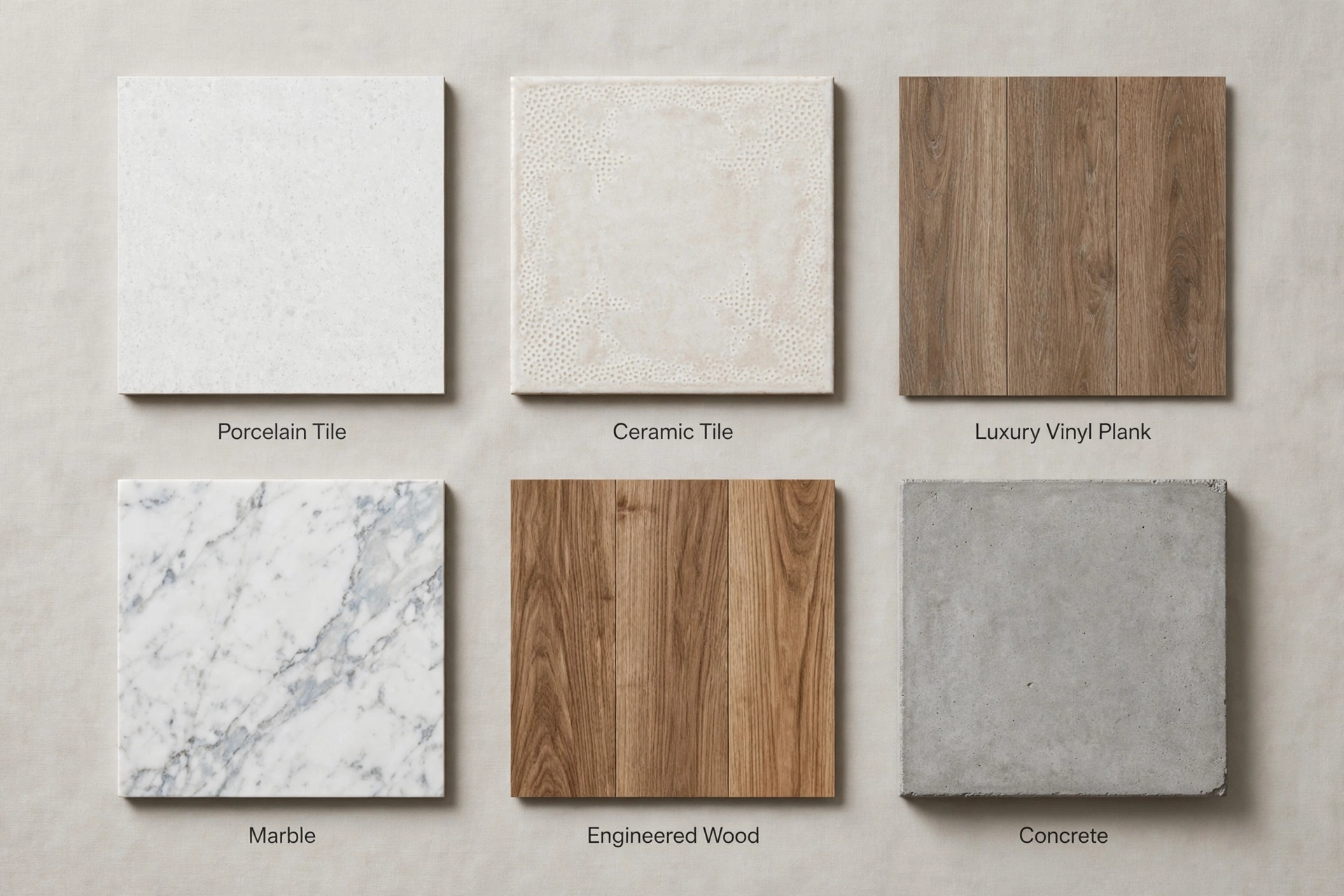
Porcelain, ceramic, vinyl, stone, wood, and concrete each offer a different balance of water resistance, cost, and style.
Porcelain Tile — The Most Reliable All-Around Choice
Porcelain is fired at a higher temperature than standard ceramic, giving it a denser, less porous surface that resists water almost completely. It’s tough enough to resist scratches and drops, and it’s available in finishes that convincingly mimic wood, marble, or slate at a lower cost and with far less maintenance than the real thing.
- Pros: Highly water-resistant, extremely durable, low maintenance, wide style range
- Cons: Cold underfoot without radiant heating, grout lines need occasional resealing
- Good to know: Look for a matte or textured finish rather than a high-gloss one — it significantly improves slip resistance in wet areas.
If you’re planning tile for both the floor and walls, our guide on the difference between wall tile and grout is worth reading before you shop, since grout choice affects water resistance just as much as the tile itself.
Ceramic Tile — A Budget-Friendly Alternative
Ceramic tile shares many of porcelain’s strengths at a generally lower price point. It’s slightly more porous than porcelain, so it’s marginally less water-resistant, but with proper sealing it performs well in most residential bathrooms.
- Pros: Affordable, widely available, easy to clean, good design variety
- Cons: Less impact-resistant than porcelain, can chip more easily
Luxury Vinyl Plank (LVP) — Waterproof and Budget-Friendly
Luxury vinyl has become one of the most popular bathroom flooring choices in recent years, largely because it’s 100% waterproof, warmer underfoot than tile, and significantly easier (and cheaper) to install.
- Pros: Fully waterproof, budget-friendly, comfortable underfoot, DIY-installable
- Cons: Less premium feel than tile or stone, can dent under heavy furniture, shorter lifespan than tile
Natural Stone — Luxurious but High-Maintenance
Marble, granite, travertine, and slate create a high-end look that’s hard to replicate. Stone is naturally durable and can significantly boost resale value, but it’s porous by nature and requires regular sealing to stay water- and stain-resistant.
- Pros: Premium look, excellent durability when maintained, adds resale value
- Cons: Requires regular sealing, can be slippery when polished, higher upfront cost
Engineered Wood — Only for Low-Moisture Bathrooms
Unlike solid hardwood, engineered wood has a plywood core that resists warping better in humid environments. It’s still not fully waterproof, though, so it’s best reserved for powder rooms or half-baths without a tub or shower.
- Pros: Authentic wood look, warmer underfoot than tile
- Cons: Not fully waterproof, not recommended near tubs or showers, needs prompt attention to spills
Sealed Concrete — A Durable, Modern Option
Polished or stained concrete is increasingly popular in basement bathrooms and modern-style renovations. Properly sealed, it’s essentially waterproof and can last for decades with minimal upkeep.
- Pros: Extremely durable, waterproof when sealed, modern aesthetic
- Cons: Cold and hard underfoot, sealant needs periodic reapplication

A matte, textured tile finish significantly improves slip resistance in wet areas like showers.
Materials to Avoid in a Bathroom
- Solid hardwood — Even sealed, standing water and humidity will eventually cause warping, cupping, or staining.
- Laminate flooring — Most laminate has a fiberboard core that swells when exposed to moisture, even the “water-resistant” versions.
- Carpet — Traps moisture and bacteria, and rarely dries fully between uses — not recommended for any bathroom.
- High-gloss, polished stone or tile — Beautiful, but can become dangerously slippery when wet, especially near the tub or shower.
Understanding Slip Resistance Ratings
Many tile manufacturers list a slip-resistance or “R” rating on their product specs. In general:
- R9 — Suitable for dry areas like hallways or living rooms, not recommended for wet bathroom floors.
- R10 — A common bathroom-appropriate rating; the surface has a moderate texture and is safe for regular wet-floor use.
- R11+ — A rougher, higher-grip surface, often used in shower floors or areas with frequent standing water.
When shopping in person, look for this rating on the tile’s spec sheet or ask a flooring associate directly — it’s one of the most overlooked factors in bathroom floor safety.
Choosing the Right Material for Your Bathroom
- Full bathroom with a tub/shower: Porcelain or ceramic tile with a textured, R10+ finish
- Budget renovation: Luxury vinyl plank or sheet vinyl
- Powder room (no tub/shower): Engineered wood, natural stone, or any tile option
- Basement bathroom: Sealed concrete or porcelain/LVP over a proper vapor barrier
- High-end remodel: Natural stone with a honed or textured (non-polished) finish for safety
Frequently Asked Questions
What is the most durable bathroom floor material? Porcelain tile is generally the most durable bathroom floor material, often lasting 50 years or more with proper installation and maintenance.
Is vinyl or tile better for a bathroom floor? Both are strong choices. Tile (porcelain or ceramic) is more durable and long-lasting, while luxury vinyl plank is fully waterproof, warmer underfoot, and typically less expensive to install.
What flooring should I avoid in a bathroom? Avoid solid hardwood, standard laminate, and carpet, since all three are vulnerable to warping, swelling, or trapping moisture in a consistently wet environment.
Is natural stone slippery when wet? It can be, especially with a polished finish. Choose a honed, textured, or brushed stone finish instead of high-gloss polished stone for better slip resistance in wet areas.
What is the best flooring for a small powder room? Since a powder room typically has no tub or shower, water exposure is limited, opening up more options — including engineered wood, natural stone, or any standard tile — without water resistance being the primary concern.
Planning a full bathroom refresh? Explore more flooring and material guides on Ayaan Home Decor for tips on tile, paint, and finishing details throughout your home.
Last modified: July 28, 2026

