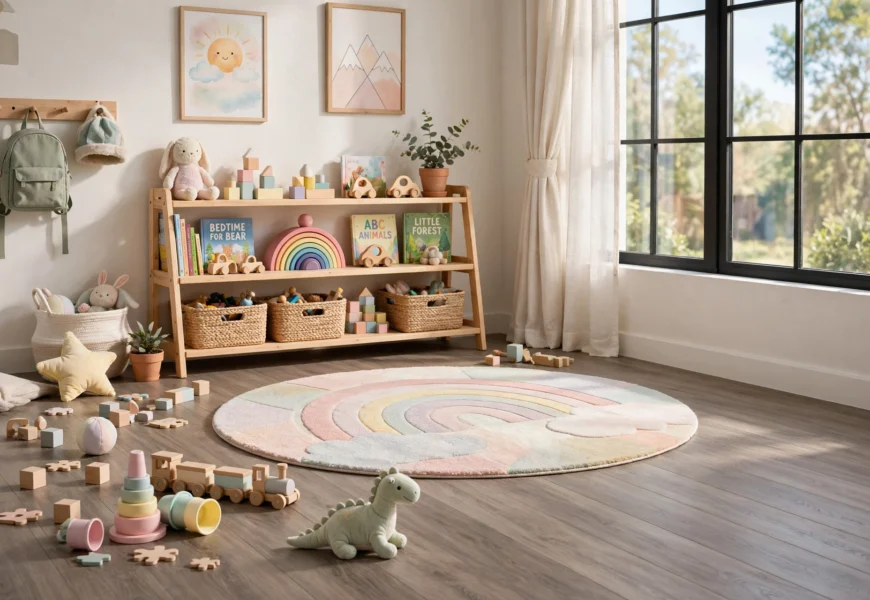
Kids are hard on floors in ways most people don’t think about until it’s too late — spilled juice, dropped toys, crayon marks, muddy shoes, and hours of crawling or roughhousing on the same few square feet. The “best” flooring for kids isn’t necessarily the prettiest option in the showroom; it’s the one that survives real family life without needing to be replaced in three years.
Quick Answer: The best overall flooring for kids’ rooms and playrooms is luxury vinyl plank (LVP) — it’s 100% waterproof, scratch-resistant, comfortable underfoot, and easy to clean. Carpet offers the softest landing for toddlers but stains more easily, while cork and engineered hardwood are strong options for families prioritizing comfort or long-term durability.
Here’s how to weigh your options by durability, safety, and how your child actually uses the room.
What to Look For Before You Choose
Every kid-friendly flooring decision comes down to five practical factors:
- Durability — Can it handle dragged toys, dropped blocks, and daily foot traffic without scratching or denting?
- Water and stain resistance — Spills, accidents, and art projects happen. A floor that shrugs off moisture saves you from permanent stains.
- Comfort and fall cushioning — Crawling babies and toddlers learning to walk benefit from a softer, warmer surface underfoot.
- Easy maintenance — Can you wipe up a spill in seconds, without special tools or cleaners?
- Low-VOC and allergen-friendly materials — Since kids spend more time close to the floor (and breathing the air near it), look for low-VOC certified flooring, especially in nurseries.
If allergies or air quality are a concern, the EPA’s guidance on volatile organic compounds is a useful reference for understanding what to look for on a flooring product’s label.
Best Flooring Options for Kids, Compared
| Material | Durability | Water Resistance | Comfort | Maintenance | Best For |
|---|---|---|---|---|---|
| Luxury vinyl plank (LVP) | Excellent | Excellent (waterproof) | Good | Very easy | Playrooms, bedrooms, high-traffic zones |
| Carpet | Fair | Poor | Excellent | Moderate (needs stain treatment) | Nurseries, toddler play areas |
| Cork | Fair–Good | Fair (needs sealing) | Excellent | Moderate | Bedrooms, low-traffic play areas |
| Engineered hardwood | Very good | Fair–Good | Good | Easy | Long-term family rooms, older kids |
| Laminate | Good | Fair (some waterproof lines) | Fair | Easy | Budget-friendly bedrooms |
| Rubber tile/mats | Excellent | Excellent | Excellent (best fall cushioning) | Very easy | Dedicated playrooms, basement play areas |

LVP, carpet, cork, hardwood, and rubber tile each balance durability, comfort, and cleanup differently.
Luxury Vinyl Plank (LVP) — The Overall Best Choice
LVP has become the go-to recommendation from flooring professionals for a reason: it’s fully waterproof, resists scratches from toys and furniture, and feels noticeably softer and warmer underfoot than tile or hardwood. It also comes in a huge range of wood-look and stone-look styles, so it doesn’t feel like a “practical” compromise.
- Pros: 100% waterproof, scratch-resistant, comfortable, wide style range, budget-friendly
- Cons: Less premium feel than real hardwood, can dent under very heavy furniture
Carpet — Best for Softness and Fall Cushioning
Carpet is still the classic choice for nurseries and toddler play areas because nothing beats it for a soft, warm, cushioned landing. The tradeoff is that carpet is more vulnerable to stains, spills, and odors than hard flooring.
- Pros: Softest option, warmest underfoot, best fall cushioning for crawling babies
- Cons: Prone to stains, harder to deep-clean, can trap allergens if not vacuumed regularly
If you go with carpet, it’s worth bookmarking our guide on removing coffee, milk, and other spill stains from carpet — the same stain-lifting techniques apply to most kid-related spills too.
Cork — Soft, Natural, and Allergy-Friendly
Cork is a bit of a hidden gem for kids’ rooms. It’s naturally antimicrobial and hypoallergenic, has a soft, slightly springy feel underfoot, and provides better sound absorption than hard flooring — useful if the room is above another living space.
- Pros: Naturally antimicrobial, soft and warm, good sound absorption, eco-friendly
- Cons: Softer surface can dent or scratch, needs proper sealing to resist spills, can fade in direct sunlight
Engineered Hardwood — A Long-Term Investment
Engineered hardwood’s layered construction gives it better moisture resistance than solid hardwood, while still offering the authentic look and feel of real wood. It’s a strong choice for families thinking beyond the toddler years, since it can often be refinished if it takes a beating over time.
- Pros: Long-lasting, refinishable, better moisture resistance than solid hardwood, ages well with the room
- Cons: Higher upfront cost, still not fully waterproof
Laminate — A Budget-Friendly Middle Ground
Laminate offers a durable, scratch-resistant surface at a lower price point than hardwood or LVP, making it a practical option for growing families on a budget. Look specifically for a water-resistant or waterproof laminate line, since standard laminate can swell if spills aren’t cleaned up quickly.
- Pros: Affordable, scratch-resistant, easy to install
- Cons: Standard versions aren’t fully waterproof, can feel less premium underfoot
Rubber Tile or Foam Mats — Best for Dedicated Playrooms
For a playroom or basement play area rather than a bedroom, rubber tiles or interlocking foam mats offer the best fall cushioning of any option, along with excellent water resistance and near-zero maintenance. They’re not typically used as whole-home flooring, but they’re worth considering for spaces built specifically for active play.
- Pros: Best cushioning for falls, waterproof, easy to wipe clean, inexpensive
- Cons: Less stylish for the rest of the home, best suited to a dedicated play space rather than a bedroom
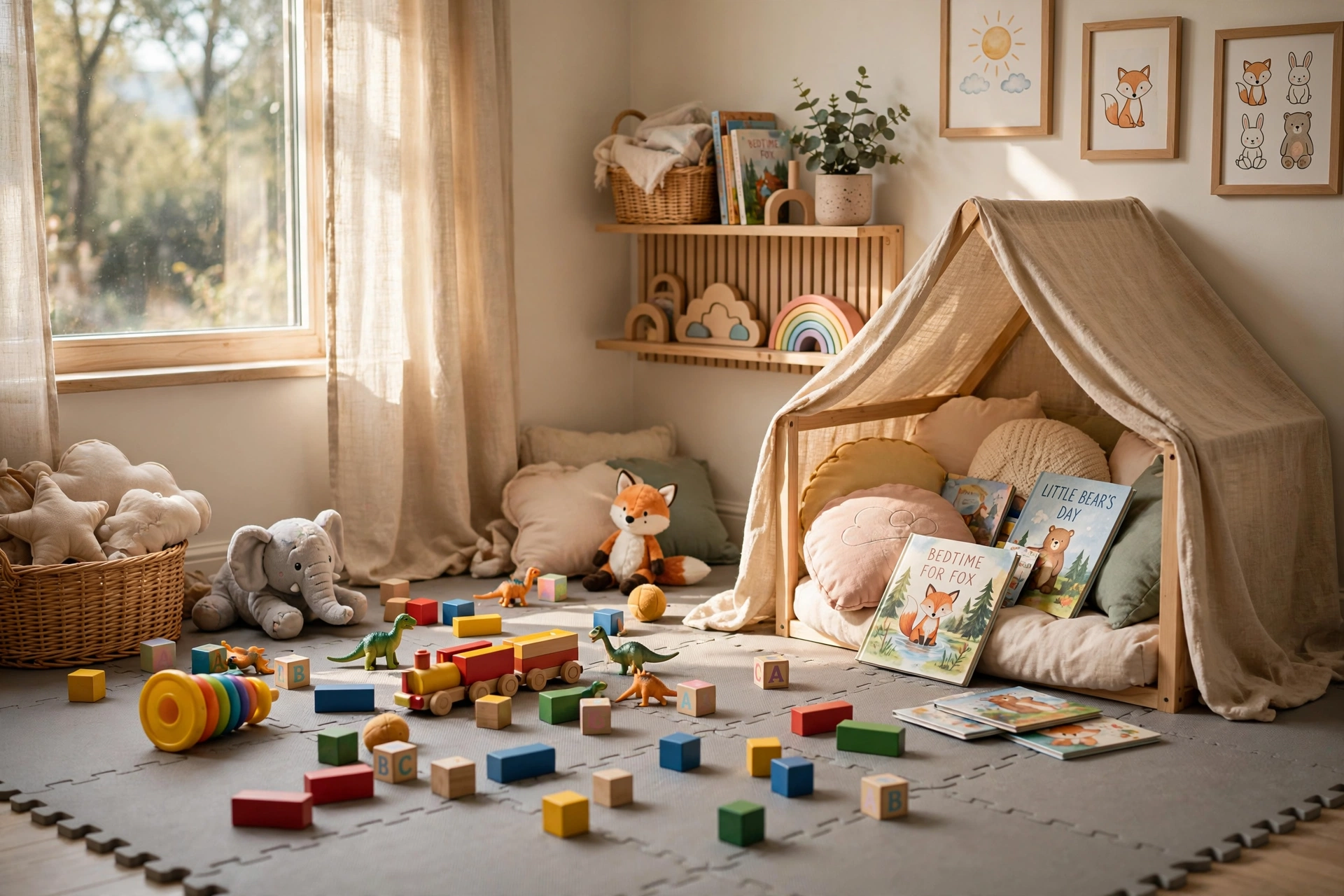
Interlocking foam or rubber tiles offer the best fall cushioning for active play areas.
Choosing Flooring by Your Child’s Age
- Nursery / infant: Carpet or cork for warmth and cushioning during tummy time and early crawling.
- Toddler: LVP or carpet — toddlers benefit from a soft, forgiving surface, but LVP handles the inevitable spills and accidents better.
- School-age: LVP, engineered hardwood, or laminate — durability and easy cleanup matter more as kids get more active with toys, art supplies, and pets.
- Teen: Almost any option works well at this stage; consider what will transition smoothly into a more grown-up bedroom later, since replacing flooring again is a bigger expense than swapping a rug or repainting.
Common Mistakes to Avoid
- Choosing based on showroom looks alone, without considering how the material handles daily spills and impact
- Skipping the low-VOC check, especially important in nurseries where kids spend extended time close to the floor
- Assuming all laminate or “wood-look” flooring is waterproof — always confirm the specific product line’s water resistance rating
- Overlooking slip resistance, particularly for toddlers who are still building balance and coordination
- Not planning for the room to evolve — a floor that only works for a nursery may mean an unnecessary full replacement in a few years
Frequently Asked Questions
What is the most durable flooring for kids?
Luxury vinyl plank (LVP) offers the best overall balance of durability, water resistance, comfort, and easy cleaning, which is why it’s the top recommendation from most flooring professionals for family homes.
Which flooring is safest for toddlers?
Carpet, cork, or rubber tile are generally considered the safest for toddlers, since they offer more cushioning for falls than hard flooring like tile or hardwood.
Is carpet or vinyl better for a kid’s bedroom?
Carpet is softer and warmer, making it ideal for infants and toddlers, while vinyl plank is more durable and far easier to clean, making it a better long-term choice as kids get older and more active.
Do I need low-VOC flooring for a kids’ room?
It’s strongly recommended, especially for nurseries and young children, since kids spend more time close to the floor and can be more sensitive to off-gassing from certain synthetic materials.
Can I use the same flooring throughout the whole house?
Yes — many families choose LVP or engineered hardwood throughout the main living areas for consistency, while reserving softer materials like carpet or rubber tile specifically for nurseries or dedicated play areas.
Planning flooring for more than one room? Compare options for wet areas in our guide to good bathroom floor materials, or browse more home improvement tips on Ayaan Home Decor.
Last modified: July 28, 2026