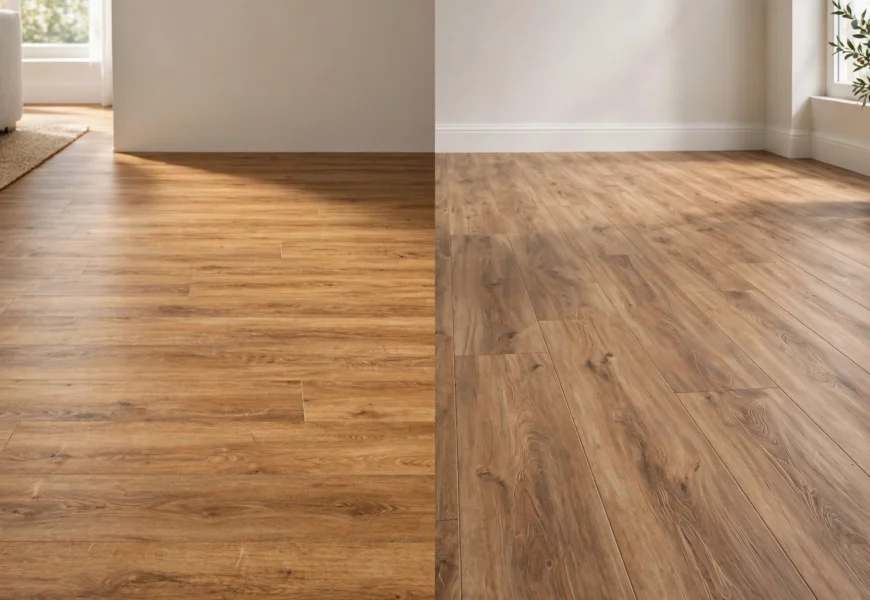
Vinyl and laminate flooring get mixed up constantly — and it’s not really your fault. Both come in convincing wood-look planks, both click together during installation, and both sit in the same aisle at most flooring stores. But underneath that similar look, they’re built from completely different materials, and that difference matters a lot once water, scratches, or a flooded basement enter the picture.
Quick Answer: The main difference is what each floor is made of. Vinyl flooring is a synthetic, 100% waterproof material made from PVC and other compressed layers, making it ideal for bathrooms, kitchens, and basements. Laminate flooring has a wood-fiber core topped with a photographic wear layer, giving it a slightly more realistic wood look, but it’s far less water-resistant and can swell or warp if it gets wet.
Here’s a full breakdown of how they compare, and which one actually fits your room.
What Vinyl Flooring Is Made Of
Vinyl flooring is a fully synthetic product built from multiple compressed layers, typically including a flexible or rigid core, a printed design layer, and a clear protective wear layer on top. Because none of these layers are made from wood or wood byproducts, vinyl doesn’t absorb water the way laminate can.
- Luxury Vinyl Plank (LVP) — mimics hardwood
- Luxury Vinyl Tile (LVT) — mimics stone or ceramic tile
- Sheet vinyl — a single continuous roll, common in bathrooms and laundry rooms
For a residential installation, Lowe’s buying guide on vinyl vs. laminate notes that the wear layer thickness ideally falls between 10 and 20 mil for everyday durability — a spec worth checking before you buy, since thinner wear layers wear through faster in high-traffic rooms.
What Laminate Flooring Is Made Of
Laminate flooring is built around a high-density fiberboard (HDF) core, made from compressed wood fibers, with a high-resolution photographic layer on top that replicates wood, stone, or tile, sealed under a hard, transparent wear layer. Because the core is wood-based, it’s inherently more vulnerable to moisture than vinyl’s synthetic construction.
If you’re also planning flooring in a wet-prone room, our comparison of the best bathroom floor materials covers where vinyl fits in alongside tile and stone.

Vinyl’s synthetic core makes it waterproof, while laminate’s wood-fiber core is more vulnerable to moisture.
Vinyl vs. Laminate: Side-by-Side Comparison
| Factor | Vinyl Flooring | Laminate Flooring |
|---|---|---|
| Core material | Synthetic (PVC-based) | Wood-fiber (HDF core) |
| Water resistance | 100% waterproof | Limited; can swell if wet |
| Best rooms | Bathrooms, kitchens, basements, laundry rooms | Living rooms, bedrooms, dry areas |
| Underfoot feel | Softer, warmer, especially with underlayment | Firmer, slightly more “hollow” sound |
| Appearance | Wide range, including stone and tile looks | Slightly more realistic wood grain embossing |
| Average cost (material) | $1–$10 per sq ft | $1–$6 per sq ft |
| Installation cost | $3–$10 per sq ft | $3–$13 per sq ft (more labor-intensive) |
| Scratch/dent resistance | Very good | Good, but photo layer can scuff more easily |
| Refinishable | No | No |
Water Resistance: The Biggest Difference
This is the factor that decides most vinyl-vs-laminate decisions. Vinyl’s synthetic core means it can handle standing water, humidity, and repeated mopping without any risk of swelling. Laminate’s wood-fiber core, on the other hand, will absorb moisture over time — the surface can bubble, the seams can peel, and once it’s warped, laminate typically can’t be repaired, only replaced.
This is exactly why vinyl is the standard recommendation for bathrooms, kitchens, and basements, while laminate is better reserved for consistently dry spaces like bedrooms and living rooms.
Appearance and Feel
Laminate has historically had a slight edge in realism, since its photographic layer can be paired with deeper embossing that closely mimics hand-scraped hardwood texture. That said, higher-end luxury vinyl plank has closed the gap significantly in recent years, and vinyl still wins on design versatility — it’s available in stone and tile looks that laminate typically can’t replicate as convincingly.
Underfoot, vinyl tends to feel slightly softer and warmer, especially with an attached underlayment, while laminate has a firmer, sometimes more hollow-sounding step.
Cost Comparison
Both are considerably cheaper than natural hardwood or stone, but pricing varies by quality tier:
- Vinyl: roughly $1–$10 per square foot for materials, plus $3–$10 per square foot for installation
- Laminate: roughly $1–$6 per square foot for materials, but often $3–$13 per square foot for installation, since it typically requires more labor to fit and finish correctly
Laminate can be less expensive on materials alone, but factoring in installation, the total project cost often ends up close to or higher than a comparable vinyl floor. This Old House’s cost breakdown is a useful reference if you want current regional pricing before requesting quotes.

Both vinyl and laminate typically use a floating, click-lock installation system.
Durability and Maintenance
Both materials hold up well to everyday foot traffic, but they fail differently under stress:
- Vinyl resists scratches, dents, and stains well, and its waterproof surface makes cleanup as simple as a damp mop.
- Laminate is durable against everyday wear but more susceptible to dings from dropped objects, since its wear layer is only a few millimeters thick. It also requires more careful cleaning — excess water left standing on laminate seams is one of the most common causes of early failure.
Neither vinyl nor laminate can be refinished the way solid hardwood can; once the wear layer is damaged beyond repair, the affected planks need to be replaced.
Which One Should You Choose?
- Choose vinyl if: the room sees moisture, spills, or humidity — bathrooms, kitchens, laundry rooms, basements, or homes with pets and kids
- Choose laminate if: the room stays consistently dry and you want a slightly more traditional hardwood look and feel underfoot — living rooms, bedrooms, home offices
If you’re weighing this decision for a kids’ room or playroom specifically, our guide on choosing the best flooring for kids breaks down why LVP tends to outperform laminate in most family homes. And once you’ve picked a material, our guide on how to determine square footage of a room will help you calculate exactly how much flooring to order.
Frequently Asked Questions
Is vinyl or laminate flooring better?
Neither is universally “better” — vinyl is the stronger choice for wet or high-moisture rooms because it’s fully waterproof, while laminate offers a slightly more realistic wood look and feel for dry living spaces.
Can laminate flooring get wet?
Laminate can handle light, quickly-cleaned spills, but it’s not waterproof. Standing water or prolonged moisture exposure will cause the wood-fiber core to swell, bubble, or warp.
Is laminate cheaper than vinyl?
Laminate materials are often slightly cheaper per square foot, but installation typically costs more due to the extra labor involved, which can make the total project cost similar to or higher than vinyl.
Does vinyl or laminate feel more like real wood?
Laminate has traditionally offered a more realistic wood-grain texture and embossing, though high-end luxury vinyl plank has closed much of that gap in recent years.
Can I install vinyl or laminate over an existing floor?
Both are typically installed as floating floors and can often go over an existing subfloor, tile, or concrete, as long as the surface underneath is clean, level, and stable. Always check the specific manufacturer’s installation guidelines first.
Still deciding on the right flooring for your space? Browse more flooring and material comparisons on Ayaan Home Decor to find the best fit for every room in your home.
Last modified: July 29, 2026