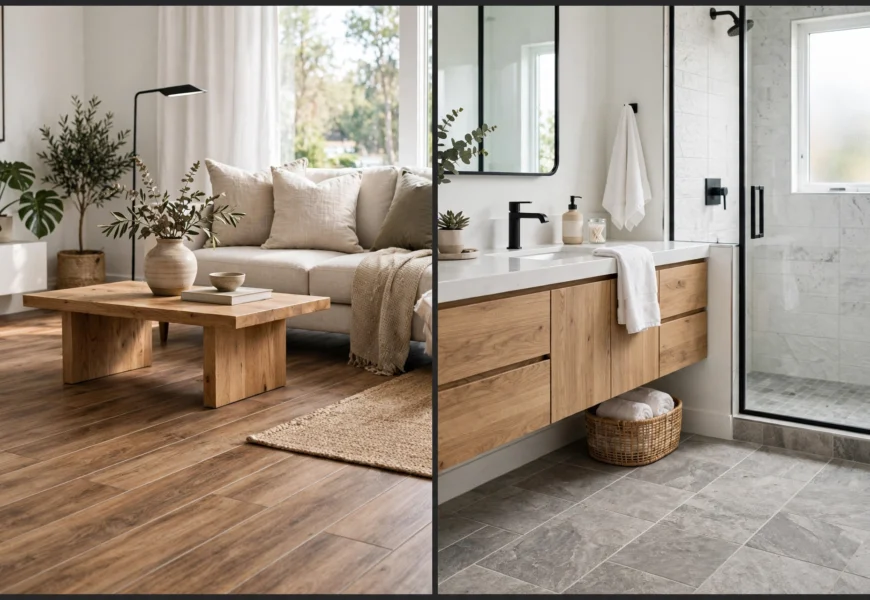
If you’ve spent any time shopping for vinyl flooring, you’ve probably run into two nearly identical-sounding terms: LVP and LVT. They show up side by side in almost every flooring showroom, they’re made from the same core materials, and yet they’re marketed as two distinct products. So what actually separates them — and does it matter which one you choose?
Quick Answer: Luxury vinyl plank (LVP) and luxury vinyl tile (LVT) are both made from the same layered PVC-based construction, so their durability and water resistance are nearly identical. The real difference is shape and style: LVP comes in long, narrow rectangular planks designed to mimic hardwood, while LVT comes in larger square or rectangular pieces designed to mimic stone or ceramic tile. Your choice mostly comes down to which look — wood-style or tile-style — fits the room.
Here’s a full breakdown of how they compare, where each one shines, and how to decide between them for your specific space.
LVP and LVT Are Built From the Same Materials
This is the part that surprises most people: luxury vinyl plank and luxury vinyl tile aren’t actually different products at a material level. Both are cut from the same category of luxury vinyl flooring (LVF), constructed from multiple layers — typically a rigid or flexible core, a high-resolution printed design layer, and a clear urethane-coated wear layer on top. The only meaningful difference is the shape the material is cut into during manufacturing.
- LVP is cut into long, narrow strips — generally ranging from about 4″ x 48″ up to 9″ x 72″ — to mimic the proportions of a real hardwood plank.
- LVT is cut into larger square or rectangular pieces — typically 16″ x 16″ up to 18″ x 36″ — to mimic the proportions of ceramic tile or natural stone slabs.
Because they share the same core construction, both are considerably thicker (usually 5mm to 12mm) than older-style sheet vinyl (around 2mm), which is part of why luxury vinyl feels noticeably more solid and premium underfoot than traditional vinyl flooring.
Visual Style: Wood Look vs. Tile or Stone Look
The most obvious difference between the two is what they’re designed to imitate:
- LVP replicates the warmth and grain pattern of hardwood — you can find it in nearly any wood species, stain color, or plank width, right down to knots and grain variation.
- LVT replicates the look of ceramic tile, porcelain, or natural stone — including marble veining, slate texture, or geometric mosaic-style patterns. Some LVT products even include a groutable edge, so installers can add real grout between pieces for an even more convincing tile look.
If you’re deciding between a wood-look and tile-look floor for a wet-prone space, our comparison of good bathroom floor materials covers how tile-style LVT stacks up against real porcelain and natural stone.
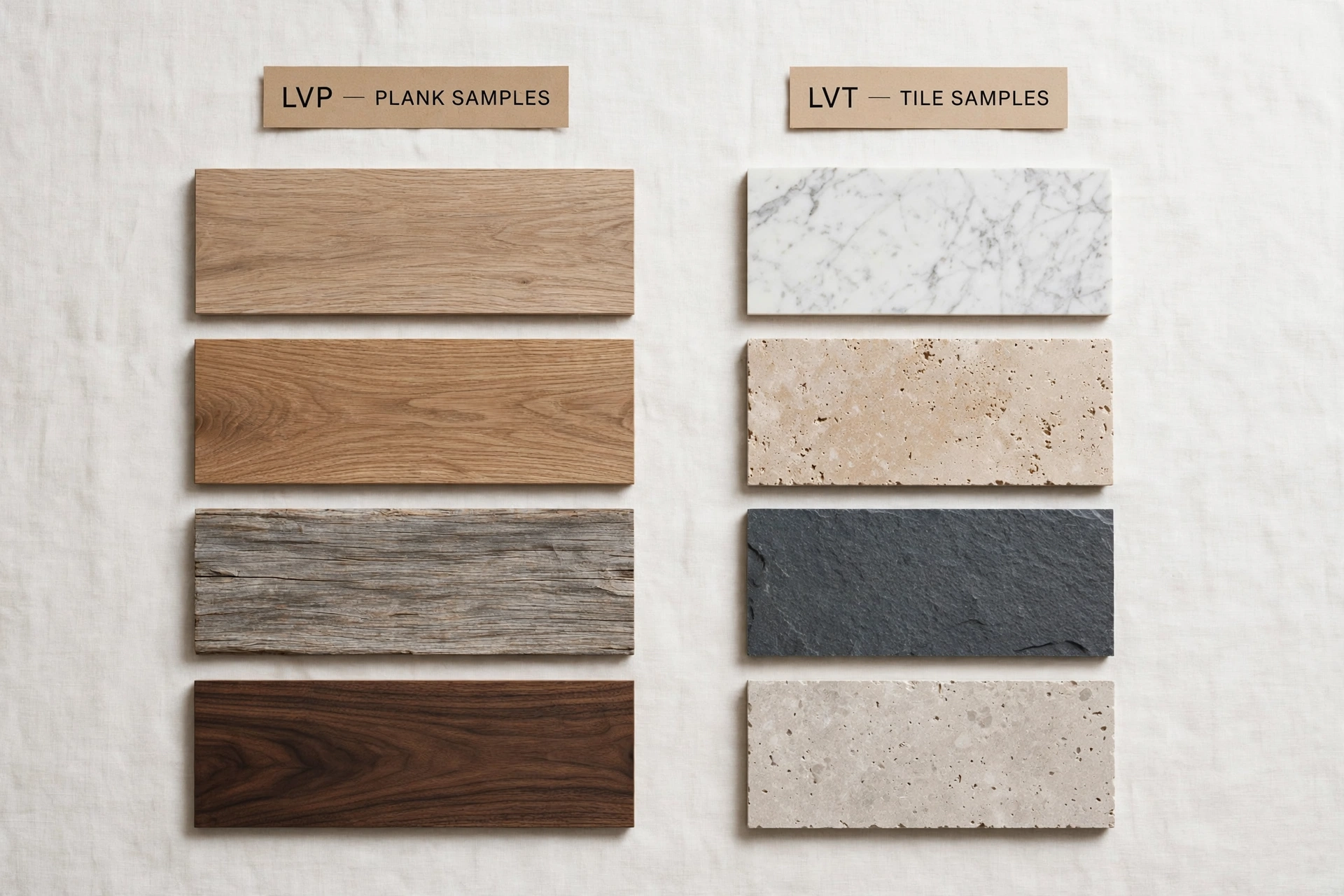
LVP is available in a wide range of wood species and grain patterns, while LVT replicates marble, stone, and tile finishes.
LVP vs. LVT: Full Comparison Table
| Factor | Luxury Vinyl Plank (LVP) | Luxury Vinyl Tile (LVT) |
|---|---|---|
| Shape | Long, narrow planks (4″x48″ to 9″x72″) | Larger squares/rectangles (16″x16″ to 18″x36″) |
| Visual style | Mimics hardwood | Mimics ceramic tile or natural stone |
| Core material | PVC-based composite | PVC-based composite |
| Water resistance | Waterproof | Waterproof |
| Thickness | 5mm–12mm | 5mm–12mm |
| Flexibility | More flexible, molds closely to subfloor | Slightly more rigid, tougher surface feel |
| Grout option | No | Yes, on some groutable product lines |
| Best rooms | Living rooms, bedrooms, hallways | Bathrooms, kitchens, entryways, mudrooms |
| Installation method | Click-lock floating floor | Click-lock floating floor |
| Maintenance | Sweep and mop, no sealing needed | Sweep and mop; grout (if used) may need occasional cleaning |
| Average cost | Comparable to LVT; varies by brand and finish | Comparable to LVP; varies by brand and finish |
Durability: Is One Tougher Than the Other?
Because LVP and LVT share the same core construction and wear-layer technology, their day-to-day durability is essentially equal — both resist scratches, dents, stains, and everyday wear extremely well, and both are fully waterproof when installed correctly with properly sealed seams.
The one nuance worth knowing: LVT tends to feel slightly more rigid and tougher underfoot than LVP, since it’s cut for a stone/tile aesthetic rather than the more flexible, wood-mimicking format. This makes LVT a popular pick for high-traffic entryways or mudrooms, though the practical difference in real-world wear is minor for most households. According to Empire Today’s comparison guide, the biggest deciding factors for most homeowners end up being shape and surface visuals rather than performance.
Cost Comparison
LVP and LVT are typically priced in a similar range, since they’re manufactured from the same base materials and wear-layer technology. Pricing differences come down more to brand, finish quality, and wear-layer thickness than to whether you choose plank or tile format. As a rule of thumb, thicker wear layers (closer to the 12mm end of the range) cost more but hold up better in high-traffic households, including homes with pets or kids.
If you’re weighing LVP against a wood-fiber alternative instead of tile, our vinyl vs. laminate flooring comparison breaks down how luxury vinyl performs against laminate specifically.
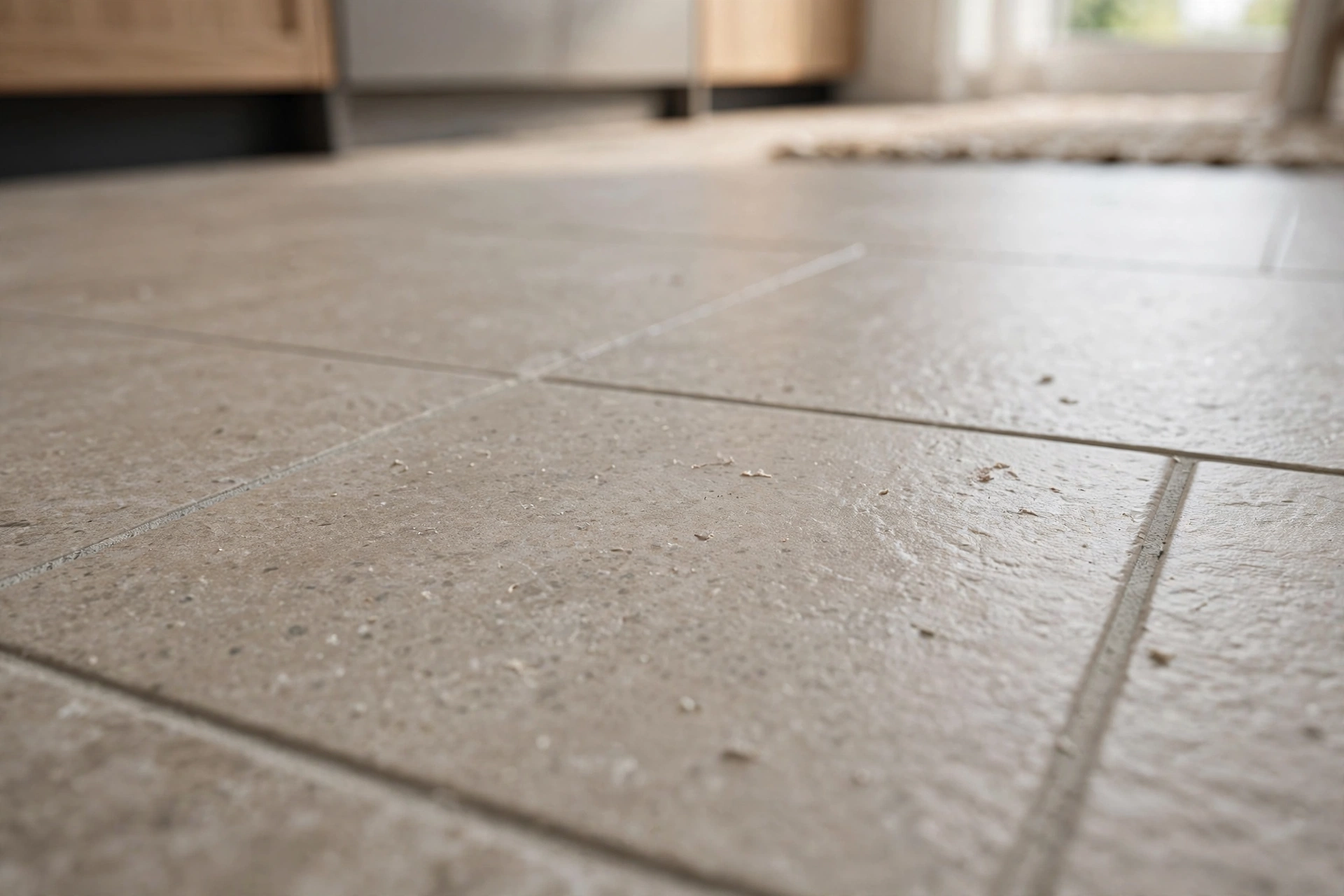
Some luxury vinyl tile products include a groutable edge for an even more realistic tile appearance.
Installation: Nearly Identical Process
Both LVP and LVT are most commonly installed as floating floors using a click-lock interlocking edge system — the same basic method used for laminate flooring. This makes both options relatively DIY-friendly compared to glue-down sheet vinyl or traditional ceramic tile, and both can typically be installed directly over an existing subfloor, concrete, or old flooring, as long as the surface underneath is clean, level, and stable.
The main installation difference shows up only with groutable LVT lines, which require spacers and grout application similar to real tile — adding a bit more time and skill to the process compared to a standard click-lock LVP or LVT install.
Which Rooms Suit Each Format Best?
- Living rooms, bedrooms, hallways: LVP is the natural fit, since a wood-look floor tends to feel warmer and more cohesive in everyday living spaces.
- Bathrooms, kitchens, laundry rooms: LVT’s tile and stone visuals tend to feel more appropriate here, matching the look homeowners typically expect in wet-prone rooms.
- Entryways and mudrooms: LVT’s slightly tougher surface and stone-look styling make it a popular, practical choice for high-traffic, shoe-heavy areas.
- Open-concept spaces: Some homeowners mix both — LVP through the main living area and LVT in the connected kitchen or entry — since matching wear-layer thickness and installation height between the two keeps transitions seamless.
If you’re planning flooring for a kids’ room or playroom specifically, our best flooring for kids guide explains why LVP in particular tends to be the top recommendation for family bedrooms.
Common Mistakes to Avoid
- Assuming LVT is automatically more durable than LVP — in reality, both perform almost identically day to day; the difference is mainly aesthetic and format-based.
- Choosing a wear layer that’s too thin for a high-traffic room — for busy households, aim for the thicker end of the 5mm–12mm range regardless of whether you choose plank or tile format.
- Skipping proper seam sealing in wet-prone rooms — while LVP and LVT are waterproof at the surface, water can still seep through improperly sealed seams over time.
- Mixing formats without checking thickness — if you’re transitioning from LVP in one room to LVT in another, confirm both products have a matching installed height to avoid an uneven transition strip.
Frequently Asked Questions
Is LVP or LVT more durable?
Neither is significantly more durable than the other — both are built from the same core materials and wear-layer technology. LVT tends to feel slightly more rigid underfoot, but real-world durability is essentially the same for most households.
Can I use luxury vinyl tile in a bathroom?
Yes. LVT is fully waterproof and is a popular choice for bathrooms, especially for homeowners who want the look of ceramic tile or natural stone without the cost, weight, or cold feel of the real material.
Is luxury vinyl plank the same as laminate flooring?
No. While both come in similar plank shapes and mimic hardwood, LVP is made from a synthetic, waterproof PVC-based core, while laminate has a wood-fiber core that isn’t fully waterproof.
Do LVP and LVT cost the same?
Generally, yes — pricing depends more on brand, wear-layer thickness, and finish quality than on whether the product is cut into plank or tile format.
Can I install LVP and LVT in the same house?
Yes, and many homeowners do — using LVP in living areas and bedrooms, and LVT in bathrooms, kitchens, or entryways. Just confirm the installed thickness of both products matches so floor transitions stay level.
Still narrowing down the right flooring format for your home? Explore more flooring comparisons and material guides on Ayaan Home Decor to find the best fit for every room.
Last modified: July 29, 2026

