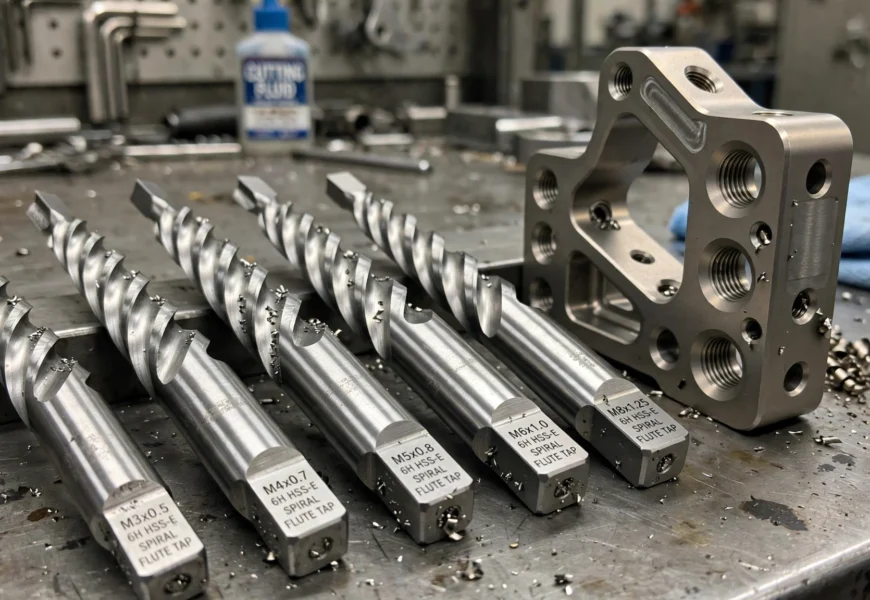
Thread quality isn’t a cosmetic detail in aerospace manufacturing — a single failed threaded connection in an engine mount or structural fastener can compromise the safety of an entire aircraft. That’s why the taps used to cut those threads are held to a different standard than general industrial tapping tools, engineered around specific alloys, thread forms, and failure tolerances unique to the aerospace industry.
Quick Answer: The best industrial taps for aerospace manufacturing are typically cobalt HSS (high-speed steel), powdered metal, or carbide taps with a spiral-point or spiral-flute geometry, finished with a wear-resistant coating like TiN, TiCN, or TiAlN. The right choice depends heavily on the material being tapped — high-temperature alloys like titanium, Inconel, and A286 stainless steel generally require premium substrates and coatings specifically engineered to resist galling and heat buildup, while standard aluminum aerospace components can often be tapped with more conventional cobalt or HSS taps.
Here’s a full breakdown of tap types, materials, coatings, and thread standards specific to aerospace applications.
Forming Taps vs. Cutting Taps
The first major decision in aerospace tapping is whether to use a forming tap or a cutting tap:
- Forming taps don’t remove material — they cold-form the thread by displacing metal into shape. This produces a stronger, smoother thread and is well-suited to high-production environments and miniature applications, since forming taps are more rigid and typically last longer than cutting taps.
- Cutting taps remove material to create the thread and are the better choice for harder materials, larger thread sizes, or applications where the torque and hardness limitations of forming taps become a factor.
The right choice ultimately depends on the specific material being worked and the production goals of the job.
Materials Used in Aerospace-Grade Taps
Aerospace fastener applications frequently involve some of the hardest materials to machine, which is why tap substrate selection matters so much:
| Substrate | Key Trait | Best For |
|---|---|---|
| Cobalt HSS | Good heat resistance, cost-effective | General aerospace aluminum and steel components |
| Powdered metal HSS | Improved wear resistance over standard HSS | High-temperature alloys, extended tool life needs |
| Solid carbide | Highest hardness and heat resistance | The most demanding titanium and superalloy applications |
| High-vanadium HSS-E | Enhanced wear resistance for solution-treated alloys | A286, 300-series stainless steel, titanium fasteners |
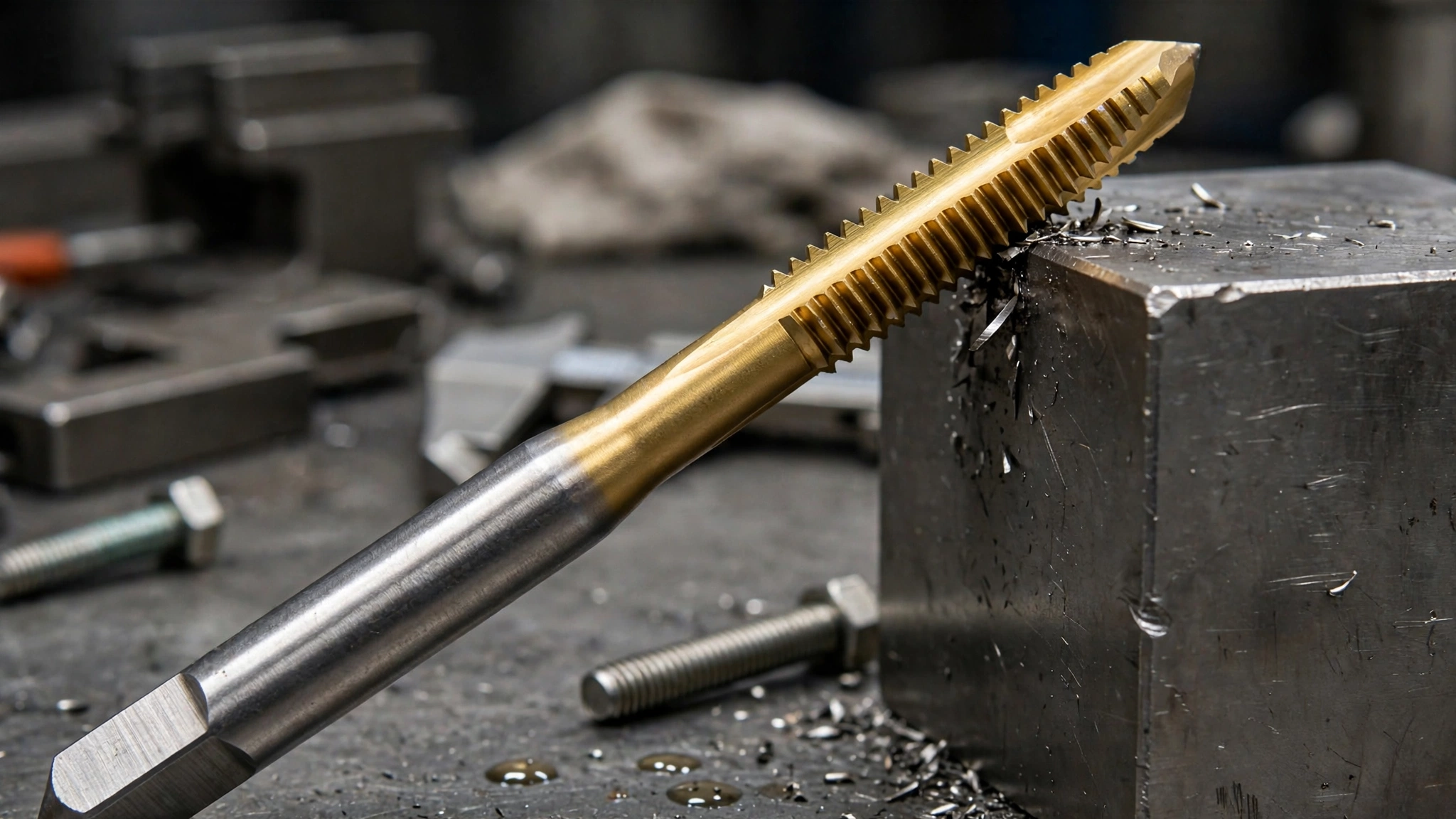
Spiral-point geometry pushes chips forward while cutting, reducing galling in tough aerospace alloys like titanium.
Coatings That Matter for Aerospace Tapping
Coatings significantly extend tool life and improve performance when tapping high-strength or high-temperature alloys:
- TiN (Titanium Nitride) — A general-purpose coating that improves wear resistance for moderate-duty applications.
- TiCN (Titanium Carbo-Nitride) — Offers greater hardness and toughness than standard TiN, often paired with premium HSS substrates for demanding fastener work.
- TiAlN (Titanium Aluminum Nitride) — Specifically effective for managing extreme heat, making it a strong choice for high-temperature alloys like titanium and Inconel.
Reducing galling — the tendency for metal to weld itself to the tap’s cutting edges during machining — is a major focus of aerospace tap coatings, since galling directly shortens tool life and can compromise thread quality in safety-critical fasteners. According to WIDIA’s aerospace fastener tap documentation, spiral-point geometry combined with a TiN CrC/C coating is specifically engineered to reduce cutting forces while pushing chips forward, minimizing edge buildup on solution-treated alloys.
Thread Standards Specific to Aerospace
Aerospace tapping isn’t limited to standard commercial thread forms. Several specialized thread standards exist specifically for aviation applications:
- J-series threads (MJ, UNJC, UNJF) — The most widely recognized aerospace thread standard, designed for high fatigue strength in highly stressed connections.
- Spiralock-compatible threads — A locking thread form common in aerospace applications, requiring taps specifically manufactured to guarantee compatibility with Spiralock gauges.
Because of the safety-critical nature of aerospace fasteners, the use of specialized threading tools in this industry is often governed by both regulatory requirements and specific agreements between aircraft parts manufacturers and their contractors.
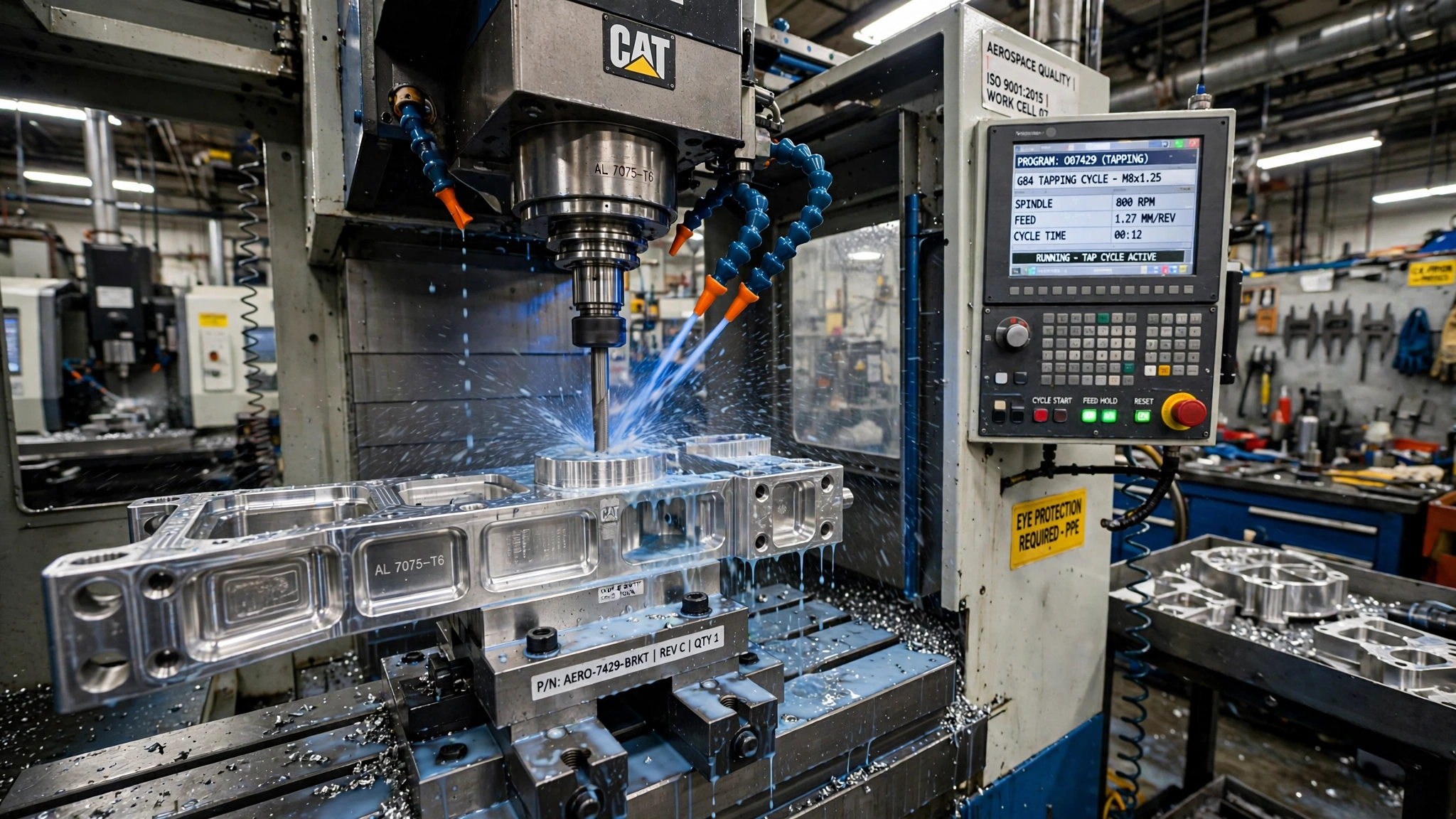
Precision tapping machines are used to create the exact thread tolerances required for safety-critical aerospace fasteners.
Common Materials Tapped in Aerospace Manufacturing
- Titanium 6AL-4V — Widely used in structural aircraft components, requiring taps engineered specifically to manage its heat sensitivity and tendency to gall.
- Inconel 718 and Waspaloy — High-temperature superalloys used in engine components, generally requiring premium carbide or powdered-metal taps.
- A286 stainless steel — A common aerospace fastener material, often paired with specialized taps designed around its solution-treated hardness profile.
- High-strength aluminum alloys — Used extensively in airframe components, typically tapped with cobalt or HSS taps run at appropriate speeds to avoid excess heat buildup.
How to Select the Right Tap for an Aerospace Application
- Identify the material being tapped — Titanium, Inconel, and A286 all demand different substrate and coating combinations than standard aluminum or steel.
- Match the thread standard to the application’s requirements — Confirm whether the fastener calls for a standard commercial thread or an aerospace-specific J-series or Spiralock-compatible thread.
- Choose forming or cutting based on material hardness and production volume — Forming taps for higher-volume, softer-material runs; cutting taps for harder materials or larger thread sizes.
- Select a coating suited to the heat and galling risk of the material — TiAlN for high-heat alloys, TiCN or TiN for moderate-duty applications.
- Work with a specialized aerospace tooling supplier where possible, since custom or application-specific taps are common in this industry due to the narrow tolerances and safety requirements involved. Jarvis Cutting Tools’ guide to internal threading taps recommends pairing premium substrates like cobalt HSS or powdered metal with a high-performance coating as a starting framework when evaluating suppliers for aerospace-grade tapping needs.
For general background on how taps are used across manufacturing more broadly, GWS Tool Group’s overview of industrial tapping applications covers how the same core tooling principles extend into automotive, medical device, and general industrial threading work.
Frequently Asked Questions
What type of tap is best for titanium aerospace components?
Spiral-point or spiral-flute taps made from powdered-metal HSS or carbide, often with a TiAlN or TiCN coating, are generally best suited for titanium, since they help manage heat buildup and resist galling.
What’s the difference between forming taps and cutting taps in aerospace manufacturing?
Forming taps cold-form threads by displacing material rather than cutting it, producing a stronger, smoother thread and better tool life in high-production settings. Cutting taps remove material and are better suited to harder materials or larger thread sizes where forming taps face torque or hardness limitations.
Why do aerospace taps need special coatings?
Coatings like TiN, TiCN, and TiAlN improve wear resistance and reduce galling, which is especially important when tapping high-temperature alloys like titanium and Inconel that are prone to welding onto the tap’s cutting edges during machining.
What thread standards are unique to the aerospace industry?
J-series threads (including MJ, UNJC, and UNJF) are the most recognized aerospace-specific thread standard, designed for high fatigue strength in critical, highly stressed fastener connections.
Are aerospace taps regulated differently from standard industrial taps?
Yes. Because aerospace fasteners are safety-critical, the use of specialized threading tools is often subject to both regulatory requirements and specific agreements between aircraft parts manufacturers and their contractors.
Have questions about this guide? Contact us or learn more about the site. Visit the homepage to browse the rest of the site’s content.
Last modified: August 10, 2026