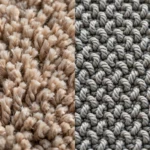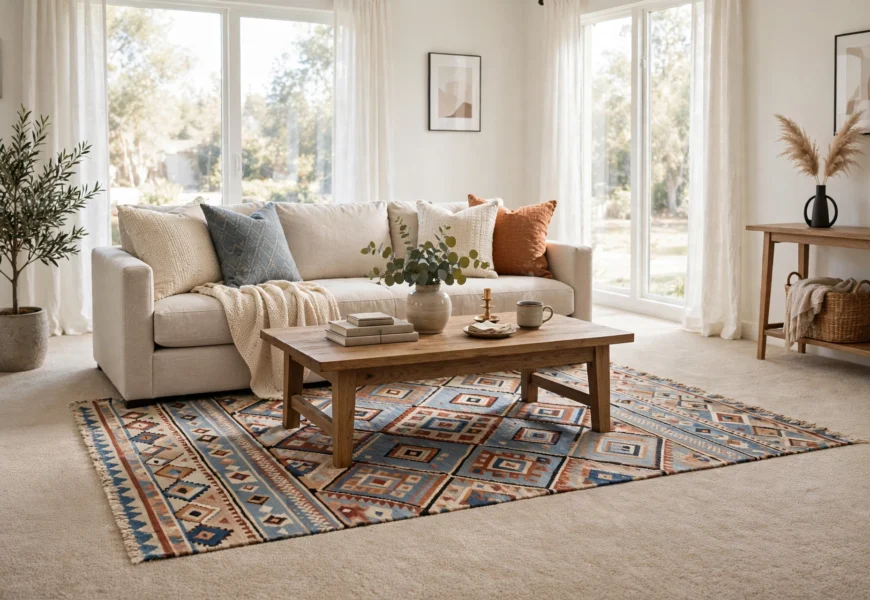
“Carpet” and “rug” get used interchangeably in everyday conversation, and most of the time it doesn’t cause any confusion. But if you’re actually shopping for one, decorating a room, or trying to figure out which term applies to what’s on your floor, the distinction matters — and it comes down to more than just size.
Quick Answer: The main difference is that carpet is a wall-to-wall floor covering that’s installed and permanently fixed in place, typically with padding underneath, while a rug is a smaller, freestanding piece of floor textile that isn’t attached to the floor and can be moved, rolled up, or replaced at any time. Rugs are generally used to define or decorate a specific area, while carpet covers an entire room edge to edge.
Here’s a full breakdown of how they differ, and when each one makes more sense for your space.
The Core Difference: Fixed vs. Movable
According to both Merriam-Webster and Encyclopedia Britannica, rug and carpet have historically been near-synonyms, but the modern, practical distinction used in home decor and the flooring industry comes down to installation and mobility:
- Carpet is installed wall-to-wall, secured to the floor (typically with tack strips, adhesive, or stretched over padding), and covers the entire room from edge to edge.
- Rug is a freestanding textile that sits on top of whatever flooring is underneath — hardwood, tile, or carpet — and can be picked up, moved, or replaced without any installation process.
This single distinction is really what drives every other practical difference between the two.
Carpet vs. Rug: Full Comparison
| Factor | Carpet | Rug |
|---|---|---|
| Installation | Fixed, wall-to-wall, professionally installed | Freestanding, no installation needed |
| Size | Covers the entire room | Smaller than the room; defines a specific area |
| Mobility | Permanent, not meant to be moved | Fully portable, can be rolled up or relocated |
| Typical materials | Nylon, polyester, wool, olefin, triexta | Wool, cotton, jute, silk, synthetic blends; often handmade |
| Pattern/style variety | Usually solid or subtly textured | Wide range, including intricate handwoven patterns |
| Cost to replace | Higher — requires professional removal and installation | Lower — simply buy a new one and swap it out |
| Cleaning | Requires vacuuming in place; professional deep cleaning | Can be shaken out, washed, or professionally cleaned off-site |
| Best for | Whole-room coverage, insulation, sound dampening | Zoning a space, adding pattern, layering, easy updates |
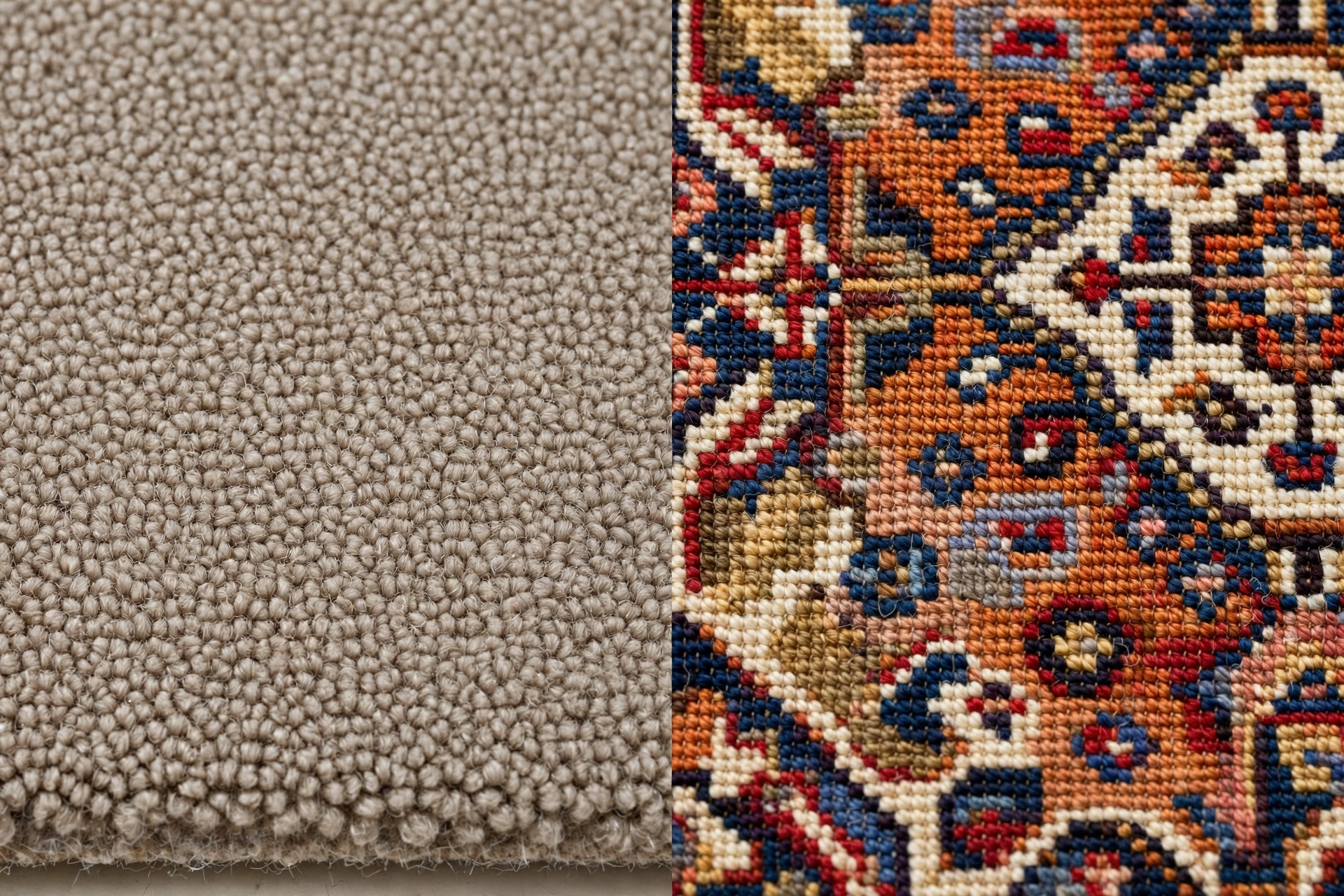
Carpet is typically solid or subtly textured, while rugs often feature intricate, decorative patterns.
Why Carpet Makes Sense for Some Rooms
Carpet’s biggest strength is uniform, edge-to-edge coverage. Because it’s installed with padding underneath, it offers better insulation, sound dampening, and a consistently soft surface across the entire floor — which is part of why it’s a popular choice for bedrooms, family rooms, and other rooms where comfort and quiet matter most. If you’re specifically shopping for carpet in a busy space, our guide on the best carpet for high-traffic areas covers fiber and pile choices that hold up well over time.
The tradeoff is flexibility: once carpet is installed, changing it means a full removal and reinstallation project, which is a bigger cost and time commitment than simply swapping out a rug.
Why a Rug Might Be the Better Choice
Rugs shine in a few specific ways carpet can’t match:
- They define zones within an open-concept space — a rug under a dining table or seating area visually separates it from the rest of the room without any construction.
- They’re easy to update — redecorating or refreshing a room’s look is as simple as buying a new rug, no installation required.
- They layer well over hard flooring or even over carpet itself — placing a rug over an existing carpet is a common way to add pattern, define a seating area, or protect high-wear spots without a full carpet replacement.
- They’re more practical for pets and messes — a stained or worn rug can be replaced far more affordably than reinstalling an entire room’s carpet.
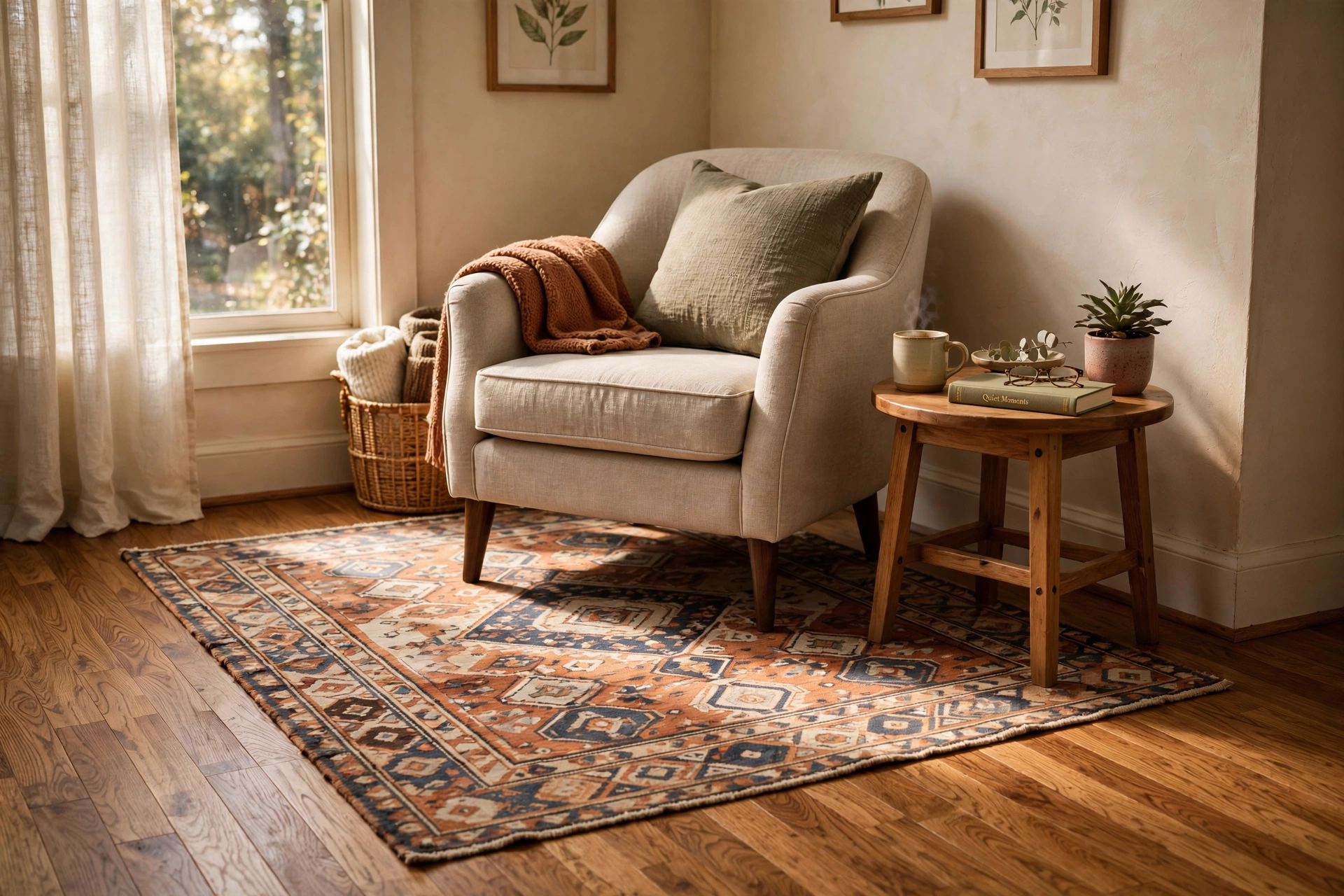
A rug is a flexible way to add warmth, pattern, and zoning to a room without any permanent installation.
Can You Use Both in the Same Room?
Yes — and it’s a common design choice. Layering a rug over wall-to-wall carpet or over hard flooring is a popular way to add texture, color, and definition without committing to a full carpet replacement. It’s especially useful in rented spaces, where installing new carpet usually isn’t an option, but adding a rug is an easy way to soften and personalize a room.
Cleaning and Maintenance Differences
- Carpet needs to be vacuumed regularly in place and typically requires professional steam cleaning every 12–18 months, since it can’t be removed for a deeper clean at home.
- Rugs can usually be shaken out, spot-cleaned, or in some cases washed, and smaller rugs can be taken outside for a more thorough cleaning that isn’t possible with fixed carpet.
If you’re dealing with a spill on either one, our guide on removing coffee, milk, and other stains from carpet covers techniques that work for most rug materials as well, though delicate handmade or wool rugs may need gentler, rug-specific cleaning methods.
How to Decide Which One You Need
- Choose carpet if: you want consistent, wall-to-wall softness and insulation in a bedroom, family room, or another space you plan to keep the same flooring in for years.
- Choose a rug if: you want flexibility, easy updates, decorative pattern, or a way to define a specific area within a larger room — especially over hardwood, tile, or another hard surface.
- Choose both if: you already have carpet or hard flooring installed and want to add zoning, pattern, or a protective layer without a full flooring project.
Frequently Asked Questions
Is a carpet just a big rug?
Not exactly. While both are soft textile floor coverings, carpet is specifically installed wall-to-wall and fixed to the floor, while a rug — regardless of size — remains freestanding and movable.
Can you put a rug on top of carpet?
Yes, this is a common design choice used to add pattern, define a seating area, or protect a high-traffic spot on an existing carpet without replacing it.
Which is cheaper, carpet or a rug?
It depends on size, but rugs are generally cheaper to replace since there’s no installation or removal labor involved, whereas carpet requires professional installation and removal, which adds significantly to the overall cost.
Are rugs or carpets better for allergies?
Rugs can be easier to manage for allergy sufferers since they can be removed and cleaned more thoroughly than fixed wall-to-wall carpet, which traps dust and allergens in place between deep cleanings.
Is an area rug the same thing as a carpet?
No. “Area rug” specifically refers to a rug sized to cover a defined area of a room — like under a dining table — as opposed to wall-to-wall carpet, which covers the entire floor.
Choosing carpet or a rug for your space? Explore more flooring and decor guides on Ayaan Home Decor to find the right fit for every room.
Last modified: August 1, 2026