I learned this the hard way when I installed pretty glossy ceramic tiles on my kitchen floor. They looked amazing at first, but after a few months of foot traffic and dropped pans, they started chipping and cracking. That mistake made me realize: even though both are called “ceramic,” ceramic floor tiles and ceramic wall tiles are designed for very different purposes.
Thickness and Strength
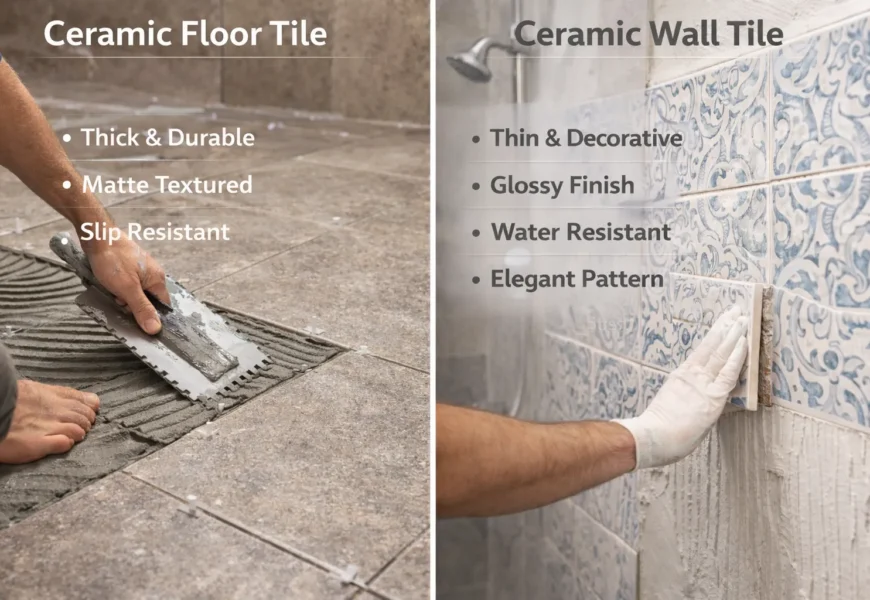
The most important difference is thickness and density. Ceramic floor tiles are significantly thicker — usually between 8mm to 12mm — and made with a denser body to withstand heavy foot traffic, furniture weight, and daily wear. Ceramic wall tiles are thinner, typically 5mm to 8mm, because walls don’t need to support weight or constant impact. Using thin wall tiles on the floor leads to quick cracking and failure.
Durability and Wear Resistance
Floor tiles go through much more abuse. They are engineered with higher abrasion resistance (often rated with a PEI rating of 3 or higher) so they can handle shoes, pet claws, and dropped objects without scratching or chipping easily. Wall tiles have lower durability requirements since they only face occasional cleaning or light contact. This makes wall tiles more prone to damage if used on the floor.
Water Absorption and Moisture Resistance
Ceramic floor tiles, especially those labeled “porcelain-like” or vitrified, have lower water absorption rates (usually under 0.5%). This makes them excellent for wet areas like bathrooms, kitchens, and entryways. Ceramic wall tiles can have slightly higher absorption rates because they are less exposed to standing water. In shower walls, however, low-absorption wall tiles are still preferred for longevity.
Surface Finish and Safety
Floor tiles usually feature a matte, textured, or honed finish to provide necessary slip resistance, especially when wet. This texture helps prevent accidents in high-moisture areas. Wall tiles often have a glossy or polished finish because they are meant to reflect light and look decorative on vertical surfaces. A glossy ceramic tile on the floor can become dangerously slippery when wet.
Installation Differences
Because floor tiles are thicker and heavier, they require stronger adhesives (thinset mortar) and sometimes a more stable subfloor. Wall tiles are lighter and easier to cut and install vertically, often needing less robust preparation. This also affects the overall cost — ceramic floor tiles are generally more expensive per square foot due to their superior strength and durability.
Can You Use Them Interchangeably?
You can safely use ceramic floor tiles on walls (many people do this in showers for better water resistance), but you should never use ceramic wall tiles on floors. The thinner body simply cannot handle the stress of being walked on.
In modern homes, it’s common to mix both: durable ceramic floor tiles downstairs and more decorative, lighter ceramic wall tiles on accent walls or backsplashes for the perfect balance of function and style.
Final Tips Before Buying
Always check the tile specifications: look for PEI rating (for wear resistance), water absorption percentage, and slip resistance rating (COF or R-value). If you’re tiling a wet area, prioritize low water absorption. When in doubt, ask the supplier or bring photos of your space.
FAQs About Ceramic Floor Tiles vs Ceramic Wall Tiles
Can I use ceramic wall tiles on the floor? No. Wall tiles are too thin and fragile for floor use. They crack easily under foot traffic and can become slippery.
Can I use ceramic floor tiles on the wall? Yes, this is perfectly fine and often recommended in wet areas like showers because floor tiles are thicker and more water-resistant.
Which one is more slip-resistant? Ceramic floor tiles are designed with better slip resistance through matte or textured surfaces. Wall tiles are usually glossy and less safe on floors.
Are ceramic floor tiles more expensive? Yes, typically. Their greater thickness, density, and durability make them cost more per square foot than standard ceramic wall tiles.
What about porcelain vs regular ceramic? Porcelain is a denser type of ceramic with even lower water absorption, making it ideal for floors. Many “ceramic floor tiles” are actually porcelain-bodied for better performance.
Last modified: April 4, 2026