The fastest way to remove industrial double-sided tape from glass is to soften the adhesive with heat (hairdryer or heat gun on low), lift an edge with a plastic scraper or razor blade held flat against the glass, then dissolve any leftover residue with isopropyl alcohol, white vinegar, or a commercial adhesive remover like Goo Gone. Always test on a small corner first and avoid abrasive scrubbers that can scratch glass.
Industrial double-sided tape is built to bond permanently — that’s exactly what makes it so hard to remove from glass, mirrors, windows, or shower doors. This guide walks through the safest, most effective methods, what tools you’ll need, and mistakes to avoid so you don’t end up with scratched or hazy glass.
Why Industrial Double-Sided Tape Is Hard to Remove?
Industrial-grade tapes (like 3M VHB or similar acrylic foam tapes) use a high-strength acrylic adhesive designed to resist heat, moisture, and UV exposure. That durability is great for mounting mirrors or signage — but it also means the adhesive won’t just peel away like standard tape. It needs heat, solvent, or mechanical force (or a combination of all three) to break down.
What You’ll Need

Everything you need: heat, a scraper, solvent, and a clean cloth.
- Hairdryer or heat gun (set to low/medium heat)
- Plastic razor blade scraper or metal single-edge razor blade
- Isopropyl alcohol (rubbing alcohol), white vinegar, or a commercial adhesive remover (Goo Gone, Goof Off, WD-40)
- Microfiber cloth or paper towels
- Glass cleaner (for the final finish)
- Optional: cooking oil or peanut butter (natural solvents for light residue)
Also read our article on How to bond foam materials using industrial tapes?
Step-by-Step: How to Remove the Tape
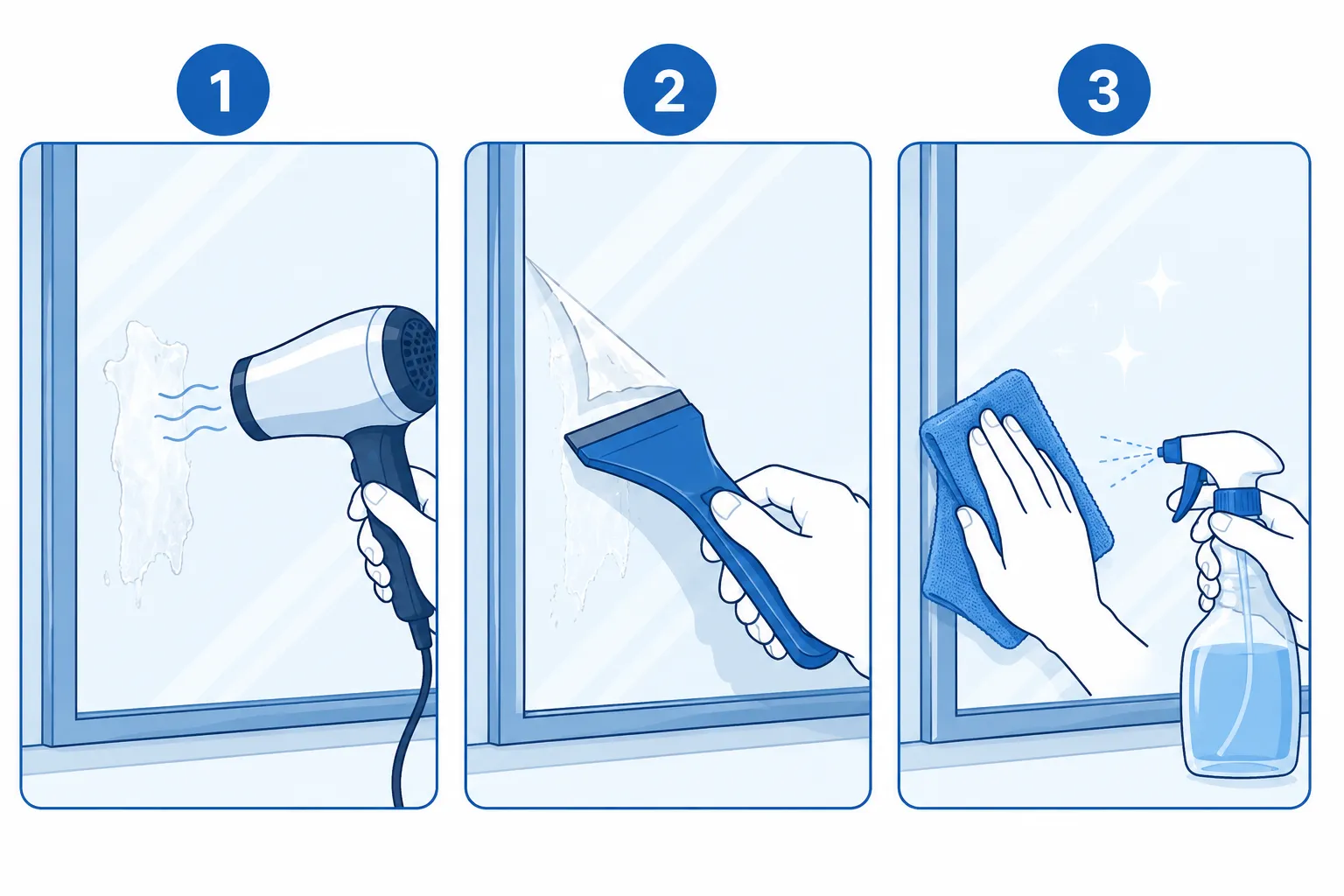
Heat it, lift it, clean it — the 3-step removal process.
Step 1: Soften the Adhesive With Heat
Point a hairdryer at the tape from about 4–6 inches away and heat it for 30–60 seconds. Heat lowers the adhesive’s bond strength and makes it pliable. If using a heat gun, keep it moving constantly on a low setting — glass can crack from sudden, uneven heat, especially tempered or older glass.
Step 2: Lift an Edge
Using a plastic scraper or a razor blade held nearly flat (almost parallel to the glass, not angled into it), gently work under one corner of the tape. A shallow angle prevents scratching. Slowly peel the tape back while continuing to apply heat just ahead of where you’re peeling.
Step 3: Remove the Sticky Residue
Once the tape backing is off, a sticky adhesive film usually remains. Soak a cloth in isopropyl alcohol or white vinegar and press it onto the residue for 2–3 minutes to let it soak in. Then rub in small circles until the residue balls up and lifts off. For stubborn spots, apply a commercial adhesive remover following the product’s instructions.
Step 4: Scrape Off Remaining Bits (If Needed)
If residue still won’t budge, use a razor blade at a low angle while the glass is wet with alcohol or remover — this lubricates the blade and reduces scratch risk. Never scrape dry glass.
Step 5: Clean and Polish
Finish with a standard glass cleaner and a lint-free cloth to remove any oily film left by the solvent, restoring a streak-free shine.
Also read our article on How differential adhesive tapes work in industrial applications?
Alternative Household Methods
| Method | Best For | How It Works |
|---|---|---|
| Isopropyl alcohol | Fresh or medium-age residue | Breaks down acrylic adhesive bonds |
| White vinegar | Light residue, eco-friendly option | Mild acid dissolves adhesive |
| Cooking oil / peanut butter | Very sensitive or antique glass | Oils loosen adhesive without solvents |
| WD-40 | Heavy-duty industrial residue | Penetrating oil lifts strong adhesives |
| Heat gun + scraper | Thick foam-core tapes (e.g., VHB) | Softens adhesive for mechanical removal |
Mistakes to Avoid
- Don’t use metal scrapers at a steep angle — this is the #1 cause of glass scratches.
- Don’t apply direct, concentrated heat from a heat gun in one spot — it can crack glass, especially tempered panels.
- Don’t use abrasive pads (steel wool, scouring pads) — these dull glass permanently.
- Don’t skip the test patch — some solvents can affect tinted, coated, or Low-E glass finishes.
Frequently Asked Questions
Does rubbing alcohol remove industrial double-sided tape from glass?
==> Yes. Isopropyl alcohol is one of the most effective and safe solvents for breaking down acrylic-based industrial tape adhesive on glass without damaging the surface.
Will vinegar damage glass?
==> No, white vinegar is glass-safe and works well on light-to-medium adhesive residue, though it’s slower-acting than alcohol or commercial removers.
Can I use a razor blade on glass safely?
==> Yes, as long as it’s held nearly flat against the surface and the glass is wet with a lubricating solvent. A dry, steep-angle scrape is what causes scratches.
How do I remove VHB tape (3M mounting tape) from glass?
==> Heat is essential for VHB tape because of its thick foam core. Warm it with a hairdryer, peel slowly at a low angle, then remove the residue with isopropyl alcohol or a commercial adhesive remover.
Is heat safe to use on all glass?
==> Use low, indirect heat only. Avoid concentrated heat guns on tempered or double-pane glass, as rapid temperature changes can cause cracking.
Final Tip
For best results, combine methods: heat to loosen, a flat-angled scraper to lift, and a solvent to finish off residue. This three-step combination handles even the toughest industrial adhesives without risking your glass surface.
Last modified: July 18, 2026