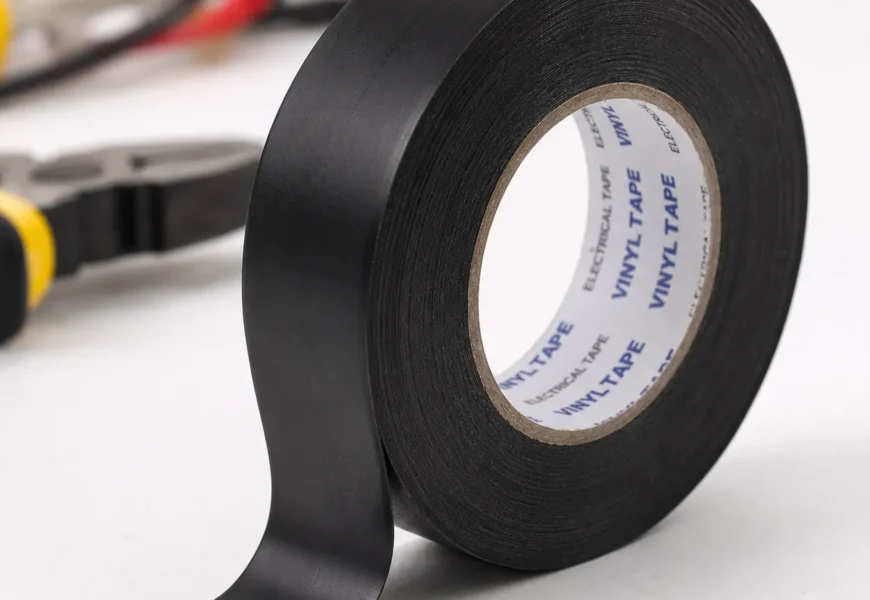
Vinyl electrical tape is one of the most common items in any toolbox. It’s cheap, flexible, and easy to find at any hardware store. But when people work around welding shops, fabrication units, or steel plants, a common question comes up: can vinyl electrical tape be used in welding or the steel industry?
The short answer is no — not for direct welding-related tasks. Vinyl electrical tape is designed for low-voltage electrical insulation, not for high-heat, high-spark environments like welding or steel manufacturing. In this article, we’ll break down exactly why, where vinyl tape can still be used around a steel facility, and what alternatives are actually built for welding conditions.
For more on adhesives and tapes for practical, industrial-style projects, check out our Hardwares category.
What Is Vinyl Electrical Tape Designed For?
Vinyl electrical tape (often just called “electrical tape”) is a PVC-based adhesive tape used mainly for:
- Insulating electrical wires and connections
- Color-coding wires and cables
- Bundling low-voltage cables
- General-purpose household and automotive electrical repairs
- Temporary wire splicing and protection
[IMAGE PROMPT 2: An infographic-style image showing vinyl electrical tape being used correctly — wrapped around electrical wires and connectors, with small icons indicating “insulation,” “wire bundling,” and “low voltage.”]
It typically withstands temperatures only up to 80°C to 105°C (176°F to 221°F) and is rated for low-voltage insulation (usually up to 600V for standard grades), in line with general specifications published by UL (Underwriters Laboratories) for vinyl electrical tape. This makes it perfect for basic electrical work — but poorly suited for the extreme conditions found in welding.
If you want to understand how different adhesive tapes are engineered for different industrial jobs, see our related post on how differential adhesive tapes work in industrial applications.
Why Vinyl Electrical Tape Doesn’t Belong in Welding
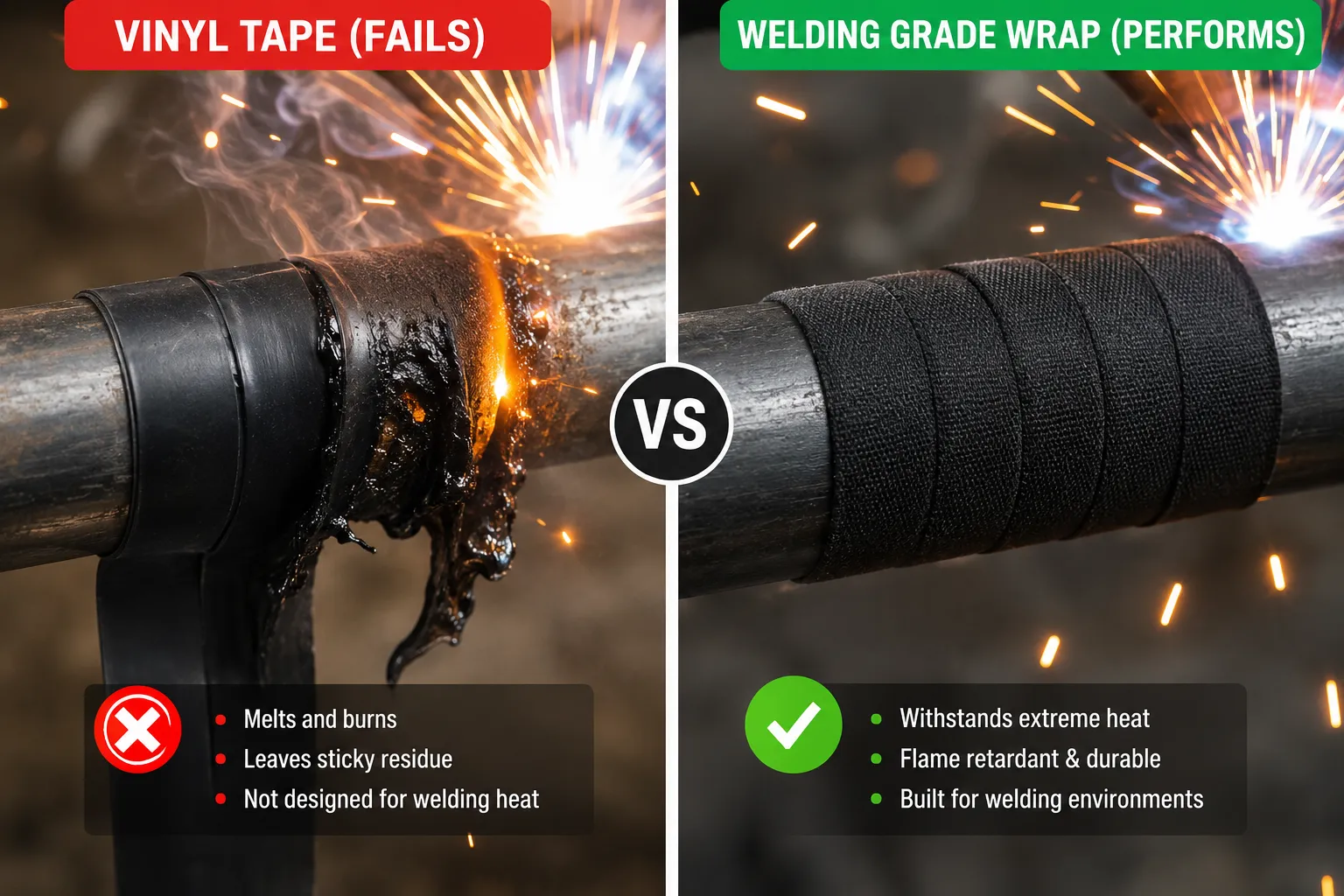
Welding produces intense heat, UV radiation, molten metal spatter, and sparks that can reach temperatures well above 1,500°C (2,700°F) in the arc zone, and OSHA’s welding safety guidelines outline the fire and burn hazards this creates for nearby materials. Here’s why vinyl tape fails in this environment:
1. Low Heat Resistance
Vinyl tape starts to melt, soften, or burn at temperatures far below what welding arcs and spatter produce. This creates a fire hazard and can expose bare wires.
2. No Spark or Spatter Protection
Molten metal spatter can instantly burn through vinyl tape, unlike materials specifically engineered for welding environments (like leather, silicone, or fiberglass-based wraps).
3. Adhesive Breakdown
The adhesive in vinyl tape breaks down under high heat, causing it to peel, unravel, or lose its grip — which is dangerous if it’s being used near live electrical components.
4. Not Rated for Heavy-Duty Industrial Voltage
Steel plants and welding setups often involve higher-voltage industrial equipment. Standard vinyl tape isn’t built to handle that kind of load safely over time.
Where Vinyl Electrical Tape Can Still Be Used in a Steel or Industrial Facility
While it’s not suitable for the welding process itself, vinyl electrical tape still has a place in steel plants and industrial facilities — just away from the heat and arc zone. Common uses include:
- Insulating control panel wiring
- Labeling and color-coding cables in electrical rooms
- General maintenance and low-voltage repairs in offices or non-welding zones
- Temporary electrical fixes on equipment not exposed to sparks or high heat
So, vinyl tape isn’t banned from steel facilities altogether — it’s simply the wrong choice for anything near an active weld or high-heat process. For more everyday tape and adhesive guides, browse our Hardwares section.
What Should Be Used Instead for Welding Applications?
If you’re looking for tape or wrap that can actually handle welding conditions, consider these alternatives:
| Material | Best For | Heat Resistance |
|---|---|---|
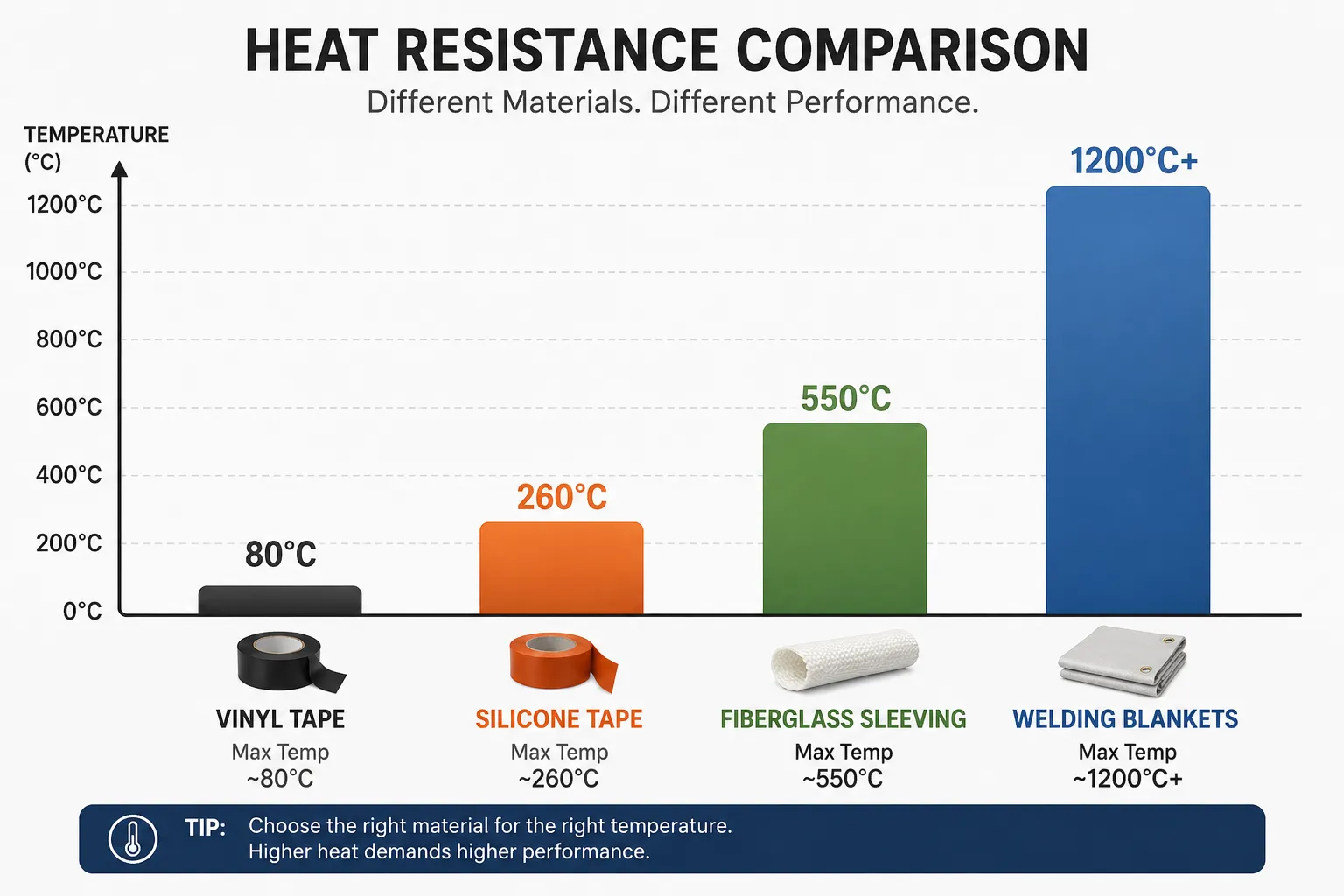
| Welding blankets/curtains | Spark and spatter containment | Up to 1000°C+ |
| Silicone tape | Cable and hose protection near heat | Up to 260°C |
| Fiberglass tape/sleeving | Wrapping cables near welding zones | Up to 550°C |
| High-temperature electrical tape (e.g., PTFE-based) | Insulation near moderate heat | Up to 260°C |
| Leather welding sleeves/wraps | Hose and cable protection | High spark resistance |
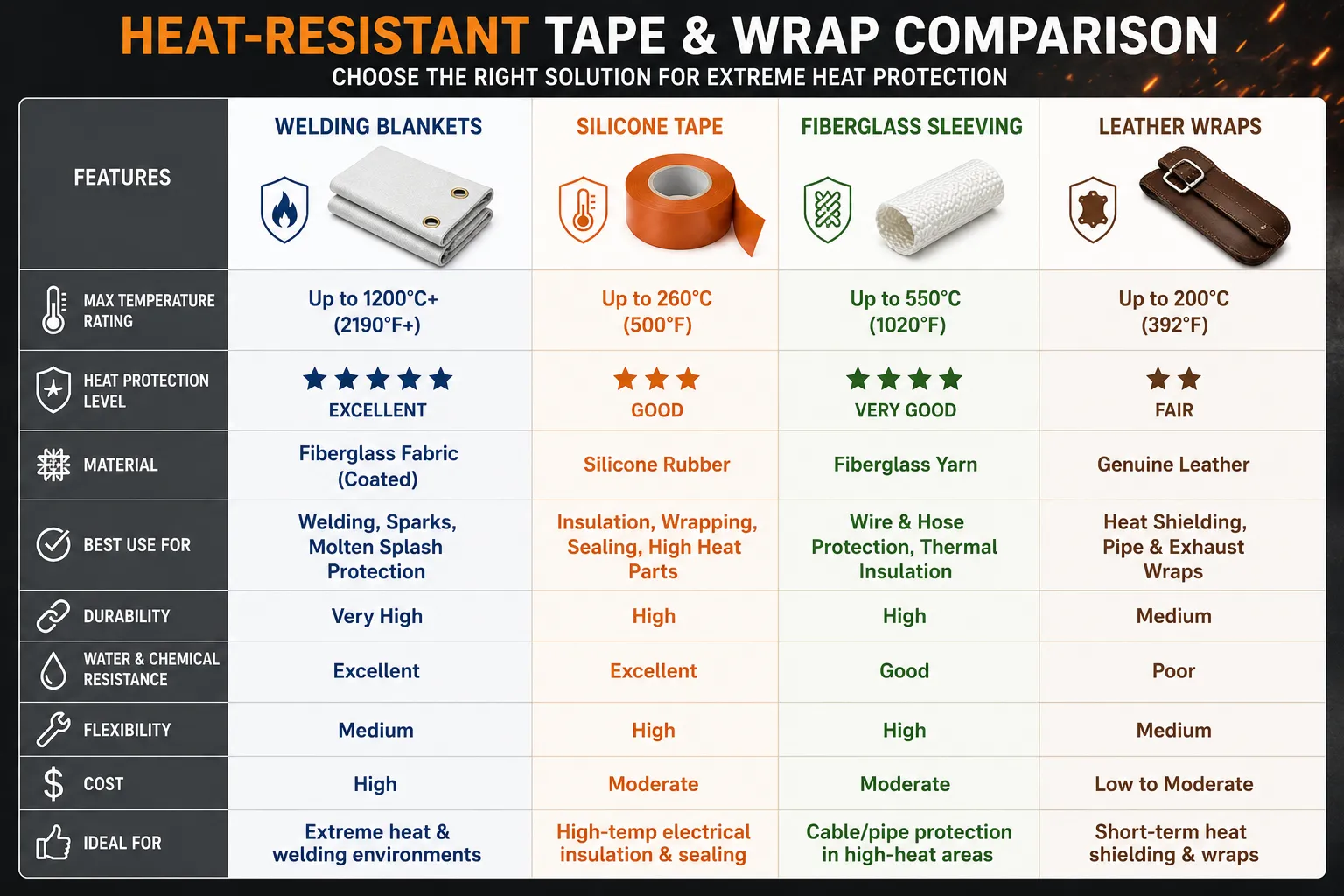
These materials are specifically engineered to resist sparks, radiant heat, and molten spatter — making them the correct choice for welding bays, fabrication shops, and steel processing lines. The American Welding Society also publishes detailed standards on protective equipment and materials for welding environments.
For a related look at how industrial tapes are chosen for tricky materials, see our guide on how to bond foam materials using industrial tapes.
Quick Comparison: Vinyl Tape vs. Welding-Grade Materials
- Heat Tolerance: Vinyl tape (~105°C) vs. welding-grade materials (250°C–1000°C+)
- Spark Resistance: Vinyl tape = poor vs. welding-grade = excellent
- Primary Use: Vinyl tape = low-voltage insulation vs. welding-grade = spark/heat protection
- Safety Near Arc Zones: Vinyl tape = unsafe vs. welding-grade = designed for it
Conclusion
Vinyl electrical tape is a reliable tool for everyday low-voltage electrical work, but it is not designed or safe for use in welding or high-heat steel industry applications. Its low melting point, weak spark resistance, and adhesive breakdown under heat make it a poor — even dangerous — choice near welding arcs or molten metal.
For welding environments, always choose purpose-built materials like welding blankets, silicone tape, fiberglass sleeving, or high-temperature-rated electrical tape. Save vinyl tape for what it does best: safe, low-voltage electrical insulation away from heat and sparks.
Have questions about choosing the right protective material for your welding or industrial setup? Check out our related guide on removing industrial double-sided tape from glass or explore more in our Hardwares category.
Last modified: July 22, 2026