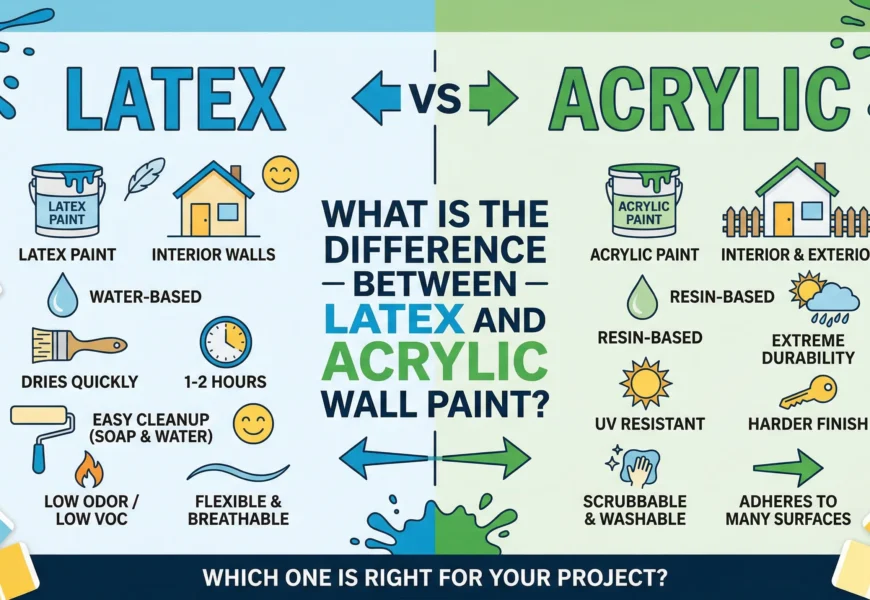
When you have ever been in the paint section and wondered which label to follow such as acrylic latex or 100 percent acrylic or simply latex, you are not alone. The majority believes that latex and acrylic are totally different paints, however, the truth is more direct- and to some extent, more technical. They both are water based paints that are ideal in interior walls but differ in their performance, quality and durability. The selection of the appropriate one can equate to a new appearance of the room in 5 years or in 10 or more years. Here is a simple, obvious breakdown to make your decision.
What Is Latex Wall Paint?
Latex paint is a generic marketing name used in the modern world to refer to any water-based paint. It does not even have natural rubber latex anymore. Rather, it employs synthetic resins that are suspended in water.
Vinyl-acrylic paints are the most basic or mid-range types of latex. They are cheap, simple to put on and dry within a short period of time and can clean up with simple soap and water. Latex paint is less odorous and contains fewer VOCs (volatile organic compounds) and is therefore a less dangerous and more environmentally friendly option in bedrooms, living rooms, and homes with children or sensitive individuals.
It applies well with a roller, has good coverage on drywall, and in beautiful matte or eggshell finishes which conceal the imperfections of walls well. But it is less bending and more susceptible to scuffs, stains and chipping with time, particularly in busy localities.
What Is Acrylic Wall Paint?
The acrylic wall paint (commonly referred to as 100 percent acrylic or acrylic latex) is a higher proportion of acrylic resins as the binder, the substance that carries the color and forms the protective coating. Premium paint such as Benjamin Moore Aura or Sherwin-Williams Emerald are usually 100 percent acrylic.
This increased acrylic level makes the paint harder, more stretchable, and enduring. Acrylic paint expands and contracts more with a change in temperature, does not fade away under sunlight, and can withstand scrubbing and cleaning significantly more than ordinary latex. It also sticks firmly to the walls and offers a great color retention and stain resistance. Also check our article on Can floor mat be applied on bricks?
The Key Differences
- Composition: Both are water-based, but acrylic has a much higher concentration of quality acrylic polymers. Standard latex often mixes in cheaper vinyl resins.
- Durability: Acrylic wins here. It’s more flexible, so it cracks and peels less. It handles moisture, scrubbing, and daily wear far better—ideal for kitchens, hallways, and kids’ rooms.
- Cleanability & Stain Resistance: Acrylic paints (especially premium ones) are scrubbable. You can wipe away marks without damaging the finish. Latex can stain more easily and show wear faster.
- VOC Levels & Odor: Latex usually has lower VOCs and less smell, making it great for quick indoor projects. Acrylic can have slightly higher VOCs in some formulas, though many premium ones are now low- or zero-VOC.
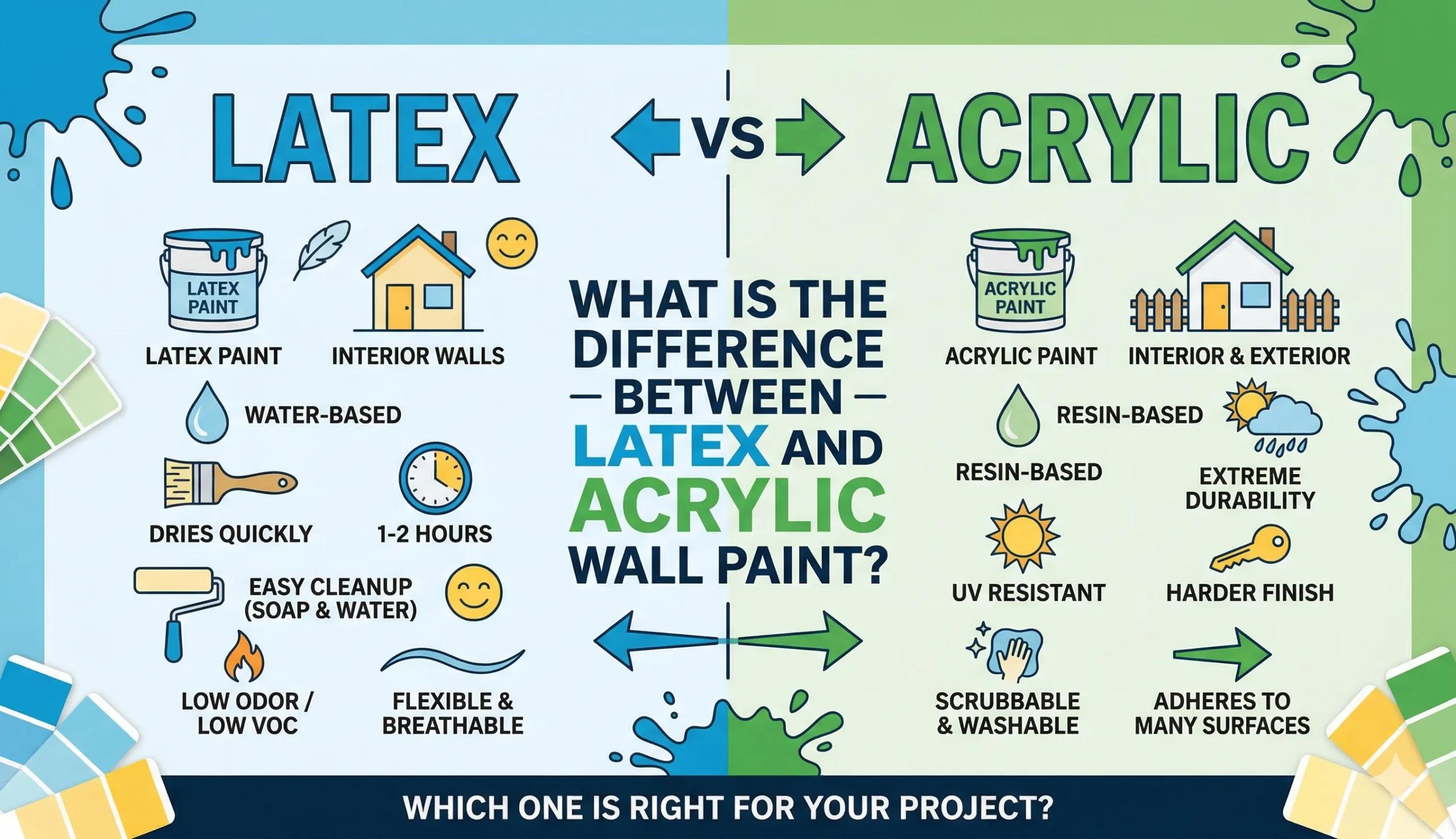
- Coverage & Application: Both apply easily, but acrylic often levels better and hides previous colors with fewer coats. Latex might need an extra coat for dark-to-light changes.
- Color Retention & Fade Resistance: Acrylic holds color better, especially in sunny rooms.
- Price: Latex is cheaper (great for large areas or budgets). Acrylic costs more upfront but saves money long-term because it lasts longer.
- Best Uses: Use standard latex for low-traffic ceilings or temporary rentals. Choose acrylic for most home walls, especially high-use areas.
Pros and Cons
Latex Paint Pros: Affordable, low odor, easy cleanup, quick drying, excellent for large wall projects. Cons: Less durable, more prone to scuffs and stains, shorter lifespan.
Acrylic Paint Pros: Highly durable, flexible, excellent scrub resistance, better color retention, longer lasting. Cons: Slightly more expensive, can have a bit more odor in some formulas.
Can You Use Them Interchangeably?
You can paint acrylic over latex, but not always the reverse without good prep. For best results on walls, many pros recommend 100% acrylic for top coats. Most modern “latex” paints you buy are actually acrylic latex hybrids anyway—the higher the acrylic content, the better the performance.
Tips for Success
Always clean walls thoroughly and use a good primer, especially on new drywall or when changing colors. Apply two coats for full coverage and richness. Work in sections to avoid lap marks, and paint on dry days with good ventilation. For the smoothest finish, use quality rollers and brushes.
If you want the best of both worlds, go with premium “acrylic latex” paints from trusted brands—they combine easy water cleanup with superior durability.
Conclusion
Latex and acrylic wall paints are both excellent water-based options, but acrylic (especially 100% acrylic formulas) offers noticeably better durability, cleanability, and longevity. For most homeowners painting living spaces, a quality acrylic latex paint gives the best value and beauty that lasts. Don’t just grab the cheapest can—match the paint to how the room is used, and you’ll enjoy beautiful walls for years.
FAQs
1. Is latex paint the same as acrylic paint?
Not exactly. “Latex” is a broad term for water-based paint. Most good latex paints today contain acrylic resins, but 100% acrylic paint has a higher concentration of premium acrylic binders for better performance.
2. Which is better for interior walls: latex or acrylic?
100% acrylic or high-quality acrylic latex is usually better for walls because it’s more durable and easier to clean. Standard latex works fine for low-traffic areas on a tight budget.
3. Does acrylic paint have more VOCs than latex?
Often yes, but many premium acrylic paints are now low-VOC or zero-VOC. Always check the label if air quality is a concern.
4. Can I paint over latex with acrylic?
Yes, acrylic paints adhere well over properly prepared latex. Lightly sand and clean the surface first for best results.
5. How long do latex vs acrylic wall paints last?
Quality acrylic can look great for 8–12+ years. Standard latex typically lasts 5–8 years before showing wear.
6. What are the best latex/acrylic wall paint brands?
Top choices include Benjamin Moore Aura (premium acrylic), Sherwin-Williams Emerald or Duration (high-performance acrylic latex), and Behr Marquee for good value.
Also check our article on Is there a difference between ceiling paint and wall paint?
Last modified: April 7, 2026