Get the size wrong and you’ll notice it immediately, even if you can’t quite put your finger on why the room feels off. A carpet that’s too small floats awkwardly in the middle of the floor; one that’s too large crowds the walls and makes the room feel smaller than it is. The right size comes down to a few consistent rules, adjusted for the specific room and furniture layout.
Quick Answer: To choose the right carpet size, measure the room first, then size the carpet so the front legs (or all four legs, in larger rooms) of your main furniture pieces rest on it, leaving a consistent border of visible flooring — typically 12 to 24 inches — around the edges. Standard sizes range from 5’x8′ for small spaces up to 12’x15′ or larger for expansive rooms, though the right choice always depends on your specific furniture arrangement, not the room size alone.
Here’s how to measure correctly, pick the right size by room type, and avoid the most common sizing mistakes.
Step 1: Measure the Room First
Before anything else, get an accurate measurement of the space:
- Measure the length and width of the room using a tape measure, starting with the longest walls.
- Note the location of doors, since carpets should sit a few inches back from any door that needs to swing open and closed freely.
- Account for irregular features like bay windows or alcoves, which can affect how much usable floor space you’re actually working with.
If you’re unsure how to translate these measurements into square footage for budgeting or wall-to-wall carpet, our guide on how to determine square footage of a room walks through the exact steps.
Standard Carpet and Rug Sizes
| Room Size | Suggested Carpet Size |
|---|---|
| Compact | 4′ x 6′ or 5′ x 7′ |
| Small | 5′ x 8′ or 6′ x 9′ |
| Medium | 8′ x 10′ |
| Standard | 9′ x 12′ |
| Large | 10′ x 14′ or 12′ x 15′ |
| Oversized | 12′ x 18′ or larger |
These are useful starting points, but the right size ultimately depends on your furniture layout and how much visible flooring border you want around the edges — not the room dimensions alone.
A dining room carpet needs enough extra space beyond the table’s edge for chairs to be pulled out without catching the border.
The Furniture Placement Rule
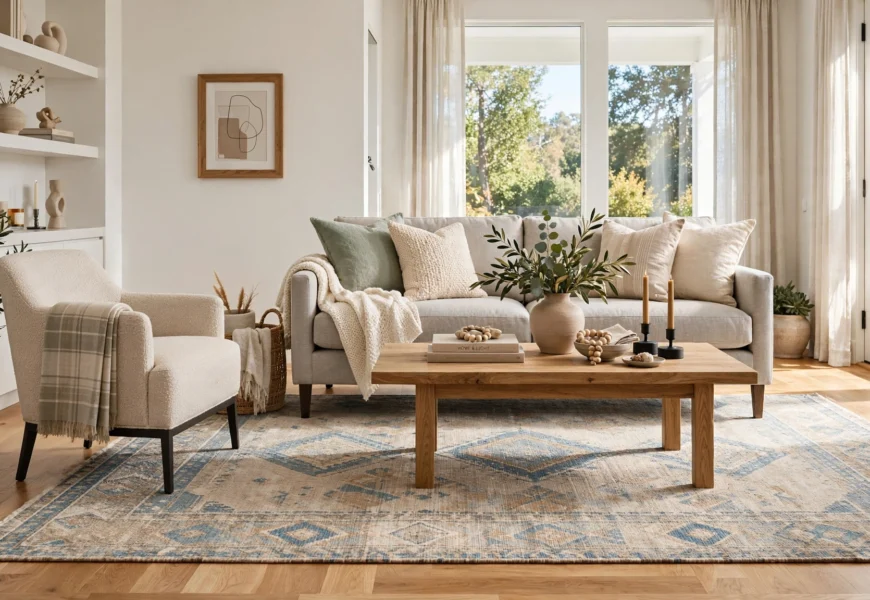
This is the single most useful rule for getting carpet size right: furniture should sit on the carpet, not beside it.
- In larger rooms: All four legs of major furniture pieces (sofas, armchairs, beds) should rest on the carpet, unifying the seating or sleeping area into one cohesive visual zone.
- In smaller or medium rooms: At minimum, the front legs of sofas and chairs should rest on the carpet, with the back legs on the bare floor — this still visually connects the furniture to the carpet without requiring an oversized rug.
- Avoid the common mistake: A carpet that only fits under a coffee table, with all the seating furniture positioned entirely off of it, tends to make the room look smaller and the furniture feel disconnected from the rest of the layout.
According to Right Step Flooring’s carpet size guide, a standard 9’x12′ carpet in a typical living room allows the front legs of seating furniture to rest on the rug while leaving a balanced flooring border around the perimeter — a proportion that works well in most conventional living rooms.
Carpet Size by Room Type
Living Room
For a room with a full seating arrangement (sofa, chairs, coffee table), aim for a carpet at least as wide as your sofa, with the front legs of all seating furniture resting on it. Medium living rooms typically work well with an 8’x10′, standard rooms with a 9’x12′, and larger rooms with a 10’x14′ or 12’x15′.
Bedroom
In a bedroom, the carpet should extend beyond the sides and foot of the bed by at least a foot or two, so that stepping out of bed lands you on carpet rather than bare floor at the edge. Larger bedrooms often look best with a carpet that extends under the nightstands as well.
Dining Room
The carpet needs to fully cover the area under the table and chairs, with enough extra space (roughly 24 to 30 inches beyond the table’s edge) that chairs can be pulled out without catching on the carpet’s border. Match the carpet’s shape to the table’s shape — a round table generally looks best with a round carpet, and a rectangular table with a rectangular one.
Hallways
Runners are the standard choice here, generally sized to leave a few inches of visible flooring on either side rather than spanning the full width of the hallway.
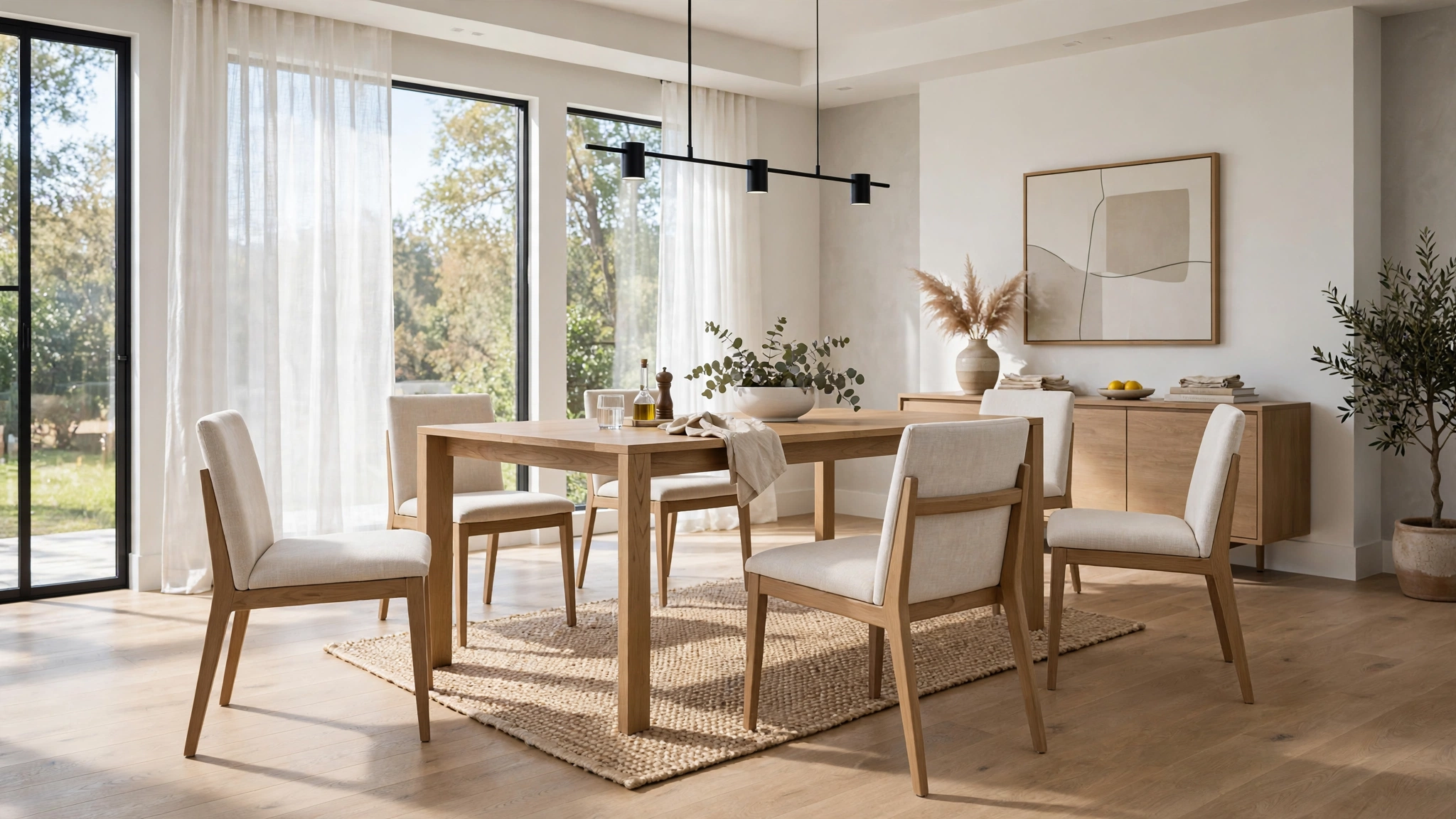
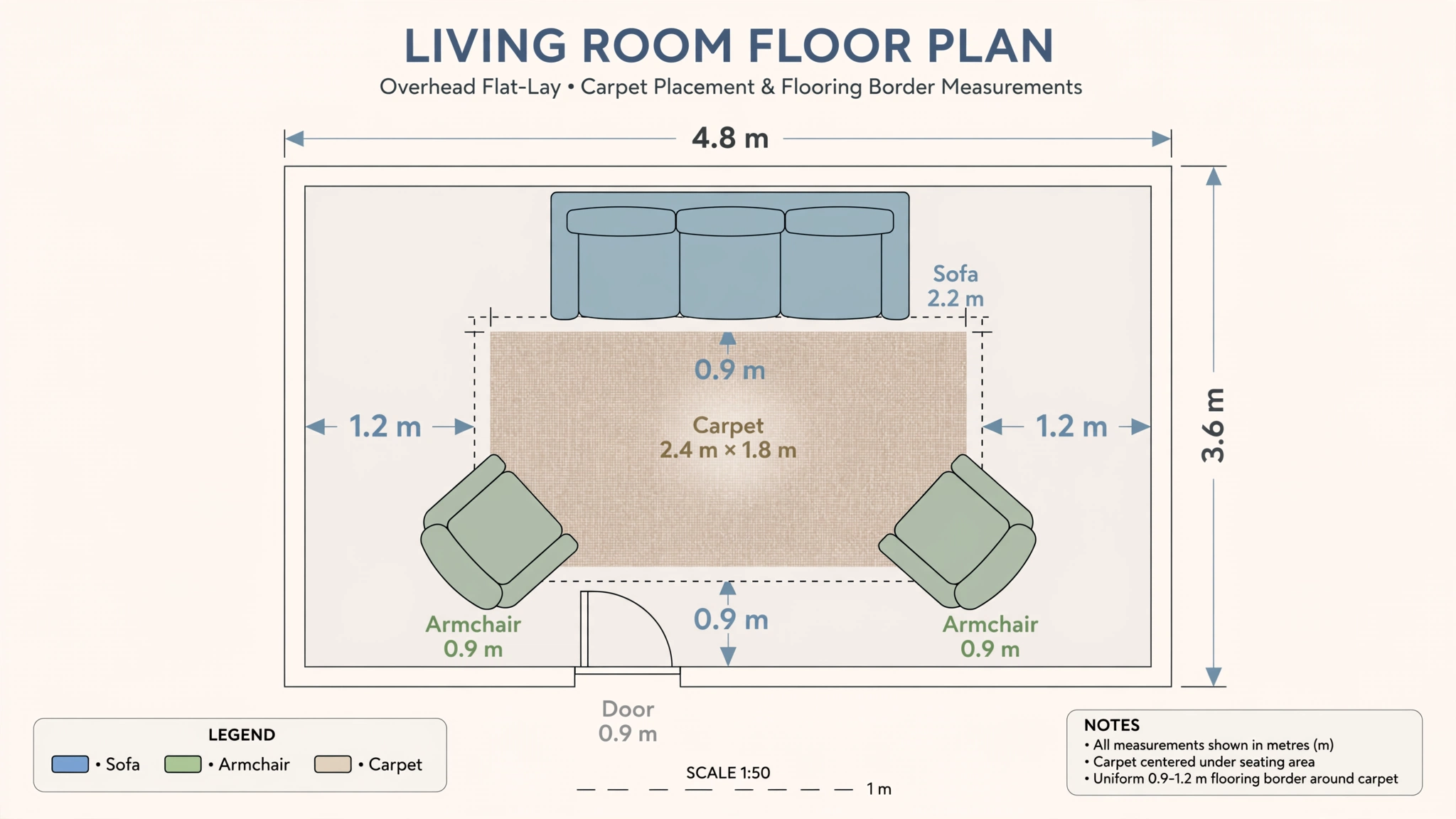
A properly sized carpet leaves a consistent border of flooring while anchoring the room’s main furniture pieces.
Leaving the Right Border of Flooring
In most rooms, leaving a visible border of flooring around the carpet’s edge — typically 12 to 24 inches for larger rooms, and a smaller margin for compact spaces — helps the carpet look intentional rather than like it was simply the largest option that would fit. Carpets pushed all the way to the walls can occasionally work in very small rooms, but in most cases, that approach is better suited to wall-to-wall carpet than a standalone area rug. If you’re deciding between wall-to-wall carpet and an area rug in the first place, our guide on the difference between a carpet and a rug can help you figure out which approach actually fits your room and goals.
Test Before You Buy
A simple, low-cost way to confirm a size before committing: use painter’s tape to mark out the expected carpet dimensions directly on your floor. This gives you a realistic, full-scale preview of how the size will actually look and feel in the room — including whether furniture will comfortably fit on it and whether doors will still swing freely — before you spend money on a carpet that might not be right.
If You’re Installing Wall-to-Wall Carpet Instead
Everything above applies to area rugs and standalone carpets, but if you’re installing wall-to-wall carpet, “size” works differently — you’re covering the entire room edge to edge rather than choosing a proportional size. In that case, the more relevant consideration is how your room’s dimensions compare to standard carpet roll widths, since a room wider than the roll will require a seam. Our guide on how wide a roll of carpet is covers standard roll widths and how to plan around them to minimize visible seams.
Common Mistakes to Avoid
- Buying a carpet that’s too small, leaving furniture floating disconnected from it in the middle of the room
- Ignoring door clearance, resulting in a carpet edge that catches on a door as it swings open
- Mismatching carpet shape to furniture arrangement — a round carpet under a rectangular sofa arrangement, for example, rarely looks intentional
- Skipping the painter’s tape test, and finding out only after installation or delivery that the size doesn’t work
- Forgetting walkway clearance in hallways or high-traffic paths, where a rug edge that’s too close to a walking path can become a tripping hazard
Frequently Asked Questions
What is the standard carpet size for a living room?
A 9’x12′ carpet is a common standard for a typical-sized living room, though medium rooms often work well with an 8’x10′ and larger rooms may need a 10’x14′ or bigger to properly anchor the furniture.
Should furniture legs be on or off the carpet?
At minimum, the front legs of sofas and chairs should rest on the carpet. In larger rooms, it’s best to have all four legs of major furniture pieces resting on the carpet for a fully cohesive layout.
How much space should be left between the carpet and the wall?
A border of about 12 to 24 inches of visible flooring around the carpet’s edge typically looks best in larger rooms, with a smaller margin appropriate for compact spaces.
What size carpet should go under a dining table?
The carpet should extend roughly 24 to 30 inches beyond the edge of the table on all sides, so chairs can be pulled out fully without catching on the carpet’s border.
How is wall-to-wall carpet sized differently from an area rug?
Wall-to-wall carpet covers the entire room edge to edge rather than being chosen in a proportional size, so the key consideration becomes the room’s dimensions relative to standard carpet roll widths rather than furniture-based sizing rules.
Deciding between an area rug and wall-to-wall carpet? Explore our guides on the difference between a carpet and a rug and how wide a roll of carpet is, or browse more flooring guides on Ayaan Home Decor.
Last modified: August 7, 2026