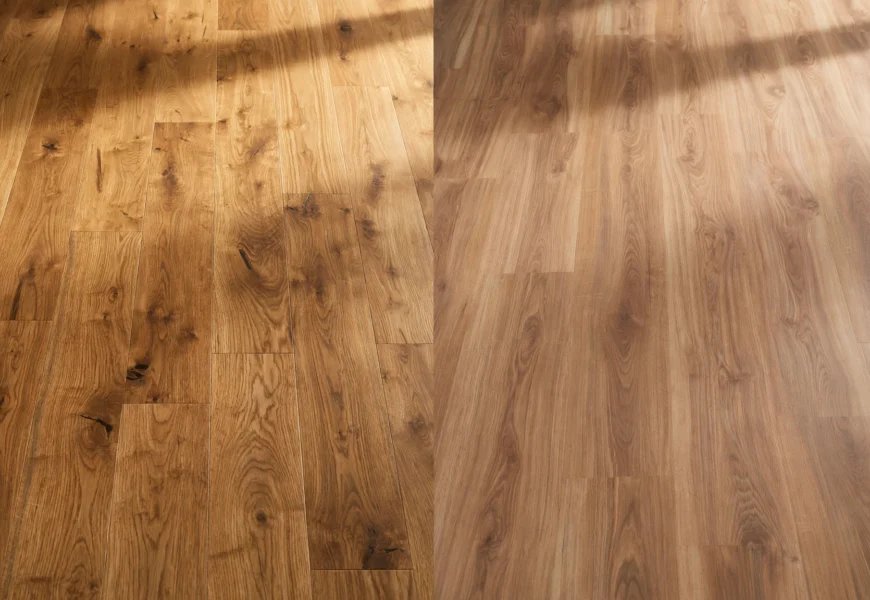
Laminate and engineered flooring get confused constantly, and it’s easy to see why — both come in convincing wood-look planks, both click together during installation, and both sit in the same “hardwood alternative” category at most flooring retailers. But one of them is made from real wood and one isn’t, and that single difference shapes almost everything else about how they perform.
Quick Answer: The core difference is what’s on top. Engineered flooring has a genuine hardwood veneer bonded to a plywood or fiberboard base, giving it the authentic look, texture, and refinishing ability of real wood. Laminate flooring is entirely synthetic — a high-resolution photographic image of wood sealed under a clear protective wear layer, with no real wood content at all. This one distinction drives the differences in appearance, durability, cost, water resistance, and resale value between the two.
Here’s a full breakdown of how each is made and which one actually fits your project.
What Engineered Flooring Is Made Of
Engineered hardwood is constructed from several thin plies of wood bonded together in a cross-layered pattern, topped with a layer of genuine hardwood — commonly oak, maple, or walnut. The layers beneath the top veneer are typically made from more affordable wood like plywood or poplar. This cross-ply construction gives engineered wood better dimensional stability than solid hardwood, meaning it resists the shrinking and expanding that solid wood experiences with seasonal humidity changes.
The top wood layer usually ranges from about 1/8 inch to 1/2 inch thick, and can typically be refinished once or twice before the veneer is worn through completely.
What Laminate Flooring Is Made Of
Laminate flooring is made almost entirely of compressed fiberboard, built from four main layers: a backing layer, a high-density fiberboard core, a photographic image layer that replicates wood grain (or stone, tile, or other patterns), and a clear protective wear layer on top. There’s no real wood content anywhere in the product — the “wood look” comes entirely from the printed layer.
Like most engineered products, laminate is installed as a floating floor, with individual planks clicking together over a thin underlayment rather than being nailed or glued directly to the subfloor. If you’re planning a laminate installation, our guide on the tongue side of laminate flooring walks through exactly how that click-lock system works.
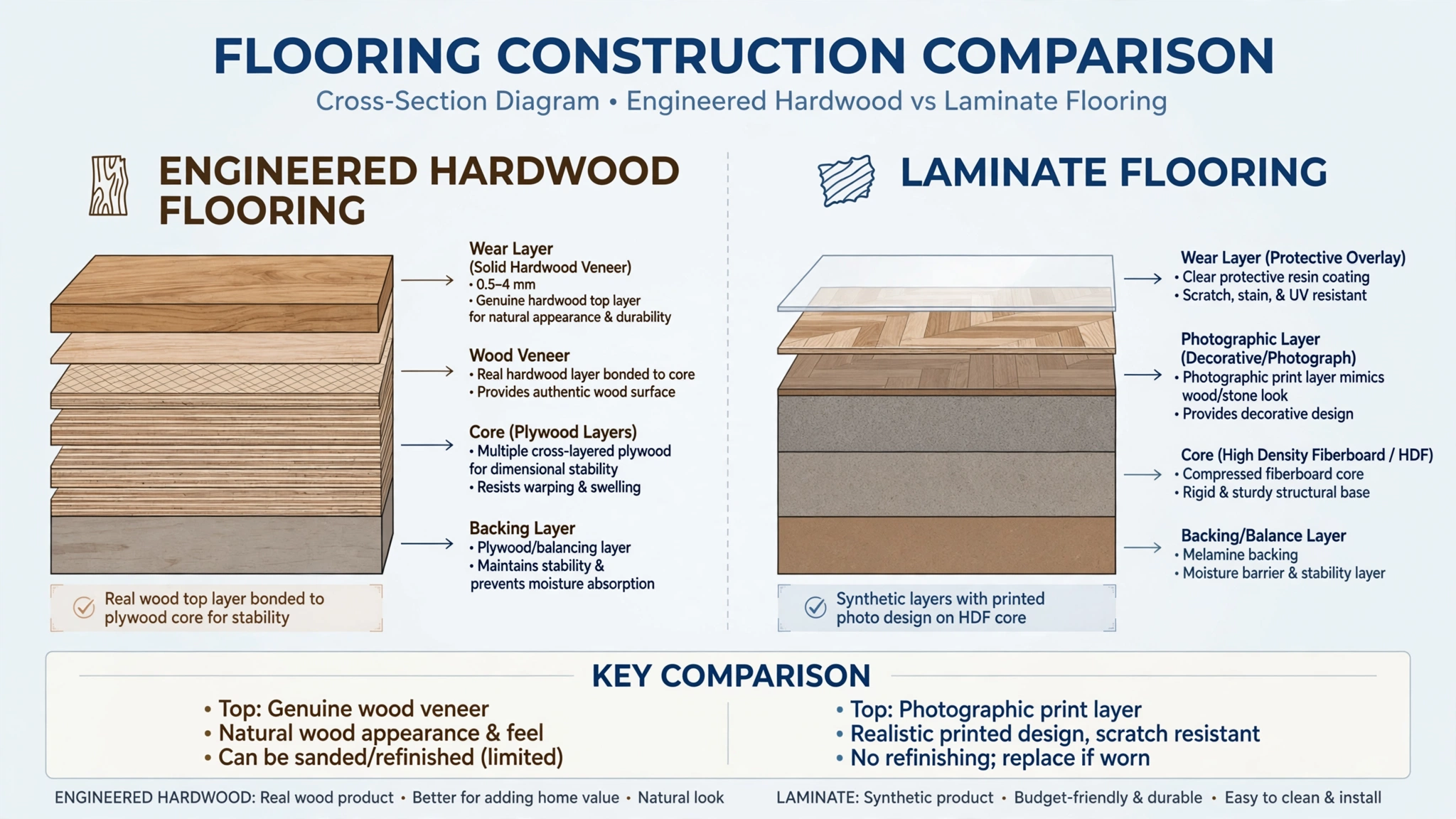
Engineered flooring’s top layer is real hardwood veneer, while laminate’s top layer is a photographic image sealed under a wear layer.
Laminate vs. Engineered Flooring: Full Comparison
| Factor | Engineered Flooring | Laminate Flooring |
|---|---|---|
| Top layer | Genuine hardwood veneer | Photographic image layer |
| Real wood content | Yes | No |
| Appearance | Authentic wood grain and depth | Realistic, but can look slightly repetitive up close |
| Refinishable | Yes, typically once or twice | No |
| Lifespan | Up to 50–100 years with proper care | 15–25 years |
| Water resistance | Moderate; more stable than solid wood but not waterproof | Good on top surface; some product lines are fully waterproof |
| Scratch resistance | Good, but more prone to dents than laminate | Very good; often more scratch-resistant than engineered wood |
| Cost | Higher | Lower |
| Installation | Nail-down, glue-down, or floating | Floating (click-lock), DIY-friendly |
| Resale value impact | Generally viewed favorably, closer to solid hardwood | Neutral to slightly less favorable than engineered wood |
Appearance: Real Grain vs. Printed Grain
Because engineered flooring’s surface is genuine wood, it has authentic grain variation, depth, and texture that’s difficult to fully replicate — every plank looks subtly different, the way real hardwood does. Laminate has improved dramatically over the years, with high-resolution printing and embossed textures that closely mimic wood grain, but because the same images are reused across a production run, sharp-eyed buyers can sometimes spot repeating patterns across a large installed area.
Durability and Lifespan
This is where the two diverge in opposite directions depending on what kind of wear you’re worried about:
- Engineered flooring can last up to 50 to 100 years with proper care, and its real wood surface can be refinished once or twice to remove scratches and restore its finish — though it’s generally more prone to dents and scratches day-to-day than laminate’s harder wear layer.
- Laminate flooring typically lasts 15 to 25 years and offers strong scratch resistance thanks to its tough resin wear layer, making it a popular choice for households with pets or kids — but once that wear layer is damaged beyond repair, laminate cannot be refinished and the affected planks need to be replaced entirely.
Water Resistance
Neither material is a perfect match for consistently wet rooms, but they fail differently. Laminate resists surface moisture well, and some newer product lines are marketed as fully waterproof, making certain laminate options viable for bathrooms or basements. Engineered wood is more moisture-stable than solid hardwood thanks to its cross-ply construction, but it’s still a real wood product at its core and can be damaged by standing water or prolonged humidity exposure. If water resistance is your top priority over an authentic wood look, it’s worth comparing both against a fully synthetic option — our guide on the difference between vinyl and laminate flooring covers how vinyl’s waterproof construction stacks up against laminate specifically.
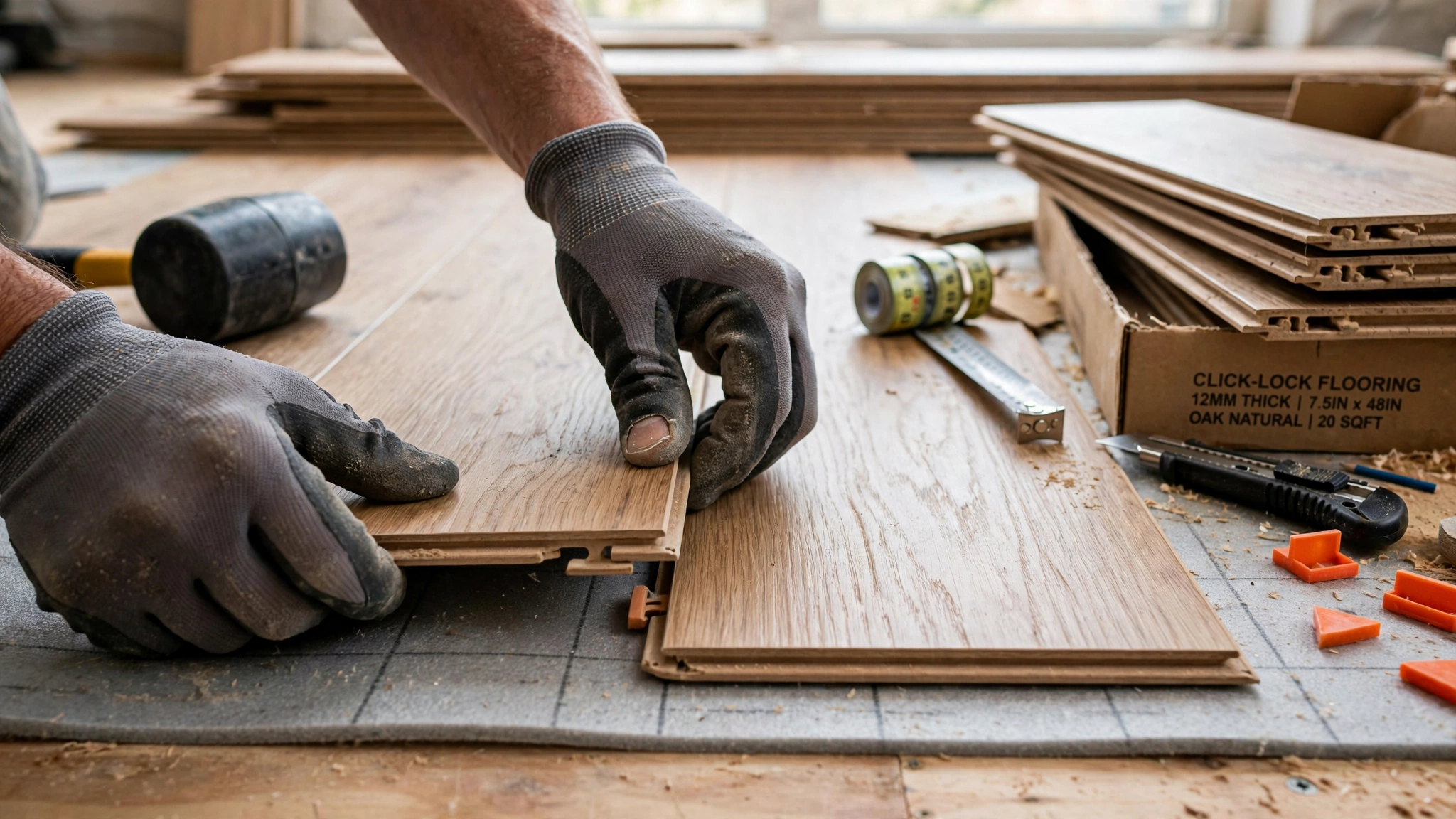
Both engineered hardwood and laminate are commonly installed as floating floors using a click-lock system.
Cost Comparison
Laminate is generally the more budget-friendly option of the two, with pricing that scales up based on AC wear ratings, added texture, and spill-protection technology. Engineered hardwood typically costs more, with price driven largely by the thickness and species of the top wood veneer — a thicker veneer allows for more refinishing over the floor’s lifetime, which factors into the higher upfront cost. According to Lowe’s buying guide, engineered wood’s higher initial cost is often offset by added value at resale, since it reads as a closer match to solid hardwood than laminate does.
Installation and Maintenance
Both materials are commonly installed as floating floors that click together, making them more DIY-accessible than solid hardwood or tile. If your subfloor needs prep work before either installation, our guide on what a subfloor is covers what to check first.
Day-to-day maintenance is similar for both — regular sweeping and occasional damp mopping — though engineered hardwood benefits from being treated more like solid wood over time (avoiding excess standing water, using furniture pads), while laminate is generally more forgiving of everyday spills and foot traffic.
Resale Value
According to HomeAdvisor’s comparison, engineered hardwood is generally viewed more favorably by buyers and appraisers than laminate, since its real wood surface reads much closer to solid hardwood flooring — a material with strong, well-established resale value. Laminate, while a practical and attractive option to live with, typically doesn’t carry the same resale premium.
Which One Should You Choose?
- Choose engineered flooring if: you want the authentic look and feel of real hardwood, plan to stay in the home long enough to benefit from refinishing, or care about maximizing resale value.
- Choose laminate if: budget and scratch resistance are top priorities, you want a fully DIY-friendly installation, or you’re flooring a space used by kids or pets where surface durability matters more than an authentic wood surface.
Frequently Asked Questions
Is engineered flooring better than laminate?
Not universally “better” — engineered flooring offers a more authentic wood look, refinishing ability, and stronger resale value, while laminate offers better scratch resistance, a lower price point, and easier DIY installation.
Can laminate flooring be refinished like engineered wood?
No. Laminate’s top layer is a printed image under a wear layer, not real wood, so it cannot be sanded and refinished. Once damaged, individual planks need to be replaced.
Which lasts longer, laminate or engineered flooring?
Engineered flooring generally lasts longer — up to 50 to 100 years with proper care and occasional refinishing — compared to laminate’s typical 15 to 25 year lifespan.
Is laminate or engineered flooring more water-resistant?
It varies by product line, but many laminate options offer strong surface water resistance, with some fully waterproof lines available. Engineered wood is more moisture-stable than solid hardwood but isn’t waterproof, since it retains real wood in its construction.
Does engineered flooring increase home value more than laminate?
Generally, yes. Engineered hardwood is typically viewed more favorably by buyers and appraisers due to its closer resemblance to solid hardwood flooring, while laminate doesn’t usually carry the same resale premium.
Still comparing flooring options? Explore our guides on vinyl vs. laminate flooring and the cost to remove carpet and install hardwood, or browse more flooring comparisons on Ayaan Home Decor.
Last modified: August 7, 2026