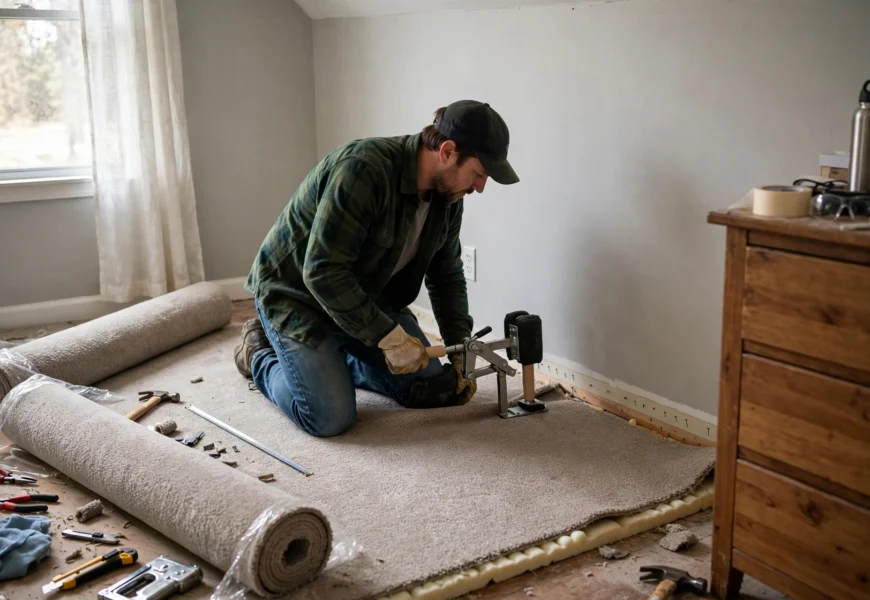
“How hard can it be?” is the question a lot of homeowners ask right before renting a carpet stretcher for the first time. The honest answer depends heavily on what kind of carpet you’re installing and what kind of room you’re installing it in — some projects are genuinely weekend-friendly, while others are the kind of job experienced installers spend years learning to do well.
Quick Answer: Laying carpet yourself ranges from beginner-friendly to genuinely difficult depending on the installation type and room. Peel-and-stick carpet tiles or pad-attached carpet are reasonably easy DIY projects. Traditional stretch-in carpet — which requires a power stretcher, knee kicker, and seaming tools — is significantly harder, and most professionals agree that stairs, whole-house installations, and patterned carpet are better left to experienced installers, since mistakes are expensive and can void your carpet’s warranty.
Here’s a full, honest breakdown of the difficulty by project type, what tools you’ll need, and how to decide whether to DIY or hire it out.
It Depends Heavily on the Type of Carpet Installation
Not all carpet installation is created equal. The method you choose has a bigger impact on difficulty than almost anything else:
| Installation Type | Difficulty | Notes |
|---|---|---|
| Carpet tiles / peel-and-stick | Easy | No stretching required; ideal for beginners |
| Pad-attached (cushion-backed) carpet | Easy–Moderate | Measure, cut, and lay; minimal specialized tools needed |
| Glue-down carpet | Moderate | Common for commercial spaces or basements; requires careful adhesive application |
| Traditional stretch-in carpet | Difficult | Requires tack strips, power stretcher, knee kicker, and seaming skills |
| Stairs or patterned carpet | Very Difficult | High skill ceiling; mistakes are costly and highly visible |
If you’re weighing carpet against other flooring options that might be more DIY-friendly, our guide on the cost to remove carpet and install hardwood breaks down how that project compares in cost and effort.
Why Traditional Stretch-In Carpet Is the Hard Part
Most of the difficulty people run into comes down to one installation method: traditional stretch-in carpet, which is what’s used for most wall-to-wall residential carpet. The process involves:
- Installing tack strips around the room’s perimeter
- Laying and securing carpet padding
- Cutting and positioning the carpet with several extra inches of excess material
- Using a knee kicker to work the carpet toward the walls
- Using a power stretcher to pull the carpet taut across the room and hook it onto the tack strips
- Seaming multiple pieces together with a heat-activated seaming iron if the room is wider than a single carpet roll
Each of these steps has a real learning curve. A carpet that isn’t stretched tightly enough will bubble, ripple, or loosen within weeks, and getting a seam invisible takes practice most first-timers don’t have. As one experienced installer put it in an online home improvement forum, laying carpet that “looks like crap in four weeks is easy — stretching, tacking, and seaming it so it looks good and lasts for years” is the genuinely hard part.
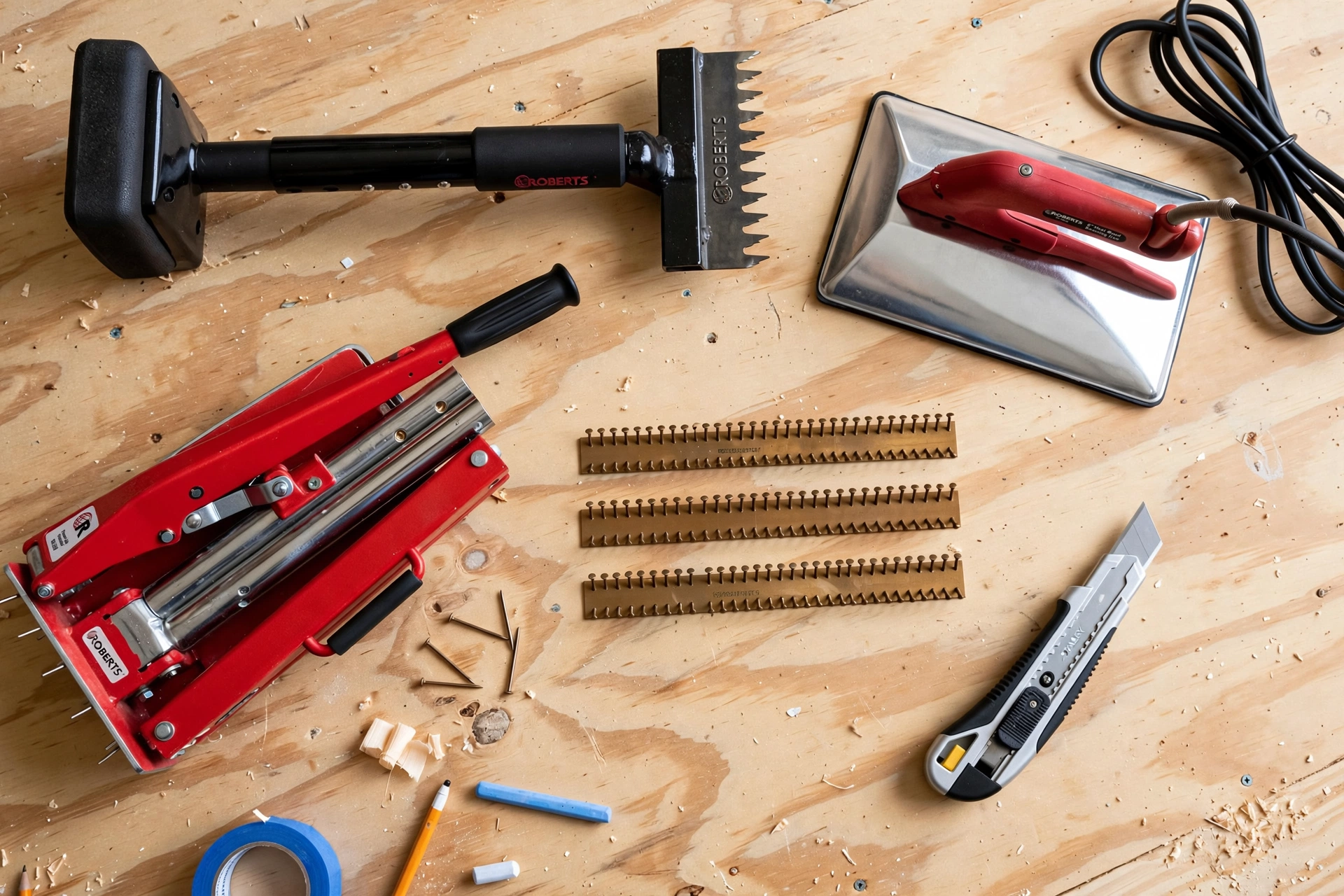
A knee kicker, power stretcher, and seaming iron are specialized tools most homeowners don’t already own.
Difficulty by Room Type
Beyond the installation method, the room itself matters just as much:
- Single rectangular room, no stairs: A reasonable DIY project for a handy homeowner with the right tools and a free weekend.
- Rooms requiring seams: Joining carpet pieces adds real difficulty — getting fiber direction and seam placement right takes a careful hand.
- Stairs: Widely considered one of the hardest parts of carpet installation, since each step requires precise cutting, stapling, and tucking that’s difficult to get consistent across an entire staircase.
- Whole-house installations: More rooms mean more opportunities for measurement errors, wasted material, and inconsistent results across large areas.
- Patterned carpet: Matching a pattern across seams adds a layer of precision that trips up even some less-experienced professionals.
Before tackling any of these, getting an accurate measurement is essential — our guide on how to determine square footage of a room walks through the exact process, and it’s worth understanding how wide a standard carpet roll is before planning where seams will fall in a larger room.
What You’ll Need for a Traditional DIY Install
- Tack strips and a hammer or stapler
- Carpet padding
- A utility knife and a carpet knife
- A knee kicker
- A power stretcher (often a rental item)
- A seaming iron and heat-activated seam tape, if joining multiple pieces
- A stair tool, if carpeting stairs
Many of these tools aren’t things most households already own, and rental costs for a power stretcher and knee kicker should be factored into your overall DIY budget.
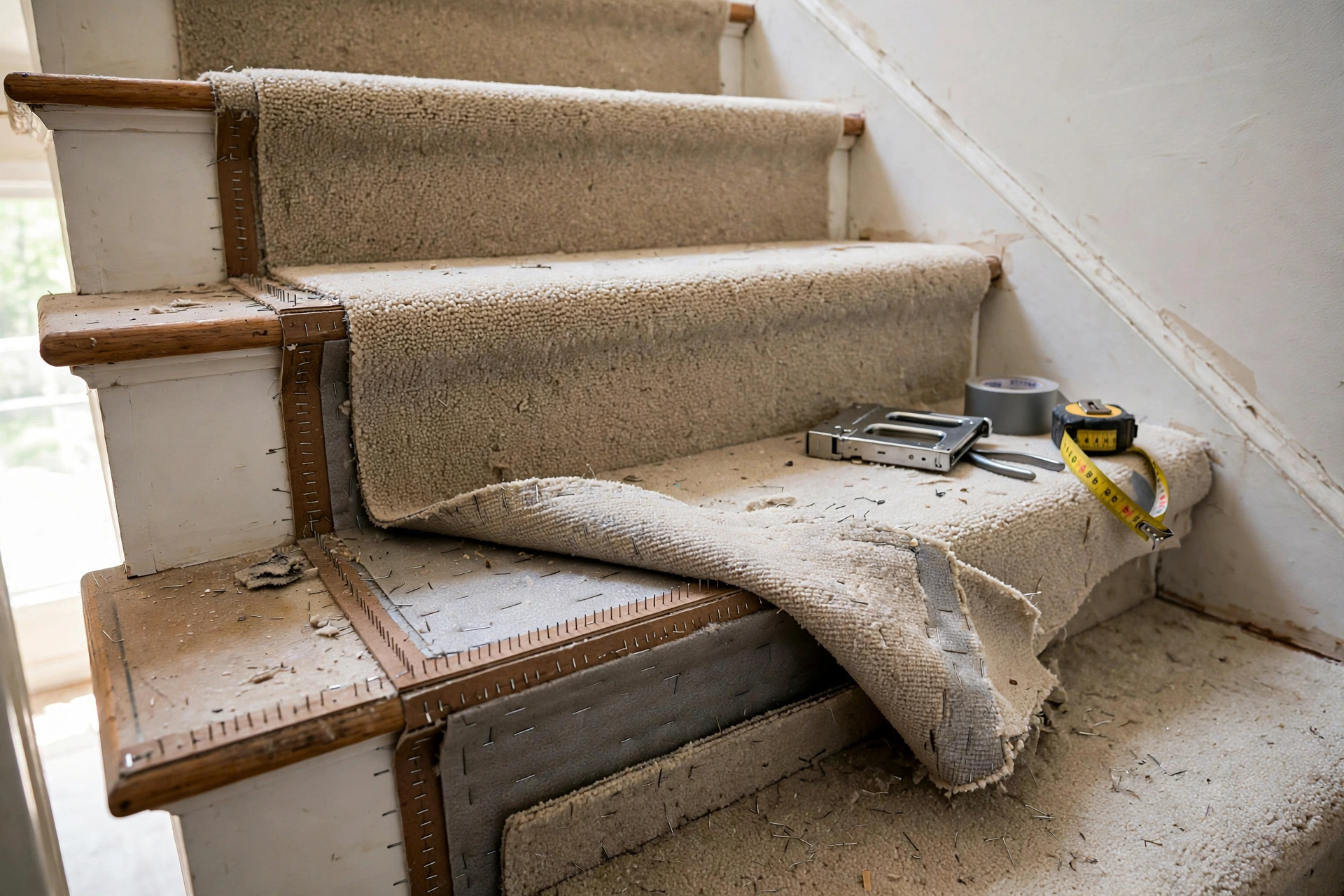
Stairs are widely considered one of the most difficult parts of a carpet installation to get right.
DIY Savings vs. the Risk of a Failed Attempt
Realistic savings from DIY carpet installation typically range from $1,000 to $2,500 on a standard residential project, according to Floors2Day’s carpet installation difficulty guide. But that savings can disappear quickly — and even go negative — if a failed attempt requires hiring a professional to fix bubbling, loose seams, or improperly stretched carpet. It’s also worth checking your carpet’s warranty terms before starting: many manufacturer warranties require professional installation to remain valid, so a DIY mistake can end up costing you both the repair and any warranty protection you would have otherwise had.
When to DIY vs. When to Hire a Professional
DIY makes sense if:
- You’re installing carpet tiles, peel-and-stick, or pad-attached carpet
- The room is a simple rectangle with no stairs
- You’re comfortable renting and learning to use a power stretcher and knee kicker
- The project is small enough that a mistake wouldn’t be a major financial setback
Hiring a professional makes sense if:
- The project involves stairs, patterned carpet, or multiple rooms
- You need seams to be close to invisible
- Your carpet’s warranty requires professional installation
- You want the finished result to last for years without bubbling or loosening, which HomeStuffWorks notes is one of the main advantages certified installers bring to the job
Frequently Asked Questions
Can a beginner install carpet themselves?
Yes, for simpler projects like carpet tiles, peel-and-stick carpet, or pad-attached carpet in a single rectangular room. Traditional stretch-in carpet with tack strips and a power stretcher has a much steeper learning curve.
What’s the hardest part of installing carpet?
Stretching the carpet tightly and evenly across the room, seaming multiple pieces so the joint is invisible, and installing carpet on stairs are generally considered the most difficult parts of the process.
How much money can I save by installing carpet myself?
Realistic savings typically range from $1,000 to $2,500 on a standard residential installation, though those savings can disappear if a failed DIY attempt requires professional repair.
Does installing carpet myself void the warranty?
It can. Many carpet manufacturer warranties require professional installation to remain valid, so it’s worth checking your specific warranty terms before deciding to DIY.
Is it easier to install carpet tiles than wall-to-wall carpet?
Yes, significantly. Carpet tiles and peel-and-stick options don’t require stretching, tack strips, or a power stretcher, making them a much more beginner-friendly option than traditional stretch-in carpet.
Planning a full flooring project? Make sure you’ve measured accurately with our guide on how to determine square footage of a room, and explore more flooring guides on Ayaan Home Decor.
Last modified: August 5, 2026