If you already know that porcelain is denser and less porous than ceramic, the next real question is a practical one: is it actually worth paying more for, and where in your home does that difference matter most? This guide breaks down real 2026 pricing, where each material earns its cost, and where ceramic is genuinely the smarter buy. For a hands-on guide to physically telling the two apart at a store or on an existing floor, see our guide on how to tell the difference between ceramic and porcelain tile.
Quick Answer: Porcelain tile typically costs 20 to 150% more than ceramic per square foot ($3–$15 material / $6–$25 installed for porcelain vs. $0.50–$8 material / $4–$9 installed for ceramic), but it earns that premium with a water absorption rate below 0.5% (versus 3–7% for ceramic), frost resistance suitable for outdoor use, and roughly double the lifespan in high-traffic or wet areas. Ceramic remains the smarter choice for walls, backsplashes, and dry, low-traffic rooms where its lower cost isn’t offset by any real performance disadvantage.
Real 2026 Cost Comparison
| Ceramic Tile | Porcelain Tile | |
|---|---|---|
| Material cost | $0.50 – $8 per sq ft | $1 – $15 per sq ft |
| Installed cost | $4 – $9 per sq ft | $6 – $25 per sq ft |
| Installation labor | Standard; can often be scored and snapped | $1–$3 more per sq ft; requires a wet saw with diamond blade |
| Water absorption | 3% – 7% | Under 0.5% |
| Typical lifespan | 20–30 years | 30–50+ years in the same conditions |
| Outdoor/frost rated | No | Yes |
Pricing varies significantly by region and tile format, but porcelain’s premium holds fairly consistently across sources at roughly 20 to 40% more than ceramic for standard residential tile, with the gap widening further for large-format or outdoor-rated porcelain.
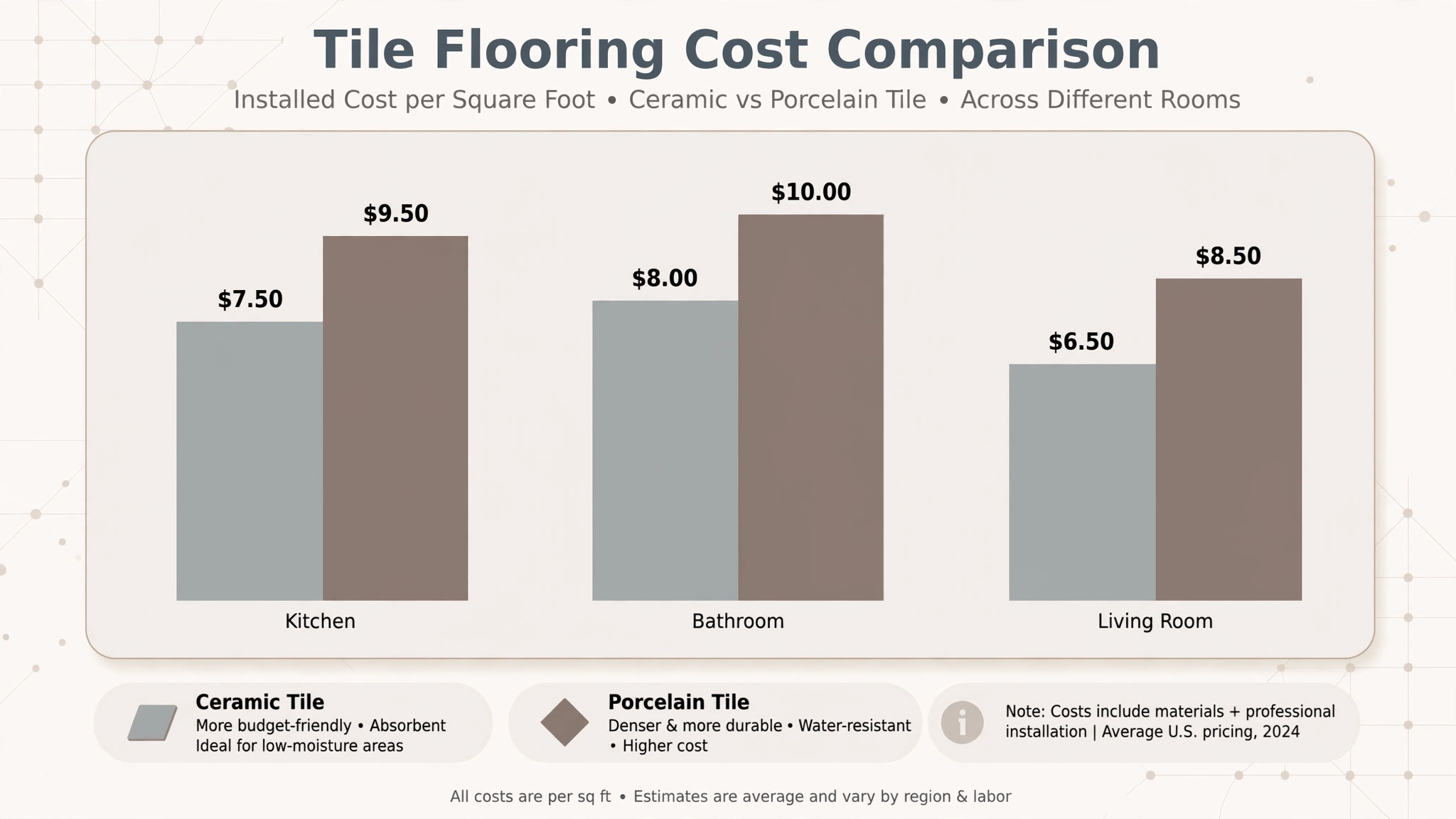
orcelain’s price premium is most justified in wet, high-traffic, or outdoor spaces where its durability advantage matters most.
Does the Extra Cost Actually Pay Off? The Lifetime Math
Sticker price alone doesn’t tell the full story. One useful way to compare the two is cost per year of expected lifespan: a mid-range porcelain floor installed at roughly $18 per square foot and lasting 30 years works out to about $0.60 per square foot per year. A ceramic floor installed at roughly $12 per square foot and lasting 20 years in the same conditions works out to almost the same annual cost — but porcelain still comes out ahead in that scenario because of its added scratch and water resistance over those extra years. In other words, porcelain’s higher upfront cost often evens out or wins over time in demanding spaces, while ceramic remains the better value in rooms that won’t stress-test either material.
Where Porcelain’s Extra Cost Is Worth It
- Outdoor patios, pool decks, and balconies — Porcelain’s near-zero water absorption makes it genuinely frost-resistant, which matters in any climate with freeze-thaw cycles; ceramic can crack under the same conditions as absorbed moisture expands when frozen.
- Bathroom and shower floors — Constant moisture exposure favors porcelain’s superior water resistance, especially over decades of daily use.
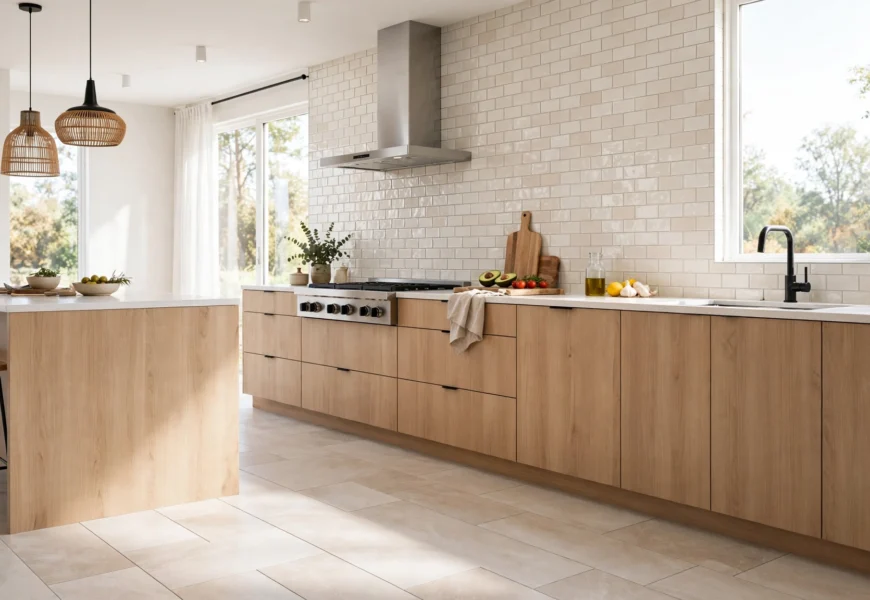
- Kitchen floors — Heavy foot traffic, dropped items, and frequent spills favor porcelain’s hardness and stain resistance.
- Entryways and mudrooms — High-impact, high-traffic zones where porcelain’s scratch resistance prevents the kind of wear that shortens ceramic’s usable life.
If you’re specifically flooring a bathroom, our guide on good bathroom floor materials covers how porcelain stacks up against vinyl, stone, and other options for that particular room.
Where Ceramic Is Still the Smarter Choice
- Walls, backsplashes, and shower surrounds — These surfaces face minimal physical impact and limited standing moisture, so ceramic’s lower cost isn’t offset by any meaningful performance gap.
- Powder rooms and other dry, low-traffic floors — Rooms with light use rarely stress-test the durability difference enough to justify porcelain’s premium.
- Decorative or artistic installations — Ceramic’s glaze is applied before firing, which allows for richer, more vibrant colors and intricate patterns that can outperform basic porcelain on pure visual appeal.
- Rental properties and budget remodels — Where minimizing upfront cost matters more than maximizing lifespan.
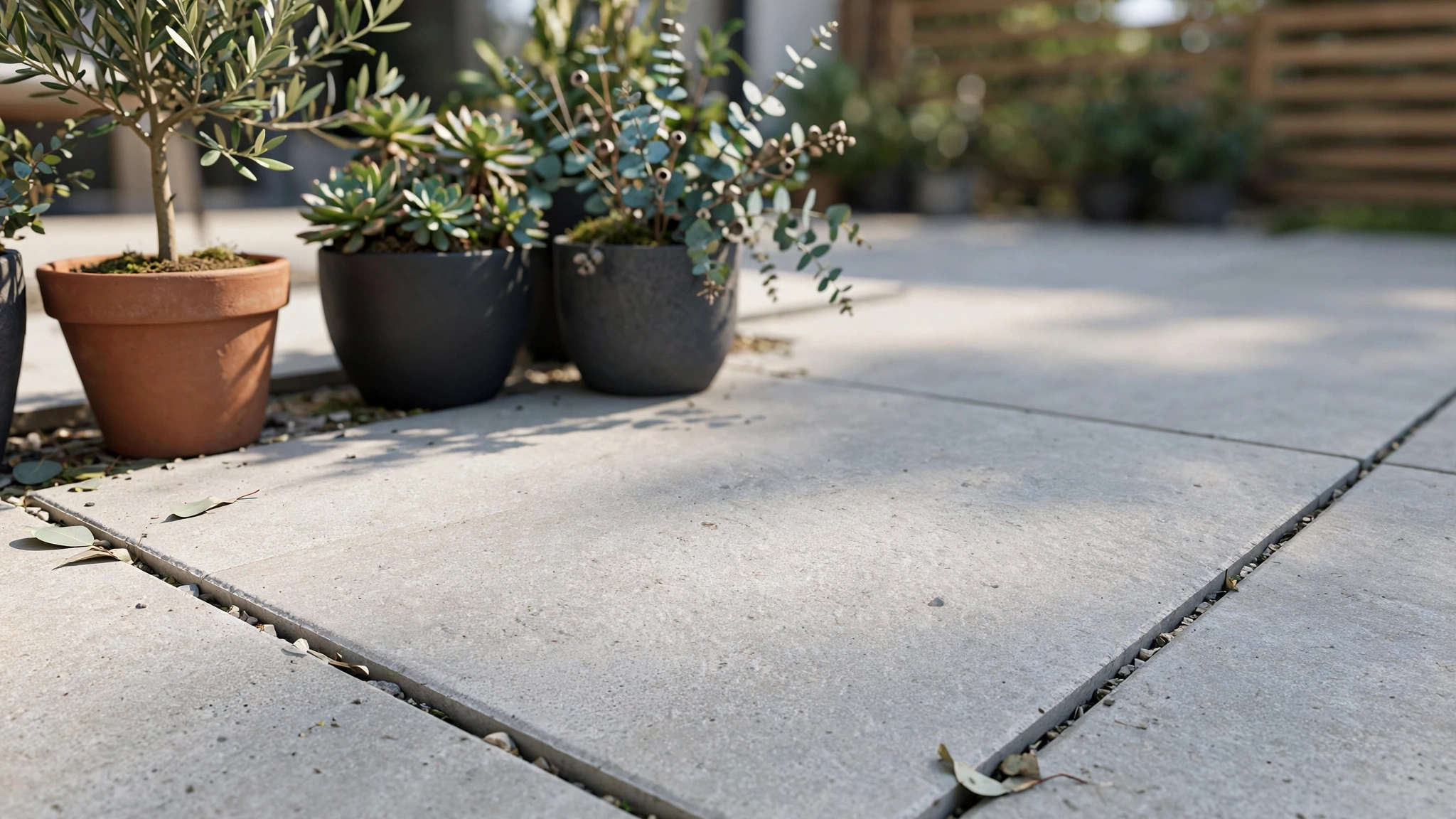
Porcelain’s near-zero water absorption makes it one of the few tile materials genuinely suited to outdoor, freeze-prone climates.
Room-by-Room Recommendation
| Room | Recommended Tile | Why |
|---|---|---|
| Kitchen floor | Porcelain | Handles heavy traffic, spills, and dropped items better long-term |
| Kitchen backsplash | Ceramic | Minimal moisture and impact; cost savings meaningful here |
| Bathroom floor | Porcelain | Constant moisture exposure demands lower water absorption |
| Bathroom walls | Ceramic | Fine for dry, low-impact vertical surfaces |
| Outdoor patio/pool deck | Porcelain (frost-rated) | Only tile type reliably rated for freeze-thaw climates |
| Entryway/mudroom | Porcelain | High-traffic, high-impact zone |
| Powder room floor | Either | Low traffic makes either a reasonable, budget-flexible choice |
If your project spans both walls and floors, our guide on the difference between wall tile and grout is a useful companion read for planning the full job.
Frequently Asked Questions
Is porcelain tile worth the extra cost over ceramic?
In wet, high-traffic, or outdoor spaces, yes — porcelain’s added durability and water resistance typically offset its higher price over the tile’s lifespan. In dry, low-traffic areas like walls or powder rooms, ceramic often delivers comparable long-term value at a lower upfront cost.
How much more expensive is porcelain than ceramic per square foot?
Porcelain typically costs 20 to 40% more than ceramic for standard residential tile, though the gap can widen to 50–150% for premium or large-format porcelain products.
Can ceramic tile be used outdoors?
Unglazed ceramic can be used outdoors in mild, non-freezing climates, but it’s not frost-resistant, making it a poor choice for regions with freeze-thaw cycles. Porcelain is the more reliable option for outdoor and cold-climate applications.
Which tile lasts longer, ceramic or porcelain?
Porcelain generally lasts longer — often 30 to 50+ years in demanding conditions — compared to ceramic’s typical 20 to 30 year lifespan in the same setting, largely due to porcelain’s lower water absorption and greater hardness.
Is porcelain always the better choice for a kitchen floor?
For most US homes, yes. Kitchen floors experience daily spills, heavy foot traffic, and dropped items — conditions where porcelain’s superior hardness and water resistance consistently outperform ceramic over time.
Want the practical, hands-on way to identify which tile you’re looking at? Read our guide on how to tell the difference between ceramic and porcelain tile, or explore more flooring and material guides on Ayaan Home Decor.
Last modified: August 8, 2026