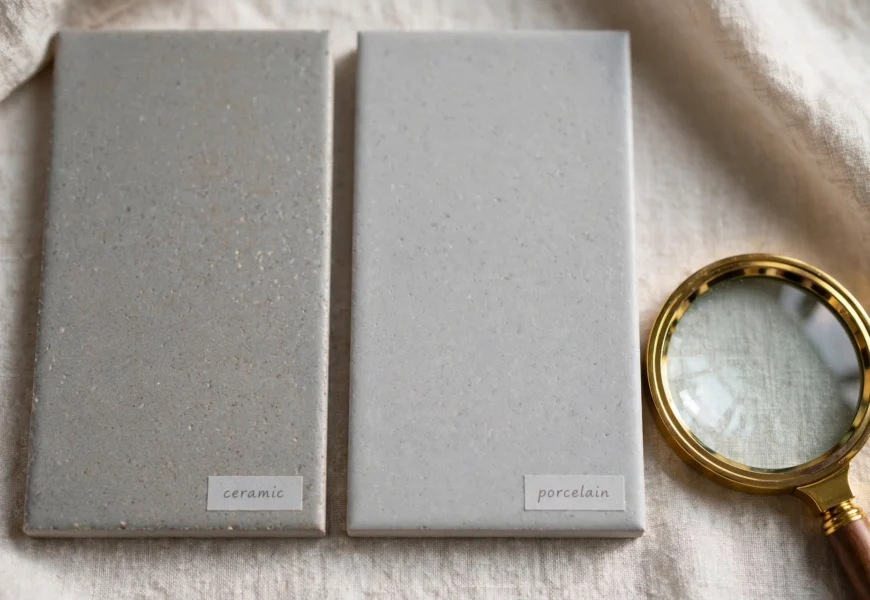
Stand two tiles next to each other in a showroom and you’d be forgiven for not being able to tell which one is ceramic and which is porcelain — even design professionals admit the visual differences can be genuinely subtle. The real distinction lies underneath the surface, in how each tile is made, and there are a handful of reliable, hands-on ways to tell them apart.
Quick Answer: Porcelain tile is technically a denser, more refined type of ceramic tile, made from finer clay and fired at higher temperatures (typically 2,200–2,500°F versus 1,800–2,000°F for standard ceramic). This makes porcelain heavier, harder, and far less porous. To tell them apart, check the packaging label first; if that’s not available, compare weight (porcelain is heavier), examine the edges (porcelain has cleaner, straighter edges), or look at a chipped or cut piece (porcelain is the same color all the way through, while ceramic often shows a different color beneath its glazed surface).
Here’s a full breakdown of how each is made and six practical ways to identify which one you’re looking at.
Porcelain Is Technically a Type of Ceramic
Before getting into how to tell them apart, it helps to understand that porcelain isn’t a completely separate material — it’s a denser, more refined subtype within the broader ceramic tile category. Both are made from clay and fired in a kiln, but the specific clay used and the firing process differ enough to create two tiles with meaningfully different performance characteristics.
- Ceramic tile is made from a coarser clay mixture (often including sand and other minerals), fired at lower temperatures, typically around 1,800–2,000°F.
- Porcelain tile is made from finer, more refined clay — often including kaolin and feldspar — and fired at much higher temperatures, typically 2,200–2,500°F.
That higher firing temperature and finer clay are what make porcelain denser, harder, and significantly less porous than standard ceramic.
6 Practical Ways to Tell Ceramic and Porcelain Apart
1. Check the Packaging or Label
This is the fastest and most reliable method if you’re shopping for new tile. Manufacturers are required to clearly label their products, so look for terms like “porcelain,” “porcelain stoneware,” or “ceramic tile” directly on the box. Many porcelain products are also certified through the American Society for Testing and Materials (ASTM) or carry a Porcelain Enamel Institute (PEI) rating, both of which will typically be listed on the packaging.
2. Compare the Weight
Pick up a loose tile in each hand if you can. Porcelain’s denser composition makes it noticeably heavier than a ceramic tile of the same size — this is one of the quickest hands-on checks if labels aren’t available.
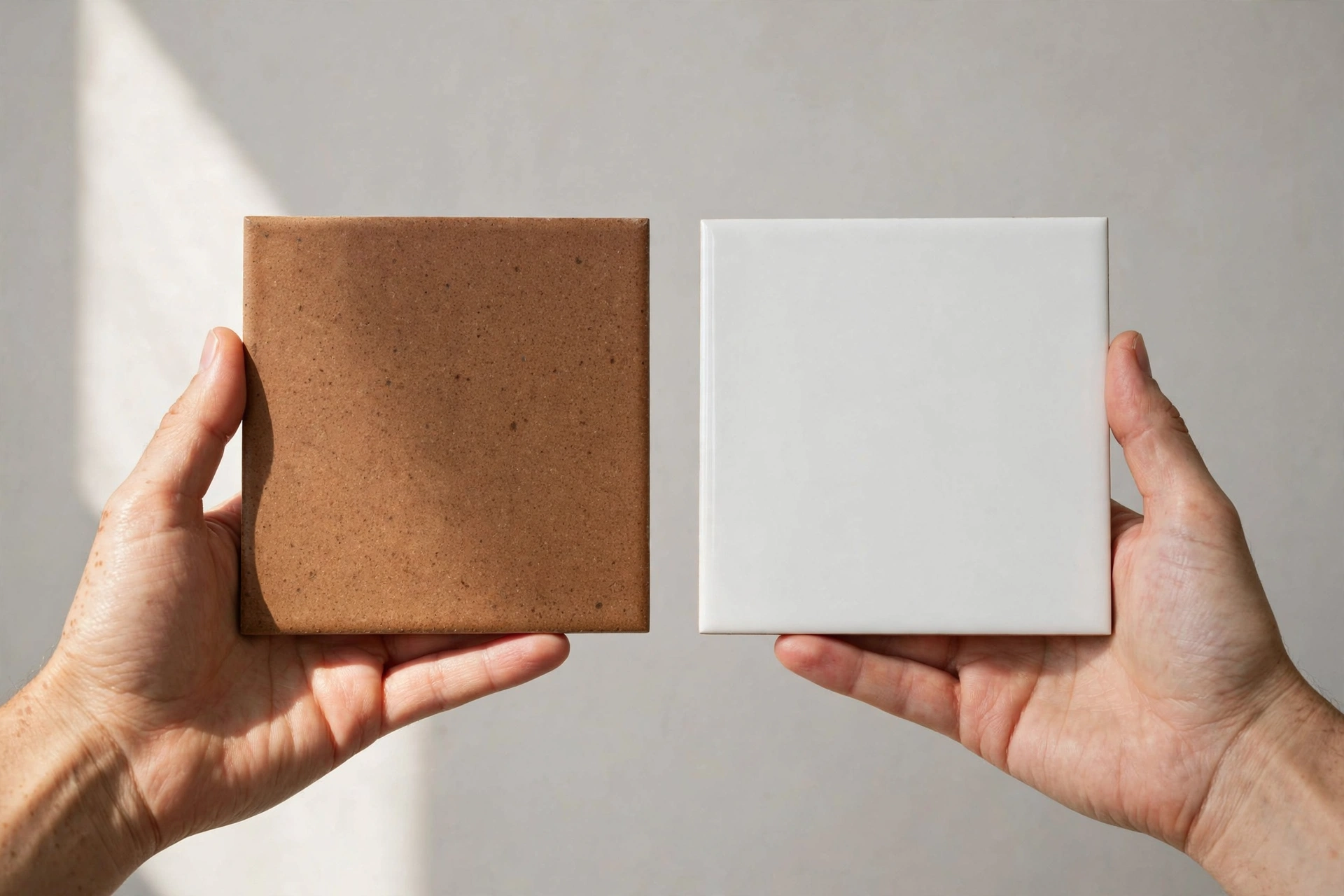
Porcelain tile is noticeably denser and heavier than a ceramic tile of the same size.
3. Examine the Edges
Look closely at the tile’s edge. Porcelain’s density and hardness typically produce a straight, clean, precisely cut edge, while ceramic tile — especially handmade or lower-cost lines — often has a slightly rounded or less uniform edge.
4. Check the Color All the Way Through (the Chip Test)
This is one of the most reliable methods for loose or already-installed tile. Look at a chipped, cut, or broken edge:
- Porcelain is typically the same color throughout the entire thickness of the tile, since the color is part of the clay body itself.
- Ceramic usually has a glazed surface color that’s different from the clay underneath, so a chip will reveal a contrasting color beneath the glaze.
5. Feel the Unglazed Surface
Flip a loose tile over and feel the unglazed back or underside:
- Porcelain feels smooth and fine-grained to the touch, a result of its finer clay composition.
- Ceramic feels noticeably coarser and grainier by comparison.
6. Ask About the Water Absorption Rate
If you’re working with a retailer or contractor, ask for the tile’s water absorption rate — it’s one of the clearest technical indicators available:
- Porcelain typically has a water absorption rate of 0.5% or less, classifying it as “impervious” and highly resistant to moisture.
- Ceramic can range anywhere from 0.5% up to 3%, and some lower-grade ceramic can absorb as much as 20%.
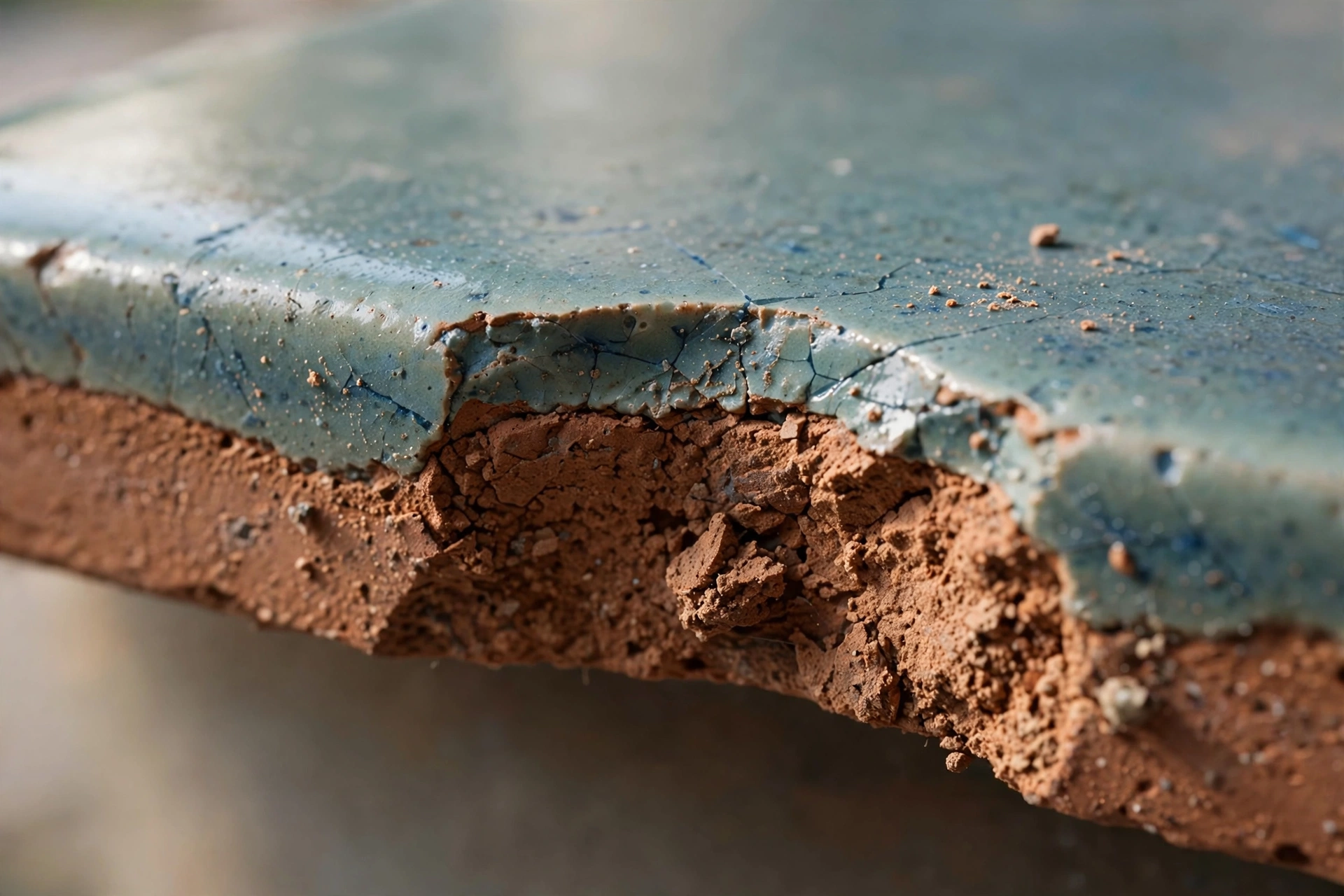
A chipped ceramic tile often reveals a different color beneath its glazed surface, while porcelain is colored all the way through.
Ceramic vs. Porcelain: Full Comparison
| Factor | Ceramic Tile | Porcelain Tile |
|---|---|---|
| Clay type | Coarser clay, sand, minerals | Finer clay (kaolin), feldspar |
| Firing temperature | ~1,800–2,000°F | ~2,200–2,500°F |
| Density | Lower | Higher |
| Water absorption | 0.5%–3% (up to 20% in low grades) | 0.5% or less |
| Weight | Lighter | Heavier |
| Edge appearance | Slightly rounded, less uniform | Clean, straight, precise |
| Color when chipped | Often different beneath the glaze | Consistent throughout |
| Cost | More budget-friendly | Generally more expensive |
| Best for | Walls, low-traffic floors, dry areas | Floors, high-traffic areas, wet or outdoor spaces |
Where Each One Performs Best
Because of these underlying differences, the two materials tend to suit different parts of a home:
- Ceramic tile is well-suited to walls, backsplashes, and low-traffic, dry-area flooring, where its lower cost and wide style variety make it an easy, budget-friendly choice.
- Porcelain tile is the stronger choice for floors, high-traffic areas, and wet or outdoor spaces, thanks to its density, durability, and superior water resistance.
If you’re specifically deciding on flooring for a wet space, our guide on good bathroom floor materials covers how porcelain compares against vinyl, stone, and other options for that particular use case. And if you’re tiling both walls and floors in the same project, our guide on the difference between wall tile and grout is a useful companion read.
Frequently Asked Questions
Is porcelain tile the same as ceramic tile?
Not exactly. Porcelain is technically a denser, more refined subtype of ceramic tile, made from finer clay and fired at higher temperatures, which gives it greater durability and water resistance than standard ceramic.
What is the easiest way to tell ceramic and porcelain tile apart?
Checking the product packaging or label is the fastest and most reliable method for new tile. For loose or installed tile, comparing weight (porcelain is heavier) or checking a chipped edge (porcelain is colored throughout, ceramic often isn’t) are the next most reliable checks.
Is porcelain tile always better than ceramic tile?
Not necessarily “better” — porcelain generally offers superior durability and water resistance, making it the stronger choice for floors and wet areas, but ceramic remains a practical, budget-friendly option for walls and low-traffic, dry spaces.
Can you tell ceramic and porcelain apart just by looking at them?
Often not reliably. Even design professionals note that the visual differences can be subtle, especially with well-made ceramic tile — the more dependable checks involve weight, edge examination, or the chip test rather than appearance alone.
Does porcelain tile cost more than ceramic tile?
Generally, yes. Porcelain’s more refined manufacturing process typically makes it more expensive than ceramic, though many buyers consider the added durability and water resistance worth the higher upfront cost, especially for high-traffic or wet areas.
Choosing tile for your next project? Explore more flooring and material comparisons on Ayaan Home Decor to find the right fit for every room in your home.
Last modified: August 4, 2026