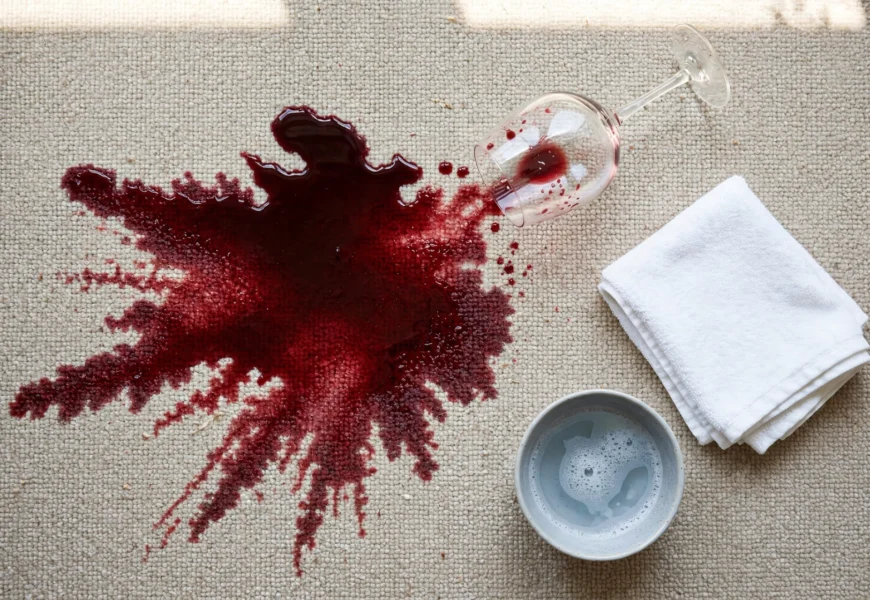
There’s a very specific kind of panic that comes with watching a glass of red wine tip over onto light-colored carpet. The good news: red wine stains are almost always fixable if you act quickly and use the right method — the bad news is that reaching for the wrong thing (or scrubbing instead of blotting) can set the stain in permanently.
Quick Answer: To get red wine out of carpet, immediately blot (don’t rub) as much wine as possible with a clean cloth, then apply a mixture of cold water and dish soap, followed by white vinegar or hydrogen peroxide to break down the remaining pigment. Blot repeatedly until the stain lifts, then rinse with cold water and blot dry. For dried or set-in stains, the same solutions work but require rehydrating the area first and may need several repeated treatments.
Here’s the full step-by-step process, plus what to do differently for dried stains and delicate rugs.
Why Red Wine Stains Are So Stubborn
Red wine contains tannins, which give the wine its structure and flavor, and anthocyanins, the natural pigments responsible for its deep red color. Both compounds bond quickly with carpet fibers once they penetrate below the surface, which is why red wine is notoriously harder to remove than most other household spills — and why speed matters more here than with almost any other stain.
Step 1: Act Immediately and Blot
The single biggest factor in whether a red wine stain comes out completely is how fast you respond.
- Blot immediately with a clean, dry cloth or paper towel — press down firmly and lift straight up. Never rub, since rubbing pushes the pigment deeper into the fibers and spreads the stain outward.
- Keep switching to a clean section of cloth as it absorbs wine, so you’re not just moving the stain around.
- Add a small amount of cold water to the stained area, then continue blotting to help dilute and lift what’s left.
If you’re at a party and can’t stop to fully treat the stain right away, blot up as much as you can and sprinkle a generous layer of salt (or baking soda) over the area — the powder will absorb much of the remaining liquid so you can vacuum it up and treat the area properly later.
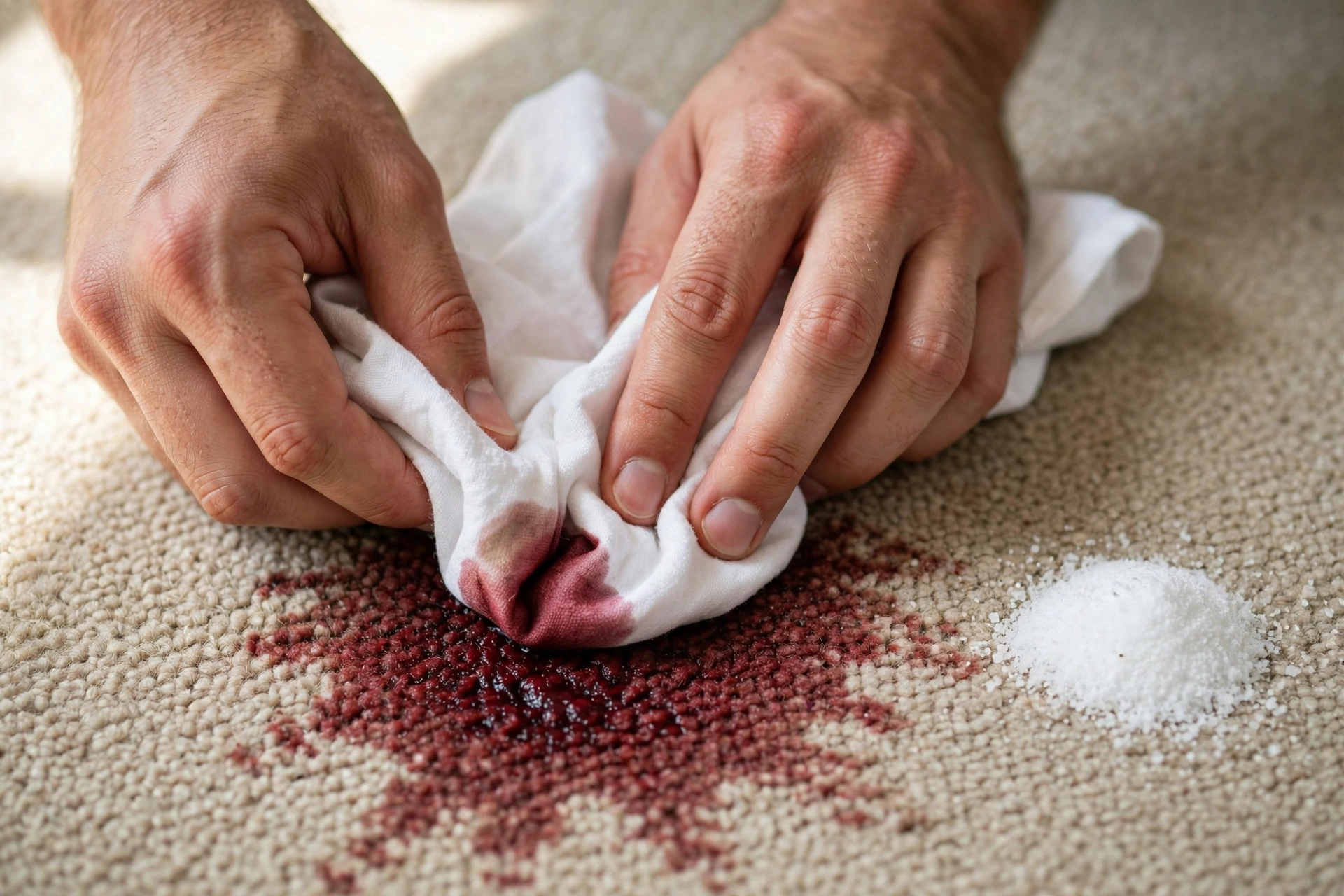
Blotting — never rubbing — is the most important first step when treating a fresh red wine spill.
Step 2: Choose a Cleaning Solution
Once you’ve blotted up as much wine as possible, treat the remaining stain with one of these methods. Always test any solution on a hidden patch of carpet first — like a spot under furniture — to make sure it doesn’t affect the color or texture.
Method 1: Dish Soap and White Vinegar
Mix one tablespoon of dish soap and one tablespoon of white vinegar into two cups of warm water. Apply to the stain with a clean cloth, let it sit for 3–5 minutes, then blot again. The vinegar helps neutralize the remaining pigment.
Method 2: Dish Soap and Hydrogen Peroxide
For tougher stains, a mixture of dish soap and hydrogen peroxide can be more effective at breaking down deeper pigment. Apply, let it sit briefly, and blot as before — always spot-test first, since hydrogen peroxide can lighten some carpet colors.
Method 3: Club Soda
Plain club soda’s carbonation helps lift red wine pigment out of carpet fibers. Pour a small amount directly onto the stain, blot, and repeat as needed — this method is gentle enough to use even if you’re unsure which of the stronger solutions is safe for your carpet.
Method 4: Baking Soda or Salt Paste
For stains that have already partially dried, a paste of baking soda (or salt) and a small amount of water can help draw out the remaining pigment. Apply, let it dry completely, then vacuum it away.
According to Molly Maid’s professional cleaning guide, the carpet’s fiber type and how long the stain has had to set both significantly affect how easily it lifts — which is part of why testing your chosen solution first matters so much.
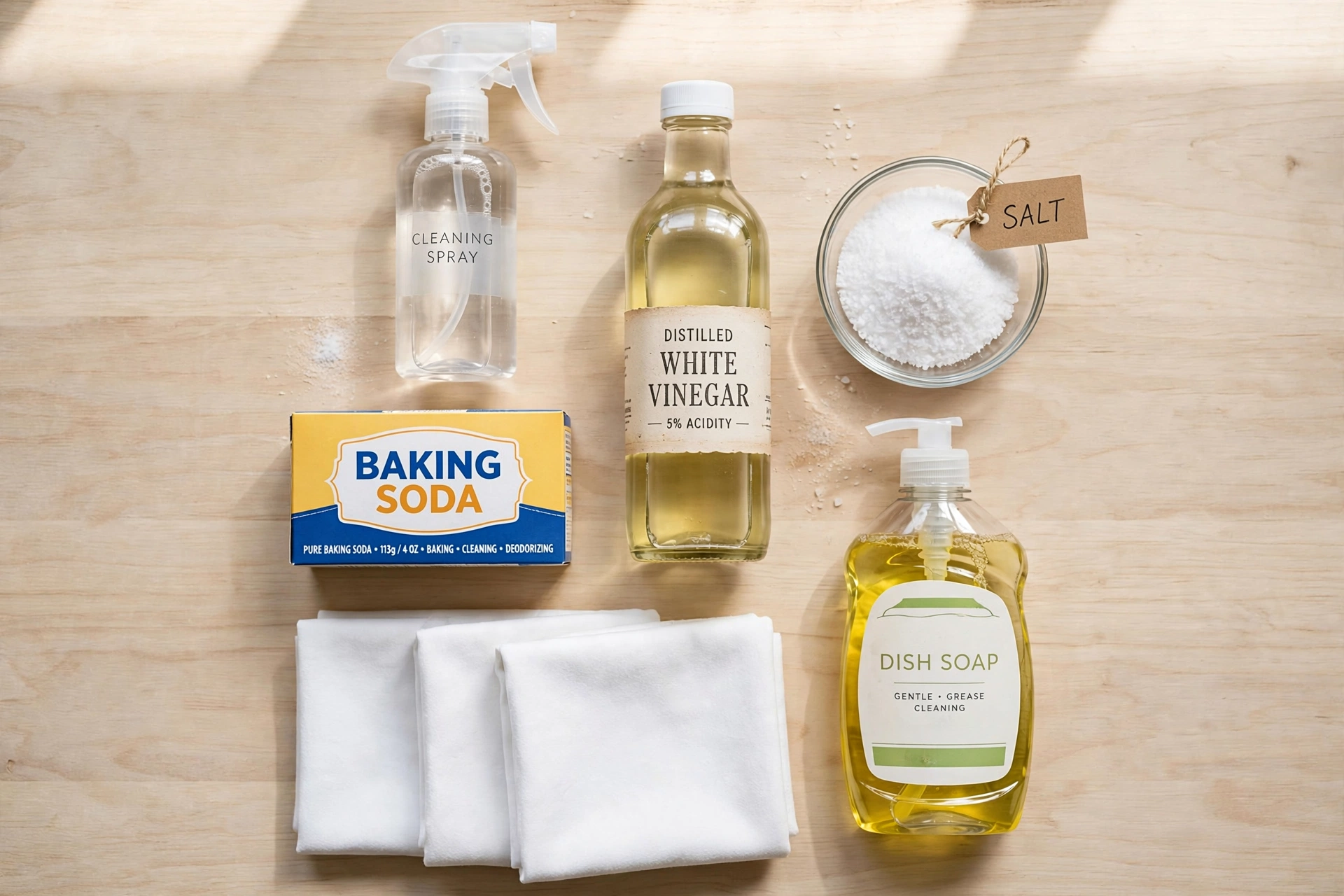
Dish soap, white vinegar, baking soda, and salt are the core household supplies for treating a red wine stain.
Step 3: Rinse and Dry the Area
After the stain lifts, dab the area with a cloth dampened in cold water to rinse away any leftover cleaning solution, then blot dry with a fresh towel. Finish by placing a folded stack of white paper towels or a clean cloth over the spot, weighed down with something flat and heavy, and leave it overnight to fully absorb any remaining moisture and help the carpet fibers dry evenly.
What to Do About Dried or Old Wine Stains
A wine stain that’s already dried is more stubborn but often still treatable:
- Rehydrate the stain first with a small amount of cold water.
- Apply a dish soap and white vinegar mixture, letting it sit slightly longer than you would on a fresh stain.
- Blot thoroughly, repeating the process as needed — dried stains frequently require multiple treatments rather than lifting completely on the first try.
- Be patient. According to Home Depot’s stain removal guide, it’s important not to let a partially treated stain dry out completely between applications, since this can make subsequent treatments less effective.
Special Care for Rugs vs. Wall-to-Wall Carpet
Not every red-wine-covered surface should be treated the same way. If the stain is on an area rug rather than fixed carpet, the material matters even more:
- Wool or synthetic rugs generally tolerate the same dish soap, vinegar, and club soda methods described above.
- Silk or other delicate hand-knotted rugs should avoid harsh chemicals entirely — stick to gentle blotting and cold water, and consider professional cleaning for a valuable or delicate piece rather than risking DIY treatment.
Since rugs and wall-to-wall carpet aren’t quite the same thing, our guide on the difference between a carpet and a rug is worth a look if you’re unsure which cleaning approach applies to what’s on your floor. It’s also worth knowing that different carpet fiber types react differently to spills and cleaning solutions — our guide on cut pile vs. loop pile carpet covers how pile construction affects how deeply stains penetrate and how easily they lift back out.
What Not to Do
- Don’t rub the stain — this spreads the pigment and pushes it deeper into the fibers instead of lifting it out.
- Don’t use hot water — heat can help set certain stains rather than lift them; stick to cold water throughout the process.
- Don’t skip the spot test — some cleaning solutions, especially hydrogen peroxide, can lighten or discolor certain carpet fibers.
- Don’t let a partially treated stain fully dry before finishing the job — this can make it noticeably harder to remove completely.
- Don’t ignore your carpet’s warranty guidelines — some carpet warranties (particularly stain-resistant lines) require specific cleaning products or professional treatment to remain valid, so it’s worth checking your documentation before using a DIY solution on a newer carpet.
If red wine isn’t your only concern, our guide on removing coffee, milk, and other spill stains from carpet covers the techniques for the other most common household spills. And if wine spills are a regular concern in a busy living or entertaining space, our guide to the best carpet for a high-traffic family room covers stain-resistant fiber options worth considering for your next carpet.
Frequently Asked Questions
What is the fastest way to get red wine out of carpet?
Blot immediately with a clean cloth to remove as much wine as possible, then apply cold water followed by a dish soap and white vinegar solution, blotting repeatedly until the stain lifts.
Can you remove a red wine stain after it has dried?
Yes, though it’s more difficult than treating a fresh spill. Rehydrate the area with cold water, apply a dish soap and vinegar mixture, and blot repeatedly — dried stains often need multiple treatments rather than lifting on the first attempt.
Does salt really help with red wine stains?
Yes, salt (along with baking soda) is a dry, absorbent material that draws liquid out of carpet fibers, making it a genuinely useful quick fix at a party before you can properly treat the stain later.
Is club soda or vinegar better for red wine stains?
Both work well. Club soda is gentler and a safe first option if you’re unsure about your carpet, while a dish soap and vinegar mixture is generally more effective on tougher or larger stains.
Can hydrogen peroxide damage carpet?
It can lighten or discolor certain carpet fibers and dyes, so it’s important to spot-test hydrogen peroxide on a hidden area of carpet before applying it directly to a visible stain.
Dealing with more than one type of stain? Explore our guide to removing coffee and milk stains from carpet, or browse more flooring and cleaning guides on Ayaan Home Decor.
Last modified: August 5, 2026