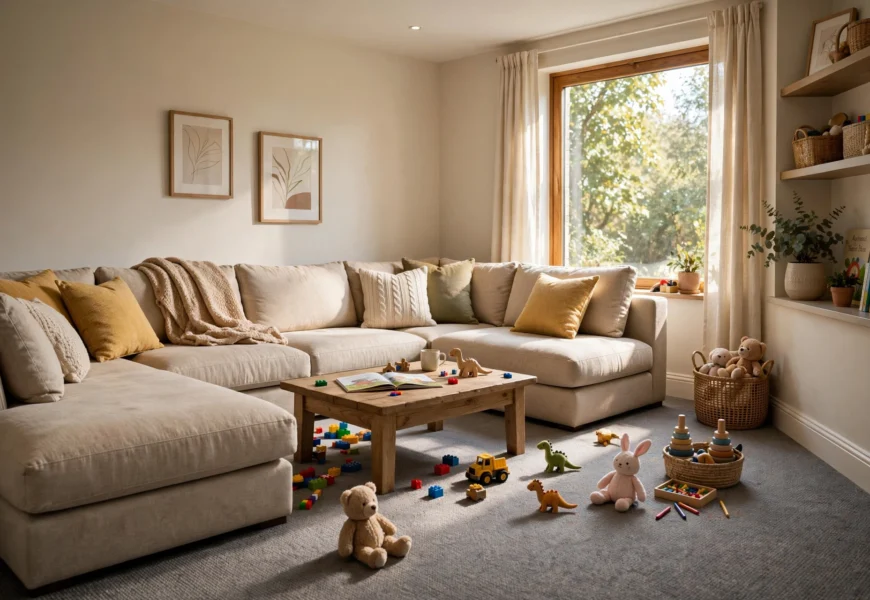
A family room usually takes more daily abuse than any other carpeted space in the house — kids running through, pets pacing back and forth, snack spills on movie nights, and guests coming and going. The wrong carpet will show wear within a year or two. The right one can look good for a decade. Here’s how to actually choose one.
Quick Answer: The best carpet for a high-traffic family room is a dense, low-pile nylon carpet in a loop (Berber) or cut-pile construction, ideally in a medium-toned or multi-toned color that hides dirt and wear. Nylon offers the best overall combination of durability, resilience, and stain resistance for busy households, with triexta and wool as strong alternatives depending on your budget and priorities.
Below is a full breakdown of what actually determines a carpet’s durability, how the major fiber types compare, and how to pick the right pile style and color for a room that sees constant use.
What Actually Makes a Carpet “High-Traffic Durable”?
Before comparing specific products, it helps to understand the four factors that determine how well a carpet holds up under heavy daily use:
- Fiber type — This has the single biggest impact on durability, stain resistance, and how well the carpet resists crushing and matting over time.
- Pile style — Loop and low-pile constructions resist wear far better than tall, plush piles.
- Density — More fiber packed per square inch means a carpet resists crushing and holds its shape longer, regardless of fiber type.
- Color and pattern — Medium-toned, multi-toned, or textured carpets visually hide dirt, foot traffic patterns, and everyday wear far better than solid light or dark colors.
Carpet Fiber Comparison for High-Traffic Rooms
–$–$$–$$
| Fiber | Durability | Stain Resistance | Comfort | Cost | Best For |
|---|---|---|---|---|---|
| Nylon | Excellent | Very good | Good | The default choice for high-traffic family rooms | |
| Triexta (SmartStrand, etc.) | Very good | Excellent | Very good | Homes with kids and pets, sunny rooms | |
| Wool | Very good | Good (needs treatment) | Excellent | Eco-conscious, allergy-sensitive households | |
| Polyester | Fair–Good | Very good | Excellent | –– $ | Lower-traffic rooms, budget-conscious buyers |
| Olefin (polypropylene) | Fair | Excellent | Good | –– $ | Basements, sunrooms — not ideal for heavy foot traffic |
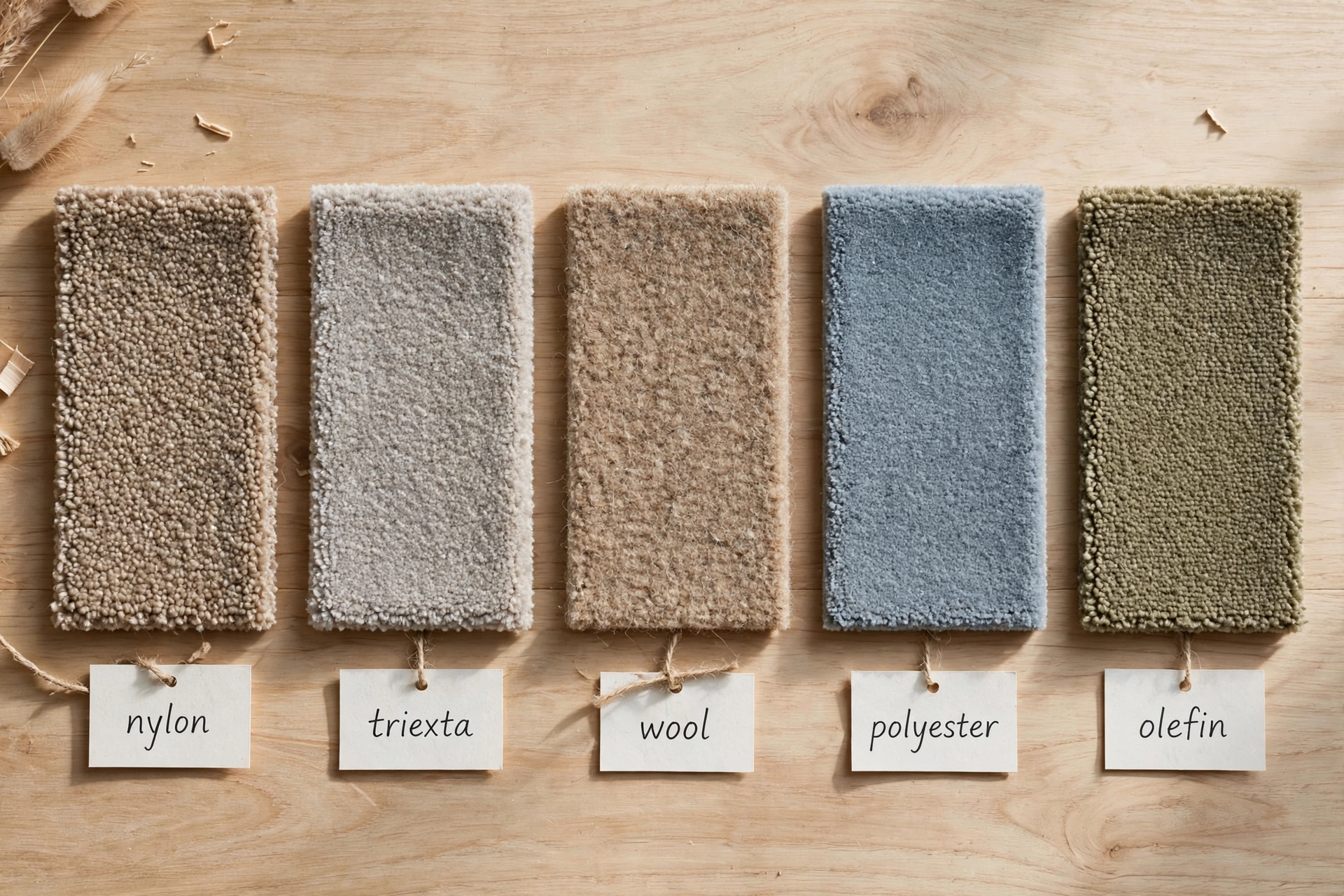
Nylon offers the strongest overall durability for high-traffic family rooms, with triexta and wool as close alternatives.
Nylon — The Standard Choice for Busy Households
Nylon is widely considered the most durable carpet fiber on the market. It resists crushing, matting, and fading better than any other common fiber, and it holds its texture and appearance even after years of heavy foot traffic. Most nylon carpets today also come with a factory-applied stain treatment, closing much of the gap that used to exist between nylon and naturally stain-resistant fibers.
- Pros: Excellent durability, resists crushing and matting, retains appearance long-term
- Cons: Typically costs more than polyester or olefin
Triexta — Built-In Stain Resistance
Triexta (marketed under names like SmartStrand) is a newer synthetic fiber that’s become popular specifically for family homes. Its stain resistance is built into the fiber itself rather than applied as a surface treatment, so it tends to hold up better over years of spills. It’s also naturally fade-resistant, making it a strong option for family rooms with large windows or lots of natural light.
- Pros: Excellent stain resistance, fade-resistant, soft underfoot
- Cons: Slightly less proven long-term durability track record than nylon
Wool — Natural, Resilient, and Long-Lasting
Wool is naturally springy and resilient, meaning it resists crushing and bounces back from foot traffic better than most synthetic fibers. It’s also a natural air filter that absorbs volatile organic compounds (VOCs), which can be a meaningful benefit for households with allergy sufferers. The tradeoff is cost — wool carpet sits at the premium end of the price range and typically needs a stain treatment applied, since it isn’t naturally stain-resistant.
- Pros: Naturally resilient, eco-friendly, absorbs VOCs, holds shape for years
- Cons: Higher cost, needs stain protection treatment, more specialized cleaning
Polyester and Olefin — Better Suited to Lighter Use
Polyester offers a soft, plush feel and natural stain resistance at a lower price point, but it tends to flatten and mat more quickly under constant foot traffic — making it a better fit for bedrooms or formal living rooms than a busy family room. Olefin (polypropylene) is highly resistant to moisture and stains, which makes it popular in basements and sunrooms, but it’s also prone to crushing under heavy use, so it’s not the best pick for a room that sees daily activity.
Pile Style Matters as Much as Fiber Type
Even the most durable fiber will wear out faster in the wrong pile construction. For a high-traffic family room:
- Loop pile (Berber) — Tight, uncut loops resist crushing and matting extremely well, making this one of the most durable constructions available. Great for a casual, textured look.
- Low-pile cut pile — Short, densely packed fibers stand up well to heavy use while still offering a soft, comfortable feel underfoot.
- High-pile, plush, or shag carpet — Comfortable and luxurious, but these taller pile styles show foot traffic patterns and crushing far more quickly. Better reserved for bedrooms or low-traffic formal spaces.
Color and Pattern: The Detail Most People Overlook
Two identical carpets in different colors can look completely different after a year of daily use. Medium-toned, multi-toned, or textured/patterned carpets do a much better job of visually hiding dirt, crumbs, and traffic wear than solid light or solid dark colors, which tend to show every mark. If you have kids, pets, or frequent guests, leaning toward a subtly variegated color rather than a flat solid tone will keep the room looking cleaner for longer between cleanings.
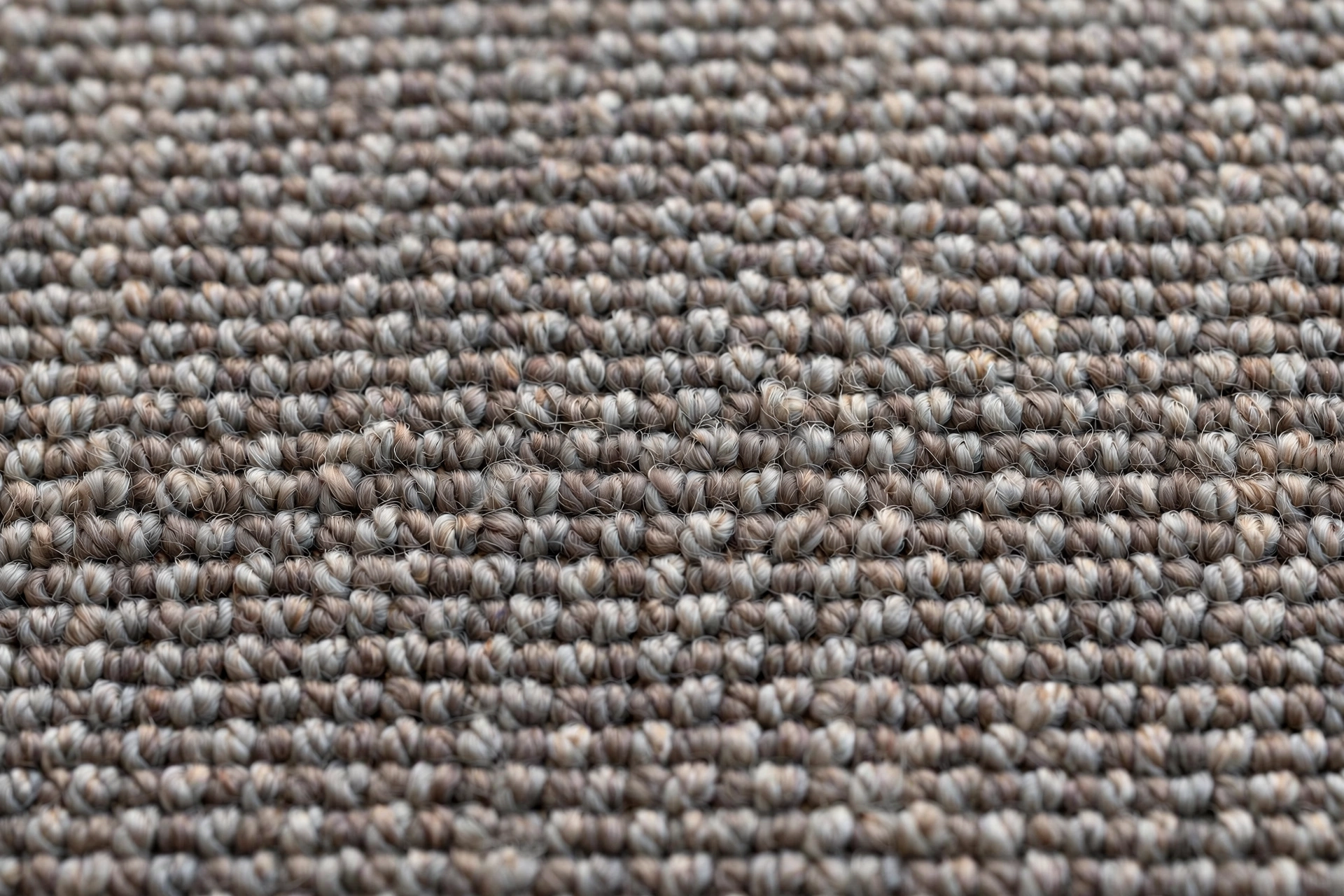
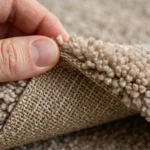
A multi-toned Berber loop carpet resists crushing and helps hide everyday dirt and wear.
Carpet Density: Why It’s Worth Checking
Density refers to how tightly the fibers are packed into the carpet backing. A denser carpet resists crushing and holds its shape significantly longer, regardless of fiber type. When comparing carpets in a showroom, try bending a sample backward — if you can easily see the backing through the fibers, the carpet is lower density and likely to wear faster in a high-traffic room. Ask your retailer for the specific density or face weight rating if it’s not listed on the sample tag.
Recommended Combination for a Family Room
For most busy family rooms, the strongest overall combination is:
- Fiber: Nylon or triexta
- Pile: Low-pile cut pile or Berber loop
- Color: Medium-toned, multi-toned, or subtly textured
- Density: As high as your budget allows — this matters more than most homeowners expect
If your family room connects to a kitchen or entryway where you’re also considering hard flooring, our guide on the best flooring for kids covers durable alternatives like luxury vinyl plank for adjoining spaces. And once you’ve settled on carpet, our guide on how wide a roll of carpet is will help you plan the installation and minimize seams in a larger family room.
Maintenance Tips to Extend the Life of a High-Traffic Carpet
- Vacuum 2–3 times per week in high-traffic rooms — dirt and grit act like sandpaper on carpet fibers if left to grind in.
- Clean spills immediately, even on stain-resistant fibers, since prompt cleanup prevents staining from setting in.
- Use area rugs or runners in the busiest paths through the room, like in front of a sofa or doorway, to reduce direct wear on the main carpet.
- Schedule professional deep cleaning every 12–18 months to remove ground-in dirt that regular vacuuming can’t fully lift.
If you’re dealing with an existing stain rather than shopping for new carpet, our guide on removing coffee, milk, and other spill stains from carpet walks through the exact steps for the most common family room spills.
Common Mistakes to Avoid
- Choosing based on softness alone — a plush, high-pile carpet might feel great in the showroom but wear out quickly in a busy family room.
- Picking a solid light or dark color without considering how quickly it will show dirt and traffic patterns.
- Ignoring density in favor of fiber type alone — a lower-density nylon carpet can actually wear faster than a well-constructed, denser polyester option.
- Skipping the stain warranty details — check whether stain protection is a factory-integrated fiber property (like triexta) or a topical treatment that can wear off over time (common with treated nylon and wool).
Frequently Asked Questions
What is the most durable carpet fiber for a family room?
Nylon is generally considered the most durable carpet fiber for high-traffic family rooms, thanks to its excellent resistance to crushing, matting, and fading over time.
Is Berber carpet good for a family room?
Yes. Berber’s tight loop-pile construction is one of the most crush-resistant carpet styles available, making it a strong choice for busy family rooms, hallways, and stairs.
What carpet color hides dirt the best?
Medium-toned, multi-toned, or textured/patterned carpets hide dirt, crumbs, and everyday wear far better than solid light or solid dark colors.
Is triexta better than nylon for high-traffic areas?
Both are excellent choices. Triexta typically offers better built-in stain resistance, while nylon has a longer track record for overall long-term durability and resistance to crushing.
How often should I vacuum a high-traffic family room carpet?
Vacuum 2 to 3 times per week in high-traffic rooms, and schedule a professional deep clean every 12 to 18 months to remove dirt that regular vacuuming can’t fully lift.
Choosing carpet for more than one room? Explore more flooring comparisons and buying guides on Ayaan Home Decor to find the right material for every space in your home.
Last modified: July 29, 2026