If you’ve ever compared two carpets at a flooring store and noticed a number like “40 oz” or “60 oz” on the spec tag, you’ve run into face weight — one of the most commonly listed but least understood carpet specs. It sounds technical, but once you know what it measures, it becomes one of the fastest ways to size up a carpet’s quality on the spot.
Quick Answer: Carpet face weight is the weight of the carpet’s pile fibers only — not including the backing — measured in ounces per square yard. A carpet with a 40-ounce face weight has 40 ounces of fiber in every square yard. Generally, a higher face weight means more fiber packed into the carpet, which often (but not always) points to better durability, though it’s only a reliable comparison between carpets of the same fiber type and construction.
Here’s exactly what the number means, what counts as a good face weight, and where it can mislead you if you’re not careful.
What Face Weight Actually Measures
Face weight refers specifically to the pile fibers — the yarn you see and walk on — measured in ounces per square yard. It does not include the carpet’s backing material, which adds additional weight but isn’t part of what you’re standing on.
This distinction matters because carpet has two different weight measurements that are easy to confuse:
- Face weight: Fiber only, in ounces per square yard — used to gauge quality and durability
- Total weight: Fiber plus backing combined — used mainly to estimate how heavy the roll will be for shipping and installation
If a spec sheet just says “weight” without specifying which one, it’s worth asking your retailer to clarify — the two numbers can be significantly different.
How to Read a Face Weight Number
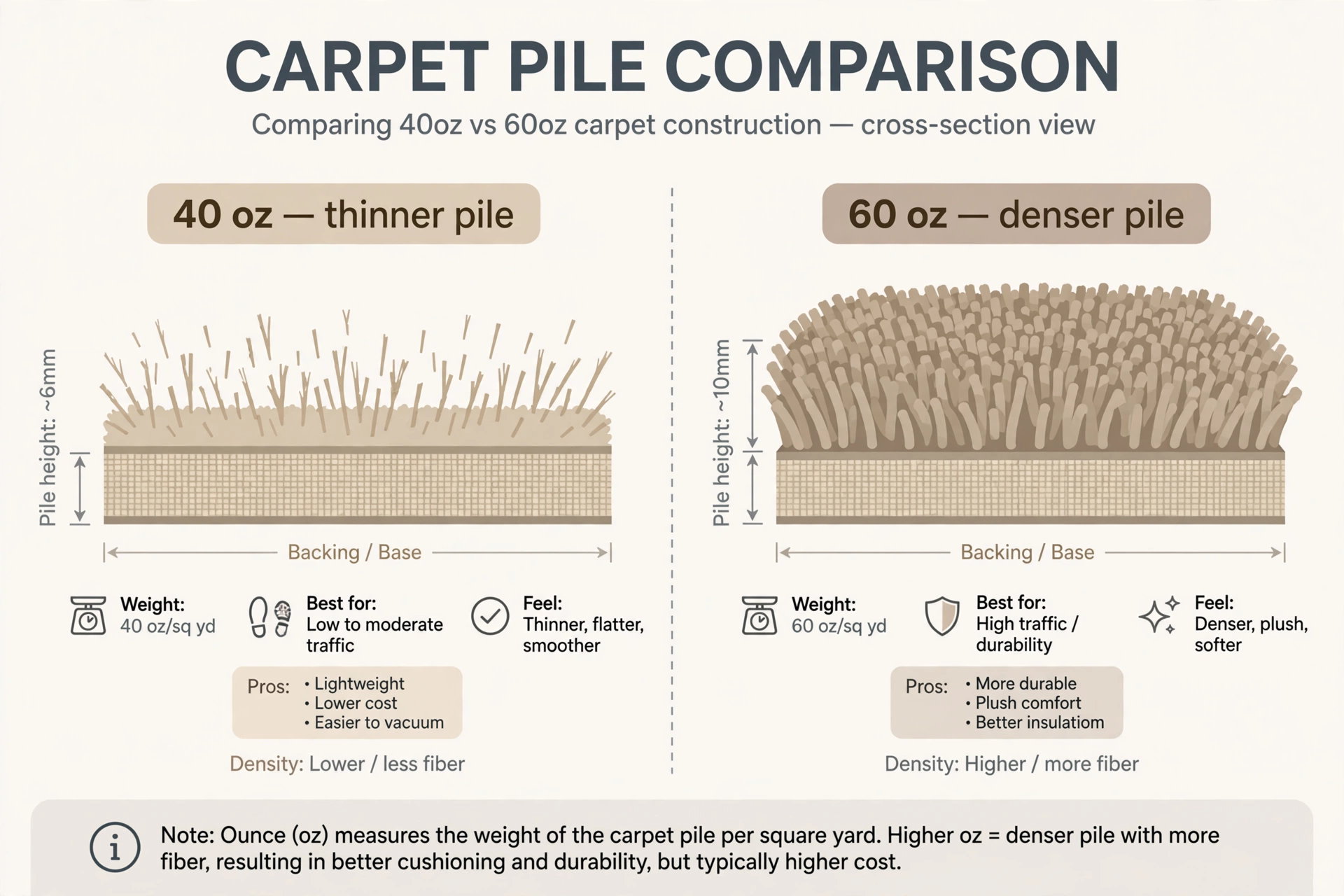
The math is simple: a carpet listed at 40 oz has 40 ounces of fiber in every square yard of material. A 60 oz carpet has 20 ounces more fiber per square yard than the 40 oz option — meaningfully more material, which is part of why it typically costs more and feels denser underfoot.
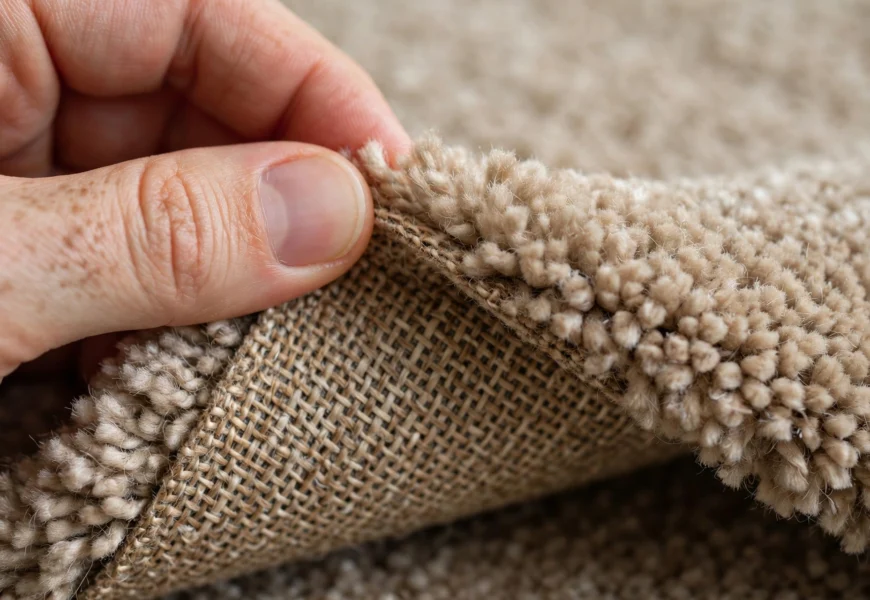
Face weight measures only the carpet’s fiber, not the backing — a key spec to check before buying.
What’s a Good Face Weight for Carpet?
As a general guideline for residential carpet:
| Face Weight | Typical Use |
|---|---|
| Under 30 oz | Light-duty, low-traffic areas like formal or rarely used rooms |
| 30–40 oz | Standard residential use, moderate traffic |
| 40–60 oz | Good to very good quality; suited to high-traffic areas like living rooms, hallways, and entryways |
| 65 oz and above | Premium-grade carpet, often marketed as a top-tier product |
If you’re shopping specifically for a busy space like a living room or family room, our guide on the best carpet for a high-traffic family room walks through how face weight fits alongside fiber type and pile style when making that decision.
The Big Catch: Face Weight Only Works Within the Same Fiber Type
This is the part that trips up a lot of shoppers. Face weight is genuinely useful when you’re comparing two carpets that are otherwise similar — same fiber, same pile style, same general construction. In that scenario, the higher face weight is a solid signal of better durability and a plusher feel.
But face weight becomes misleading when comparing carpets made from different fibers. A nylon carpet with a lower face weight can easily outperform a polyester carpet with a higher face weight, because nylon fibers are inherently more resilient and durable than polyester ones, regardless of how much material is used. Comparing a 35 oz nylon carpet against a 50 oz polyester carpet on face weight alone would give you the wrong impression of which one is actually the better investment.
Rule of thumb: Only use face weight to compare carpets of the same fiber type. Across different fibers, it’s not an apples-to-apples measurement.
Face Weight vs. Carpet Density: Not the Same Thing
These two terms get used almost interchangeably, but they measure different things:
- Face weight — the total amount of fiber per square yard, regardless of how it’s arranged
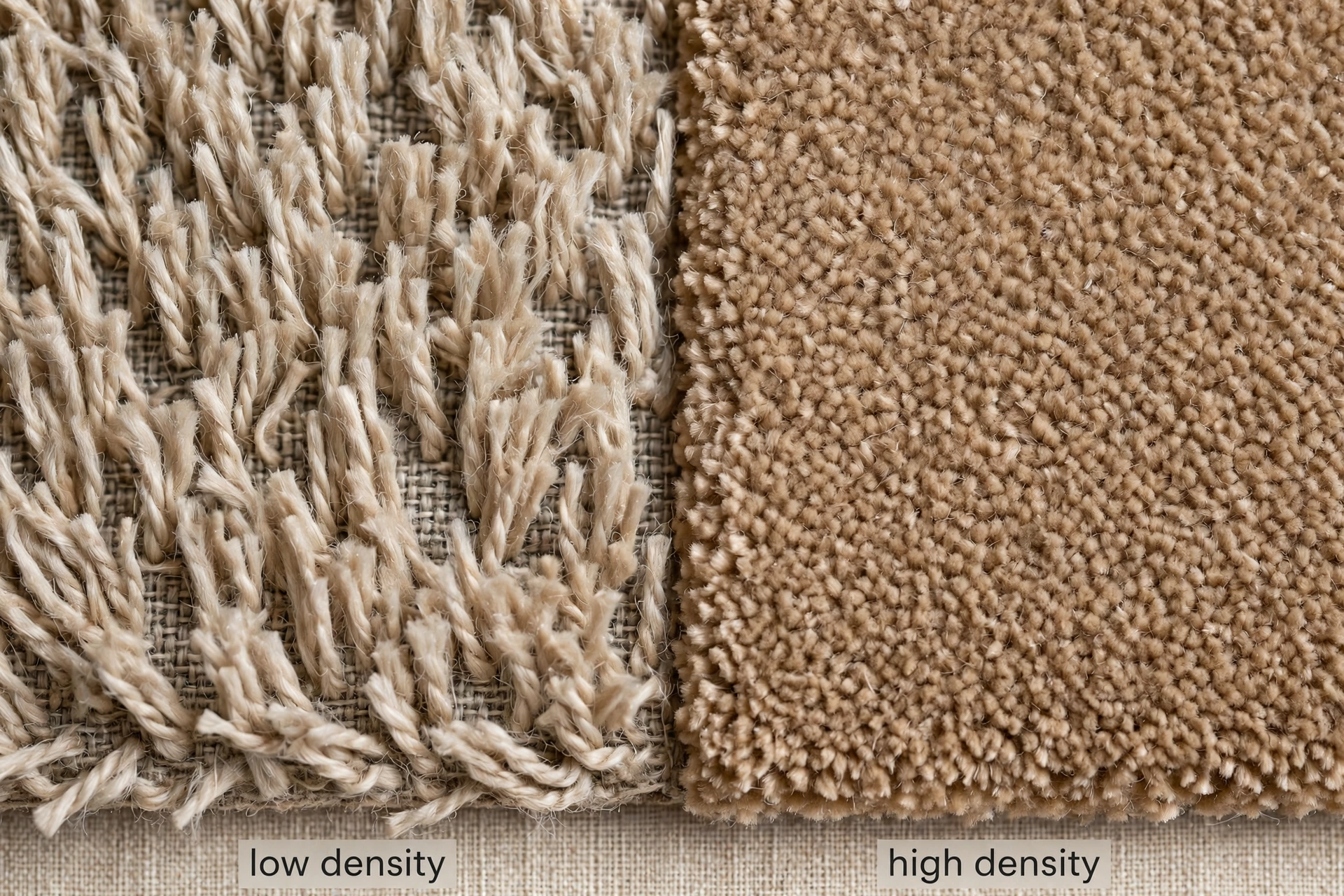
- Density — how tightly those fibers are packed together in the backing
A carpet can have a high face weight but low density if it has a tall pile with fibers spaced loosely apart — this can feel plush initially but wear down faster in high-traffic areas than a shorter, more tightly packed carpet with a lower face weight. For the most accurate read on durability, it’s worth asking about both numbers rather than relying on face weight alone.
A 60-ounce carpet has significantly more fiber per square yard than a 40-ounce carpet of the same style.
Other Factors That Affect Carpet Quality Alongside Face Weight
Face weight is a useful data point, but flooring professionals generally recommend weighing it against a few other specs before making a final decision:
- Fiber type — nylon, triexta, wool, polyester, and olefin all perform differently regardless of face weight
- Pile height — taller piles naturally have more room for fiber, which can inflate face weight without necessarily improving durability
- Twist level — how tightly the individual yarns are twisted affects how well the carpet resists matting, independent of face weight
- Density — as covered above, tighter packing generally means better wear resistance
Common Mistakes When Shopping by Face Weight
- Comparing face weight across different fiber types, which gives a misleading picture of true durability
- Assuming higher face weight always means better carpet, without checking density, twist, or pile height
- Confusing face weight with total weight, which includes the backing and isn’t a useful quality indicator on its own
- Ignoring the room’s actual use — a lower face weight can be perfectly fine for a low-traffic guest room, so there’s no need to overspend on a premium-weight carpet everywhere in the house
Frequently Asked Questions
Is a higher face weight always better?
Not always. A higher face weight generally indicates more fiber and often better durability, but only when comparing carpets of the same fiber type and construction. Across different fibers, a lower face weight can still outperform a higher one.
What is a good face weight for high-traffic areas?
For high-traffic residential areas like living rooms, hallways, and entryways, a face weight between 40 and 60 ounces is generally considered good to very good quality.
Does face weight include the carpet backing?
No. Face weight measures only the pile fibers on the surface of the carpet. The combined weight of the fibers and backing is called the carpet’s total weight, which is a separate measurement.
What’s the difference between face weight and density?
Face weight measures the total amount of fiber per square yard, while density measures how tightly those fibers are packed together. A carpet can have a high face weight but still be lower quality if its density is low.
Can I compare face weight between nylon and polyester carpet?
Not reliably. Face weight is only a useful comparison tool between carpets made from the same fiber type. Different fibers have different inherent durability, so the numbers don’t translate directly across materials.
Once you’ve picked the right carpet, our guide on how wide a roll of carpet is can help you plan the installation, and our guide to removing common carpet stains will help keep it looking new. Explore more flooring guides on Ayaan Home Decor.
Last modified: July 31, 2026