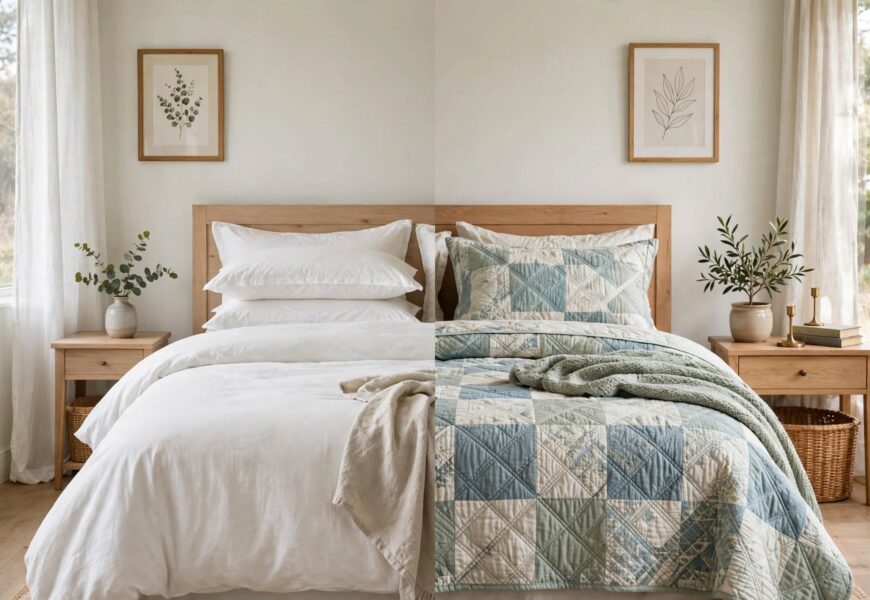
Bedding shopping gets confusing fast once “duvet” and “comforter” start appearing on the same product pages, sometimes even describing what looks like the exact same item. The confusion is understandable, but the two are genuinely built differently — and that difference affects everything from how you wash your bedding to how easily you can redecorate a room.
Quick Answer: A comforter is a single, all-in-one quilted blanket that’s used as-is, straight out of the packaging, typically layered over a top sheet. A duvet is a two-piece system consisting of a fluffy insert (filled with down, feathers, wool, or a synthetic alternative) that slides inside a separate, removable duvet cover. The duvet cover acts like a giant pillowcase — it protects the insert and can be washed or swapped independently, while a comforter’s outer fabric is fixed and typically requires washing the entire piece at once.
Here’s a closer look at how each is built, cared for, and which one actually fits your lifestyle better.
What Is a Duvet?
A duvet — from the French word for “down” — is a soft, flat insert filled with down, feathers, wool, or a synthetic down-alternative fiber, designed specifically to be placed inside a removable duvet cover rather than used on its own. This two-piece structure is the defining feature of a duvet system:
- The insert (sometimes called a “duvet insert,” even though “duvet” technically refers to the insert itself) provides the warmth and loft.
- The duvet cover is a separate, washable fabric shell — usually cotton or a cotton blend — that protects the insert and gives you an easy way to change your bedroom’s look without buying new bedding.
- Duvets are traditionally sized close to the bed itself, giving a cleaner, more tailored look often associated with European-style bedrooms, and are more commonly used in the UK and Europe than in the US, though that’s shifted as the style has grown in popularity domestically.
What Is a Comforter?
A comforter is a single, quilted piece of bedding — fill sandwiched between two layers of fabric and stitched or quilted together — designed to be used exactly as it comes out of the packaging, with no separate cover required.
- Comforters are typically filled with down, down-alternative synthetic fibers, cotton, or wool, similar to duvet inserts, but the exterior fabric itself is part of the finished, decorative piece rather than a plain shell meant to be hidden under a cover.
- They’re generally sized to hang over the sides of the bed and are traditionally paired with a top sheet underneath, sometimes with additional blankets layered on for extra warmth.
- Comforters are especially common in North America and are frequently sold as part of bed-in-a-bag sets, which bundle the comforter with matching sheets, shams, and pillowcases.
If you’re planning a full bedroom refresh alongside your bedding choice, our guide on how to use pastel colors in decor covers how to build a cohesive color palette that either bedding style can complement.
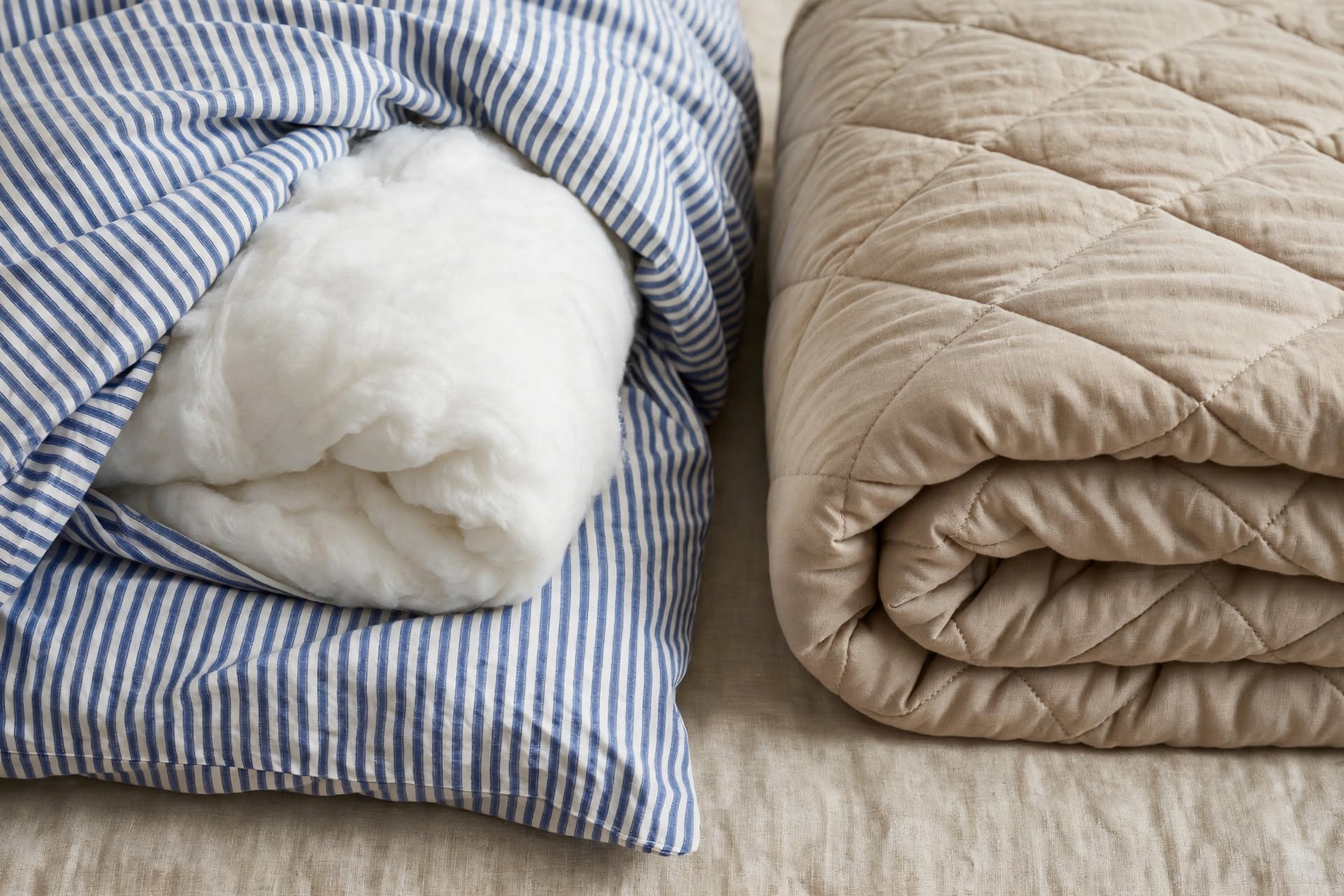
A duvet’s insert slides inside a separate, washable cover, while a comforter’s outer fabric is a fixed, finished part of the piece.
Duvet vs. Comforter: Full Comparison
| Factor | Duvet | Comforter |
|---|---|---|
| Construction | Two pieces: insert + removable cover | One piece, ready to use |
| Washing | Cover washes separately and easily; insert washed rarely | Entire piece typically needs washing together |
| Customization | Easy to change look by swapping the cover | Limited — the whole comforter must be replaced to change style |
| Warmth | Often warmer, especially with a down insert | Moderate warmth; may need layering in colder months |
| Setup | Requires assembling insert into cover | Ready to use immediately |
| Typical exterior | Plain, meant to be hidden under a cover | Decorative fashion fabric, meant to be seen |
| Popularity | More common in the UK and Europe | More common in North America |
| Usually paired with | Sheets underneath, no top sheet needed | Top sheet, sometimes additional blankets |
Warmth and Comfort
Duvets often provide more warmth than comforters, particularly when filled with high-quality down, since the loose, lofty fill inside a duvet cover tends to trap heat effectively. Comforters generally offer a more moderate level of warmth and may need to be paired with additional blankets during colder months for the same effect. That said, both bedding types are available in a range of fill weights and materials, so warmth ultimately depends on the specific product you choose rather than the category alone.
Washing and Maintenance
This is one of the most practical differences between the two:
- A duvet cover can be removed and machine washed as easily as a large pillowcase, while the insert itself typically only needs washing occasionally — a meaningful advantage for anyone who wants fresh-feeling bedding without hauling a bulky item to the laundromat every time.
- A comforter’s entire structure usually needs washing as one piece, which often requires an extra-large capacity washer or a trip to a laundromat, since a queen or king comforter frequently won’t fit properly in a standard home washing machine.
This difference matters even more for households managing allergies or frequent spills, where more regular washing is a priority.

A duvet cover can be easily removed and washed separately, without needing to launder the bulkier insert underneath.
Style and Customization
A duvet’s biggest advantage for anyone who likes to redecorate is flexibility: since the cover is a separate piece, you can change your bedroom’s entire look for the cost of one new cover rather than replacing your whole comforter. This also makes duvet covers a popular way to coordinate with seasonal decor changes or a full room redesign. Comforters, on the other hand, come as a finished decorative piece, which offers simplicity but less room to update your look without buying an entirely new one — something worth considering if you enjoy periodically refreshing your bedroom’s palette.
Which One Should You Choose?
- Choose a duvet if: you want easier, more frequent washing, plan to change your bedroom’s style periodically, or tend to sleep warm and want a plusher, down-style option.
- Choose a comforter if: you want a simple, ready-to-use bedding solution with no assembly, prefer buying a complete matched bedding set, or don’t want to deal with a separate cover.
- Consider your washing setup either way — if you don’t have easy access to an extra-large washer or laundromat, a duvet’s easily removable cover can be the more practical long-term choice.
If you’re also deciding between a carpet and an area rug while refreshing the room, our guide on the difference between a carpet and a rug covers a similarly confusing pair of home textile terms.
Frequently Asked Questions
Is a duvet warmer than a comforter?
Often, yes, particularly duvets with a high-quality down fill, since the loose fill inside a cover tends to trap heat effectively. However, warmth ultimately depends on the specific fill type and weight of the individual product, not just the category.
Can you put a comforter inside a duvet cover?
Yes, this is a common practice — a comforter can be slipped into a duvet cover for extra protection and an easy style refresh, even though it isn’t specifically designed as a duvet insert.
Which is easier to clean, a duvet or a comforter?
A duvet is generally easier to keep clean, since the cover can be removed and machine washed frequently and easily, while the insert itself needs washing far less often. A comforter typically needs to be washed as a single, bulkier piece.
Are duvets or comforters more popular in the US?
Comforters have traditionally been more popular in North America, often sold as part of matched bedding sets, while duvets have historically been more common in the UK and Europe — though duvets have grown significantly in popularity in the US as well.
Do I need a top sheet with a duvet?
It’s optional. Many duvet users skip the top sheet since the duvet cover itself functions similarly to one, while comforters are more traditionally paired with a top sheet underneath.
Refreshing your bedroom’s look alongside new bedding? Explore our guide on how to use pastel colors in decor, or browse more home decor guides on Ayaan Home Decor.
Last modified: September 14, 2026