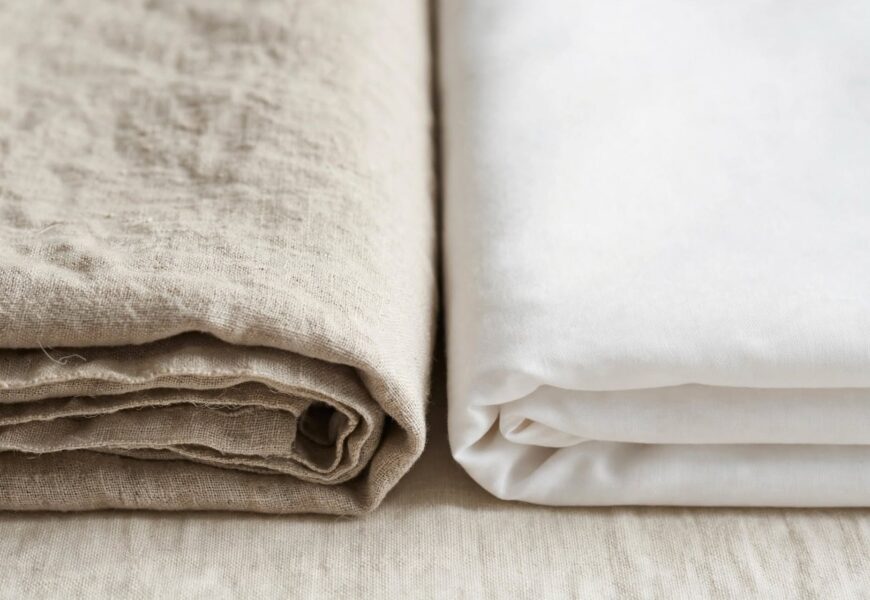
Stand in front of a shelf of bedding or curtains labeled “linen” and “cotton” and it’s easy to assume the choice comes down to price or a vague sense of which one “feels nicer.” In reality, the two fabrics come from entirely different plants and behave differently enough — in breathability, durability, and how they age — that the right choice really does depend on what you’re using them for.
Quick Answer: Linen is made from the fibers of the flax plant, while cotton comes from the fibers surrounding cotton plant seeds. Linen is generally more durable, more breathable, and develops a softer, more relaxed texture over time, while cotton is softer to the touch from the start, more affordable, and more widely available. Linen also wrinkles more visibly and dries faster than cotton, which retains more moisture but feels smoother and more uniform against the skin.
Here’s a full breakdown of how they differ, and which one makes more sense for specific home textiles.
Where Each Fabric Comes From
- Linen is made from fibers extracted from the stalk of the flax plant. The fibers are long, strong, and require a labor-intensive extraction and softening process, which is part of why linen tends to cost more than cotton.
- Cotton is made from the soft, fluffy fibers that grow around the seeds inside a cotton plant’s boll. It’s a “staple fiber,” meaning the individual fibers vary in length, and it’s grown and processed at a much larger global scale than flax, which is part of why cotton is generally more affordable and widely available.
Texture and Feel
This is often the fastest way to tell the two apart by touch:
- Cotton has a smoother, more uniform texture right out of the package, with a tighter, more even weave that doesn’t typically show visible bumps or irregularities.
- Linen has a naturally textured, slightly rougher feel at first — often described as having a “slubby” texture from small, irregular thickenings in the yarn — that softens noticeably with repeated washing and use over time.
If you’re weighing linen against cotton specifically for bedding, our guide on the difference between a duvet and a comforter is a useful companion read, since the fabric of your duvet cover or comforter shell factors into the same comfort and care decisions covered here.
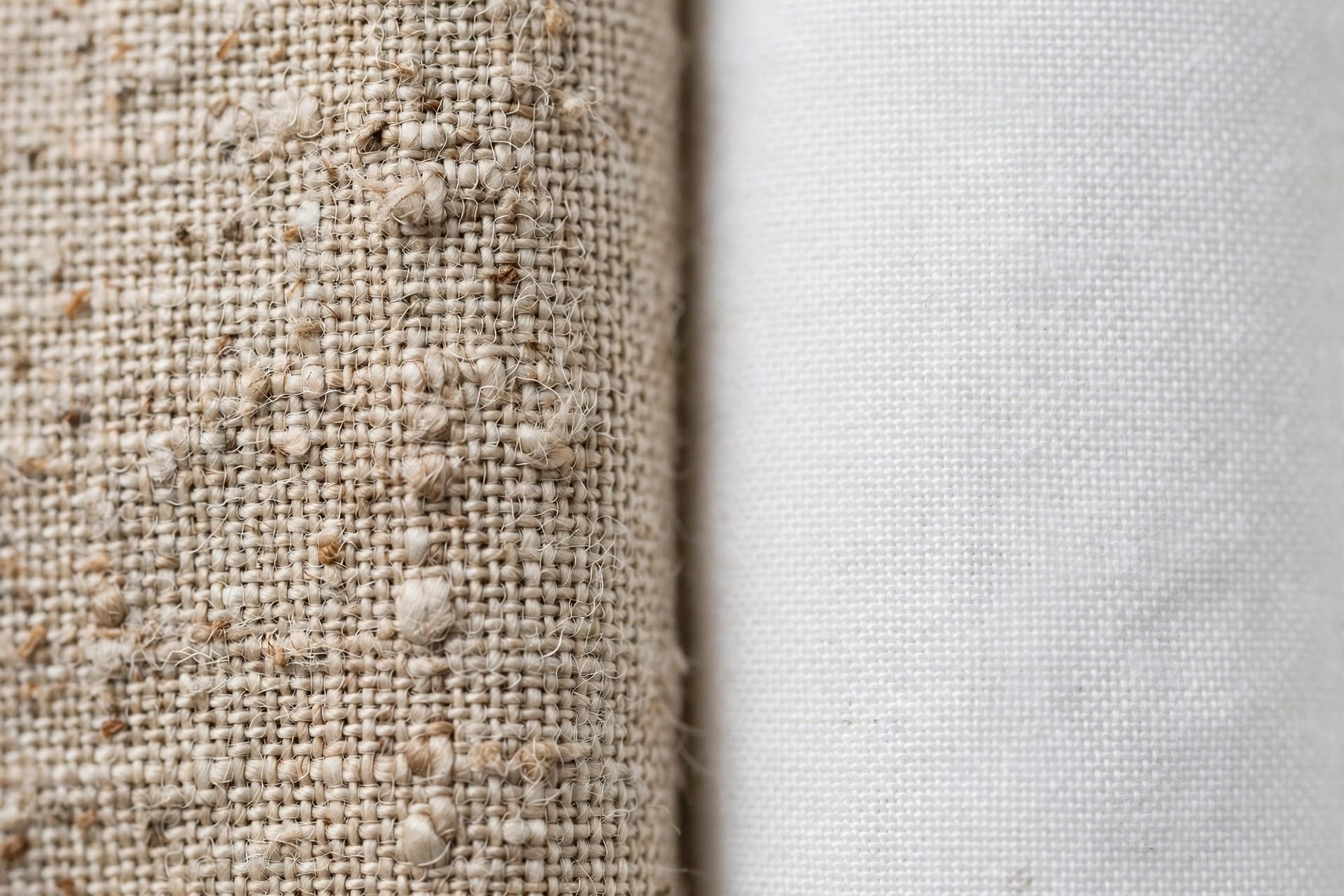
Linen’s irregular, slubby weave contrasts with cotton’s tighter, more even texture.
Durability and Strength
Linen is widely regarded as the more durable of the two fabrics. Its longer fibers create a stronger, more resilient weave that holds up to years of washing and use, and well-made linen textiles are often noted for aging gracefully rather than wearing out. Cotton has a bit more natural stretch and flexibility, but it’s generally less durable over the long term than linen, though finer cotton varieties — like Egyptian or Pima cotton, made from longer-staple fibers — offer noticeably better softness and durability than standard cotton.
Breathability and Temperature Regulation
Both fabrics are considered breathable, natural-fiber options, but linen generally has the edge for hot or humid climates:
- Linen is prized for its cooling effect and moisture-wicking properties, making it a popular choice for warm-weather clothing and summer bedding.
- Cotton is also breathable and highly absorbent, though it tends to retain more moisture against the skin than linen, which some people find less cooling in very hot conditions but more comfortable for everyday softness.
Wrinkling and Appearance
Both linen and cotton are natural fibers, and both wrinkle — but linen wrinkles more visibly and more quickly. This is often treated as a feature rather than a flaw in linen bedding and clothing, contributing to its relaxed, lived-in aesthetic, whereas wrinkled cotton tends to read as simply needing an iron. If a crisp, smooth appearance matters more to you than a relaxed, textured look, this is worth factoring into your choice.
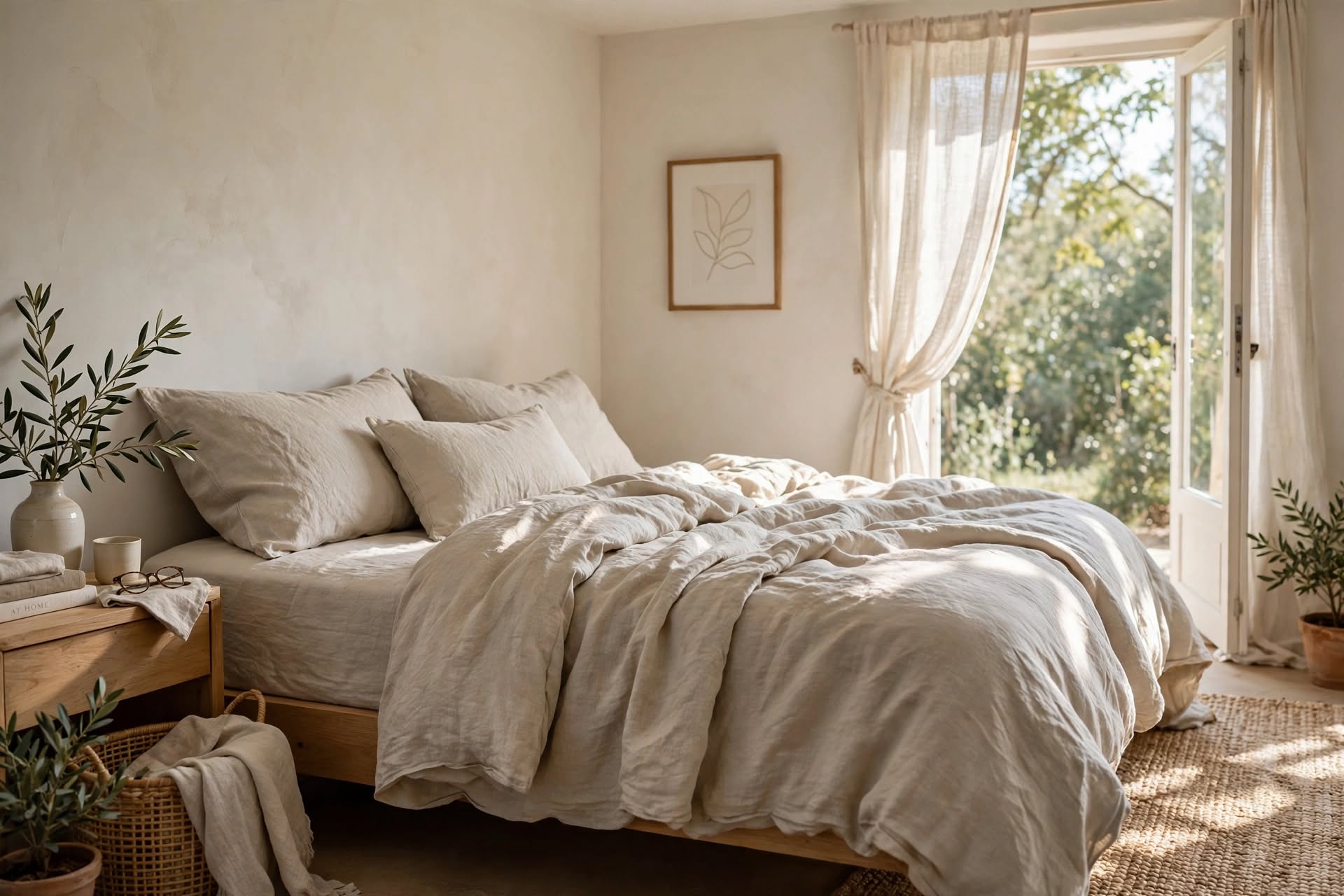
Linen’s natural wrinkling is often embraced as part of its relaxed, lived-in aesthetic rather than treated as a flaw.
Cost and Availability
Linen is generally more expensive than cotton, largely due to the labor-intensive process of growing, harvesting, and processing flax compared to cotton’s more mechanized, large-scale production. Cotton’s wider availability and lower production cost make it the more budget-friendly and accessible option across clothing, bedding, and home textiles, which is part of why it remains the most widely used natural fiber worldwide.
How to Tell Linen and Cotton Apart
If you’re trying to identify an unlabeled fabric, a few quick checks help:
- Touch test — Linen feels slightly thicker, cooler, and more textured; cotton feels smoother and softer immediately.
- Visual check — Look for a “slubby,” slightly irregular woven pattern, which indicates linen; a smooth, uniform weave points to cotton.
- Wrinkle test — Scrunch a section of the fabric in your hand; linen will hold deeper, more pronounced wrinkles than cotton.
- Weight check — Despite feeling lighter and cooler against the skin, linen fabric is often actually heavier by weight than a comparable cotton fabric.
Which One Should You Choose for Home Textiles?
- Choose linen for: summer bedding, curtains in warm or humid rooms, and any home textile where a relaxed, textured aesthetic and long-term durability matter more than a low upfront cost.
- Choose cotton for: everyday bedding, budget-friendly textiles, sensitive skin, or when a smooth, crisp, low-maintenance feel is the priority.
- Consider a blend: Many home textiles combine linen and cotton to balance linen’s durability and breathability with cotton’s softness and lower cost.
Frequently Asked Questions
Is linen or cotton better for bedsheets?
It depends on your priorities. Linen offers better breathability and durability, making it a strong choice for hot sleepers or warm climates, while cotton offers a softer, smoother feel from the first wash and is generally more affordable.
Why is linen more expensive than cotton?
Linen comes from the flax plant, which requires specific growing conditions, labor-intensive harvesting, and a longer fiber processing time than cotton, driving up its cost compared to cotton’s larger-scale, more mechanized production.
Does linen or cotton wrinkle more?
Linen wrinkles more visibly and more quickly than cotton, though this is often embraced as part of linen’s relaxed, natural aesthetic rather than considered a downside.
Is linen actually cooler than cotton?
Generally, yes. Linen has stronger moisture-wicking and cooling properties, making it a popular choice for hot climates and summer bedding, while cotton is breathable but tends to retain slightly more moisture against the skin.
Can linen and cotton be blended together?
Yes, linen-cotton blends are common in home textiles and clothing, combining linen’s durability and breathability with cotton’s softness and more affordable cost.
Choosing fabrics for a bedroom refresh? Explore our guide on the difference between a duvet and a comforter and how to use pastel colors in decor, or browse more home decor guides on Ayaan Home Decor.
Last modified: September 14, 2026