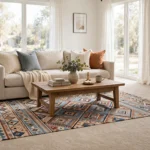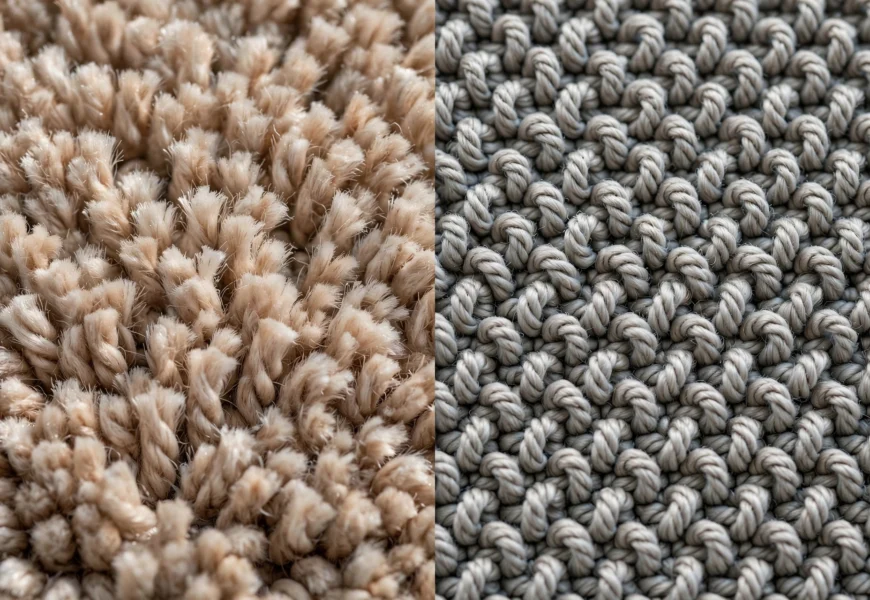
Almost every carpet you’ll come across at a flooring store falls into one of two basic construction types: cut pile or loop pile. The names describe exactly what’s happening at the fiber level, and that one manufacturing difference ends up shaping everything else about how the carpet feels, wears, and performs in your home.
Quick Answer: Cut pile carpet is made by cutting the yarn loops during manufacturing, creating soft, upright fibers with a plush, luxurious feel — but it’s more prone to showing footprints, vacuum marks, and wear over time. Loop pile carpet leaves the yarn loops uncut, creating a firmer, more textured surface that resists crushing and matting, making it a stronger choice for high-traffic areas. Cut-and-loop carpet combines both techniques for a middle-ground option.
Here’s a full breakdown of how each is made, the styles within each category, and which one actually fits your room.
How Each Pile Type Is Made
Carpet pile refers to the visible fiber surface, created by tufting yarn loops through the carpet’s backing. What happens to those loops next determines the entire category:
- Cut pile — The yarn loops are cut at the top during manufacturing, leaving upright, individual fiber tufts. The cut ends are typically twisted, giving the carpet its soft, uniform texture.
- Loop pile — The yarn loops are left completely intact, uncut, creating a looped surface texture rather than upright fibers.
This single manufacturing choice is the root of nearly every practical difference between the two.
Cut Pile vs. Loop Pile: Full Comparison
| Factor | Cut Pile | Loop Pile |
|---|---|---|
| Feel underfoot | Soft, plush, luxurious | Firmer, more textured |
| Durability | Good, but more prone to matting over time | Excellent; resists crushing and matting |
| Shows footprints/vacuum marks | Yes, especially plush and Saxony styles | No, loop construction hides marks |
| Maintenance | Needs more frequent vacuuming | Easier to maintain; dirt sits less deep in fibers |
| Pet-friendliness | Generally safer; no loops to snag claws | Loops can catch on pet claws and snag |
| Best for | Bedrooms, formal living rooms, low-traffic spaces | Hallways, stairs, family rooms, high-traffic areas |
| Common styles | Saxony, plush, frieze, textured, shag | Level loop, multi-level loop, Berber |
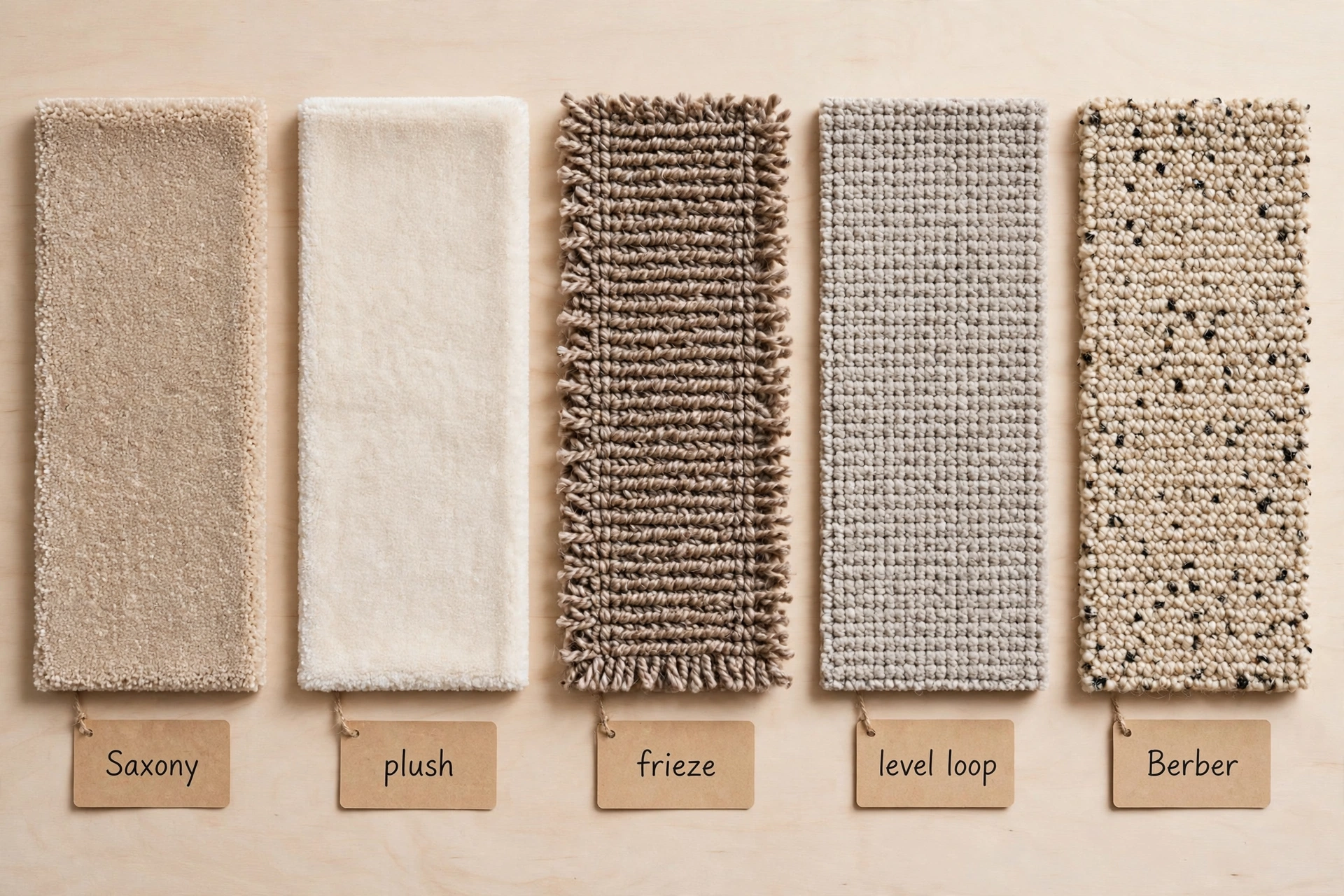
Saxony, plush, and frieze are common cut pile styles, while level loop and Berber represent classic loop pile textures.
Cut Pile Styles Explained
Cut pile isn’t a single look — it covers several distinct styles, each with a different balance of softness and durability:
- Saxony — A classic, smooth cut pile with a dense, even surface; one of the most popular residential styles.
- Plush — Very dense and velvety, giving a formal, polished appearance, though it shows footprints and vacuum lines the most of any cut pile style.
- Frieze — Highly twisted, longer fibers that curl in different directions, which helps hide footprints and wear better than plush or Saxony.
- Textured — A slightly less uniform twist that hides dirt, footprints, and daily wear better than smoother cut pile styles, making it a practical, casual option.
- Shag — Long, loosely spaced fibers with a retro, cozy look; soft and low-maintenance, but generally reserved for low-traffic decorative spaces.
Of these, frieze and textured cut pile styles tend to offer the best durability within the cut pile category, though none of them fully match loop pile’s resistance to crushing in heavy-traffic areas.
Loop Pile Styles Explained
Loop pile also comes in a few distinct constructions:
- Level loop — All loops are the same height, creating a smooth, uniform surface. This is the most durable loop style and a common choice for offices, hallways, and other heavy-traffic commercial or residential areas.
- Multi-level loop — Loops of varying heights create texture and pattern, adding visual interest while still retaining strong durability.
- Berber — A popular, often flecked loop style known for being especially crush- and stain-resistant, widely recommended for high-traffic rooms.
If you’re specifically shopping for a high-traffic space, our guide on the best carpet for high-traffic areas covers how loop pile styles like Berber compare across different rooms in more detail.
Cut-and-Loop: The Hybrid Option
Cut-and-loop carpet combines both techniques in a single carpet, using a mix of cut and looped fibers to create more complex textures and patterns — often sculpted into geometric or organic designs. It offers a middle ground between the softness of cut pile and the durability of loop pile, though it typically doesn’t match either style at its own specialty (it’s not as plush as a dedicated cut pile, nor as crush-resistant as a dedicated loop pile).
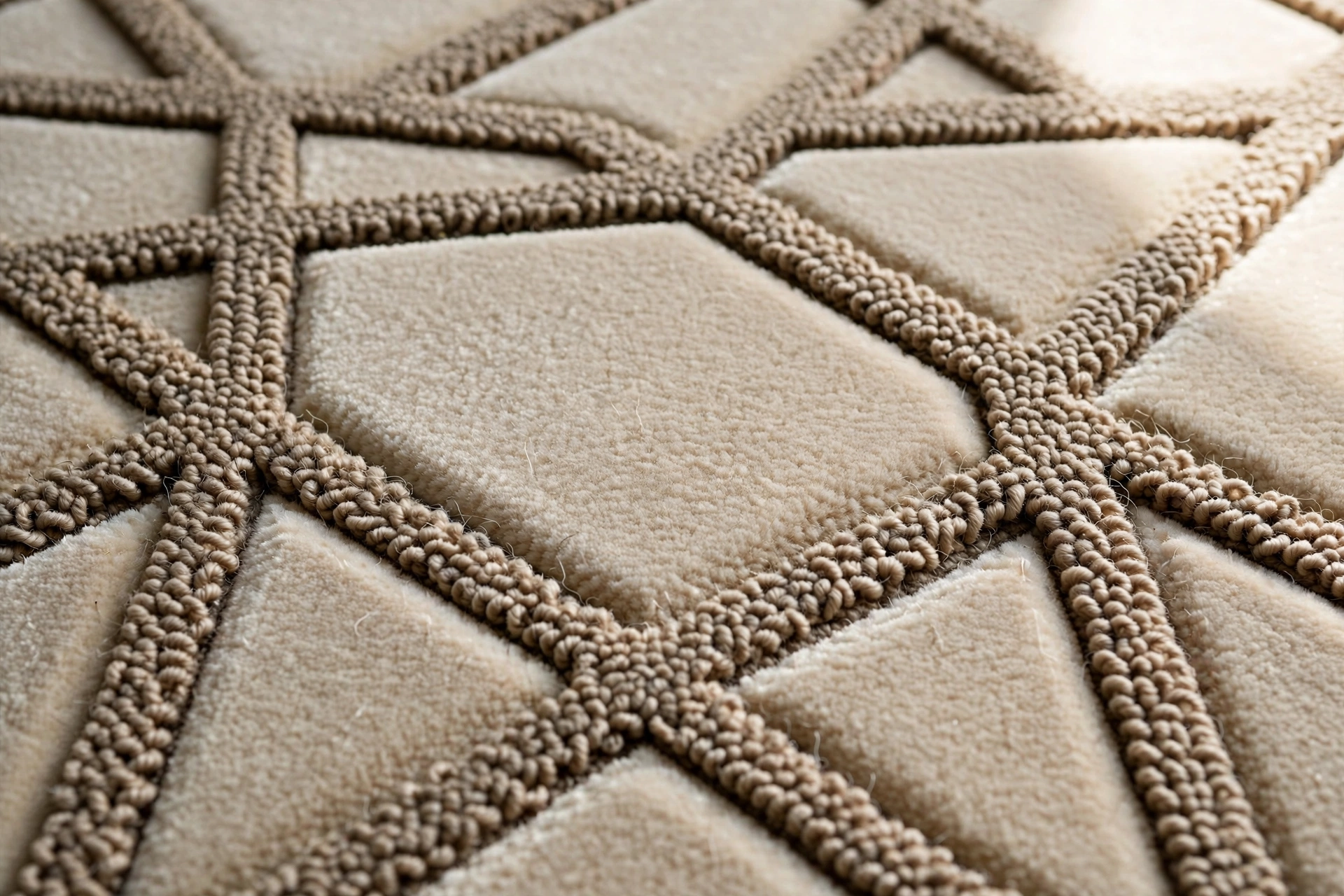
Cut-and-loop carpet blends sheared and looped fibers to create sculpted patterns and textures.
Why Durability Differs So Much Between the Two
Loop pile’s uncut, intact loops act almost like tiny springs — they resist being flattened underfoot and bounce back from pressure far better than upright cut fibers, which is why loop pile consistently outperforms cut pile in crushing and matting resistance. Cut pile fibers, especially in plush or Saxony styles, gradually bend and mat down in high-traffic paths since there’s nothing holding each fiber upright once the loop is severed. Frieze and textured cut pile styles perform better than plush styles specifically because their heavy twist helps individual fibers resist bending in a single direction.
This is also directly related to carpet face weight and density — within either pile category, a denser, more tightly twisted construction will outperform a looser one. Our guide on what face weight means in carpet explains how to read that spec alongside pile style when comparing options.
A Practical Consideration for Pet Owners
Loop pile’s biggest functional downside shows up in homes with pets: intact loops can catch on claws, and repeated snagging can pull and damage the carpet over time. Cut pile doesn’t have this issue, since there are no loops for claws to hook into — something worth weighing if you have dogs or cats, even though loop pile otherwise outperforms cut pile on durability and stain resistance.
Choosing the Right Pile for Each Room
- Bedrooms and formal living rooms: Cut pile (Saxony or plush) for maximum softness and comfort in lower-traffic spaces.
- Family rooms and casual living spaces: Textured or frieze cut pile balances comfort with reasonable durability, or a multi-level loop for added texture.
- Hallways, stairs, and entryways: Level loop or Berber loop pile for maximum durability and minimal visible wear.
- Homes with pets: Cut pile (textured or frieze) to avoid loop-snagging issues, paired with a stain-resistant fiber like nylon or triexta.
- Home offices with rolling chairs: Level loop pile handles repeated chair-caster wear better than most cut pile styles.
Frequently Asked Questions
Which is more durable, cut pile or loop pile carpet?
Loop pile is generally more durable than cut pile, since its intact loops resist crushing and matting far better than the upright, cut fibers in cut pile styles.
Does cut pile carpet show footprints and vacuum marks?
Yes, especially plush and Saxony styles. Textured and frieze cut pile styles hide footprints and vacuum lines noticeably better than smoother cut pile options.
Is loop pile carpet bad for pets?
Loop pile’s uncut loops can catch on pet claws and potentially snag or unravel over time, making cut pile a safer choice for households with dogs or cats, despite loop pile’s overall durability advantage.
What is cut-and-loop carpet?
Cut-and-loop carpet combines both cut and looped fibers in a single carpet to create sculpted patterns and textures, offering a middle ground between the softness of cut pile and the durability of loop pile.
Which pile style is best for a high-traffic hallway?
Level loop or Berber loop pile is generally the best choice for hallways, since these styles resist crushing and matting significantly better than any cut pile style under concentrated foot traffic.
Choosing carpet for a specific room? Explore our guides on the best carpet for high-traffic areas, understanding carpet face weight, and more flooring comparisons on Ayaan Home Decor.
Last modified: August 3, 2026