I once made the classic mistake of using beautiful glossy wall tiles on my bathroom floor. Within six months, they were cracked, chipped, and dangerously slippery when wet. That expensive lesson taught me that floor tile and wall tile are not interchangeable — they are engineered for completely different jobs.
Strength and Durability
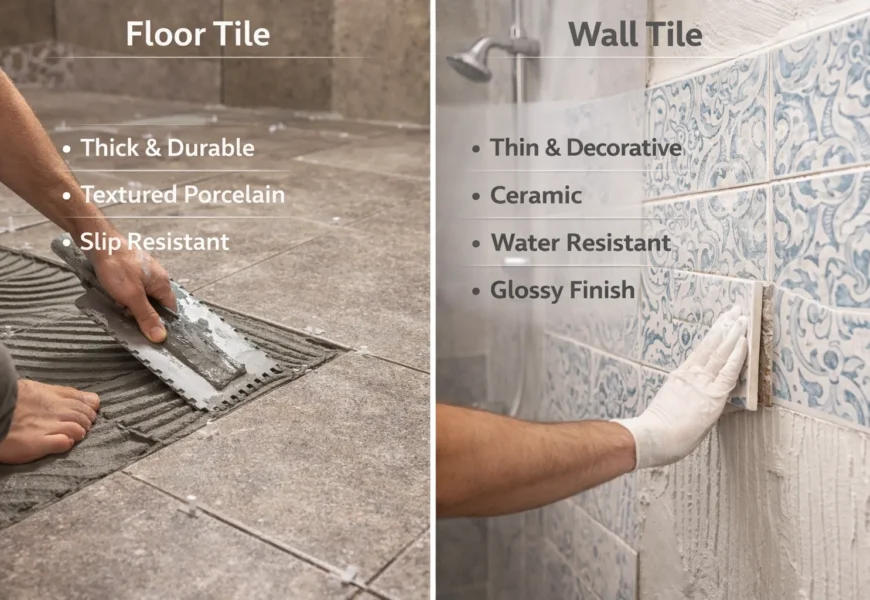
The biggest difference is strength. Floor tiles are much thicker and denser, usually made from porcelain or high-quality ceramic designed to handle heavy foot traffic, furniture weight, and daily wear. They are rated for high abrasion and impact resistance. Wall tiles, on the other hand, are thinner and lighter because walls don’t bear weight or constant traffic. Using wall tiles on the floor is a recipe for quick cracking and failure.
Thickness and Weight
Floor tiles are typically 8mm to 12mm thick (sometimes more for heavy-duty options), giving them the structural integrity needed for floors. Wall tiles are usually only 5mm to 8mm thick. This makes wall tiles easier to cut and install vertically, but they lack the robustness required for horizontal surfaces underfoot.
Water Resistance and Moisture Management
Both can be water-resistant, but floor tiles — especially porcelain — are generally less porous and better at handling standing water and frequent cleaning. In wet areas like bathrooms and kitchens, floor tiles must also offer good slip resistance (often rated with a COF or R-value). Wall tiles in showers prioritize aesthetics and can have a glossier, more decorative finish since slip resistance isn’t a concern on vertical surfaces.
Surface Finish and Safety
Floor tiles usually have a matte, textured, or slightly rough surface to provide grip and prevent slips, especially when wet. Wall tiles often feature glossy, polished, or highly decorative surfaces because they are meant to look beautiful and reflect light. A glossy floor tile would be hazardous in a bathroom, while a matte wall tile might look dull in a shower.
Installation and Cost Considerations
Because floor tiles are thicker and stronger, they require a more robust adhesive (thinset) and sometimes a stronger subfloor. Wall tiles are lighter and easier to install, often needing less preparation. Price-wise, floor tiles tend to be more expensive per square foot due to their durability requirements, while decorative wall tiles can range from budget-friendly to luxury depending on the design.
You can sometimes use floor tiles on walls (especially in high-moisture areas), but using wall tiles on floors is almost never recommended.
When to Choose Which Tile
- Use floor tiles for: bathroom floors, kitchen floors, entryways, hallways, and any high-traffic or wet area.
- Use wall tiles for: shower walls, backsplashes, accent walls, and decorative vertical surfaces.
In modern designs, many people mix both — durable floor tiles on the ground and beautiful, lighter wall tiles above for the perfect balance of function and style.
Final Tips
Always check the manufacturer’s rating (PEI rating for abrasion resistance and water absorption rating) before buying. If you’re unsure, ask the store staff or bring photos of your space. Taking the time to choose the right tile will save you from costly replacements later.
FAQs About Floor Tile vs Wall Tile
Can I use wall tile on the floor? No, it’s not recommended. Wall tiles are too thin and fragile for floor use and can crack easily underfoot.
Can I use floor tile on the wall? Yes, floor tiles work well on walls, especially in wet areas like showers. They are stronger and more water-resistant, though they may be heavier to install.
Which tile is more slip-resistant? Floor tiles are designed with better slip resistance, especially matte or textured versions. Wall tiles are often glossy and slippery if used on the floor.
Are floor tiles more expensive? Usually yes. Their greater thickness and durability make them cost more per square foot than standard wall tiles.
What about porcelain vs ceramic? Porcelain is denser and better for floors (lower water absorption). Ceramic is lighter and commonly used for walls.
Last modified: April 4, 2026