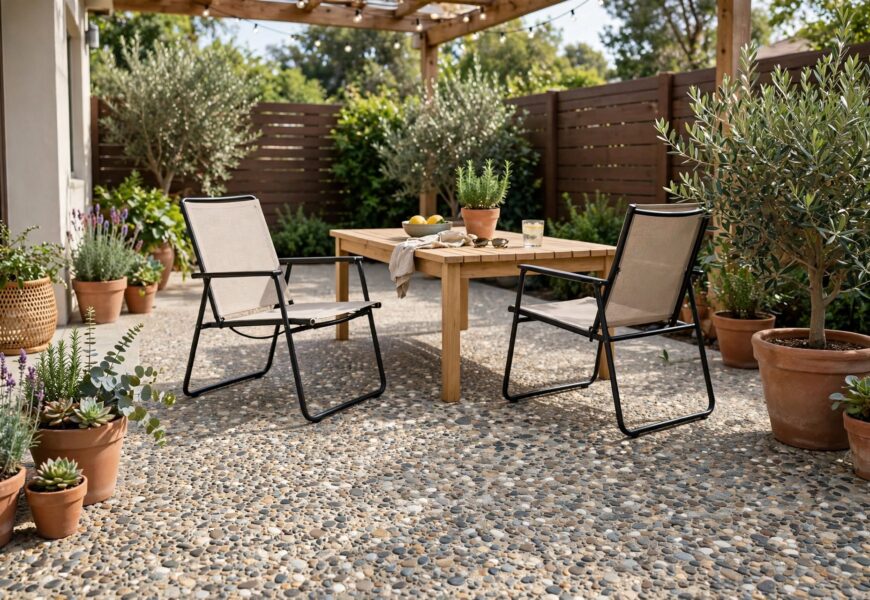
Standard poured concrete has a reputation for being purely functional — flat, gray, and forgettable. Exposed aggregate concrete is the same underlying material with one clever twist: instead of hiding the stones and pebbles mixed into it, the top layer is removed to show them off, turning an ordinary driveway or patio into something with real texture and character.
Quick Answer: Exposed aggregate concrete is a decorative concrete finish created by removing the thin top layer of cement paste to reveal the stones, pebbles, sand, or other aggregate materials mixed into the concrete beneath. It’s made using a chemical surface retarder, water washing, or light etching after the concrete is poured, and it’s a popular choice for driveways, patios, walkways, and pool decks thanks to its combination of natural texture, slip resistance, and durability.
Here’s how it’s actually made, what it costs, and where it makes the most sense around a home.
How Exposed Aggregate Concrete Is Made
There are two main methods contractors use to create this finish:
- Mixing and seeding — Decorative aggregate (stones, pebbles, shells, or even recycled glass) is blended directly into the concrete mix before it’s poured, creating a more uniform, consistent appearance throughout.
- Topping (seeding onto the surface) — Standard concrete is poured first, then a layer of decorative aggregate is spread across the still-wet surface and worked in, which is often more affordable since less decorative material is needed overall.
With either method, the process to reveal the aggregate is the same:
- A chemical surface retarder is sprayed onto the freshly poured concrete, which slows the curing process specifically at the surface.
- The concrete is left to cure for about a day.
- Once cured, the surface is pressure washed (or in some cases lightly acid-etched), removing the thin, retarded top layer of cement paste and revealing the aggregate underneath.
- A sealer is applied to protect the finished surface and help it hold up to weather and foot traffic over time.
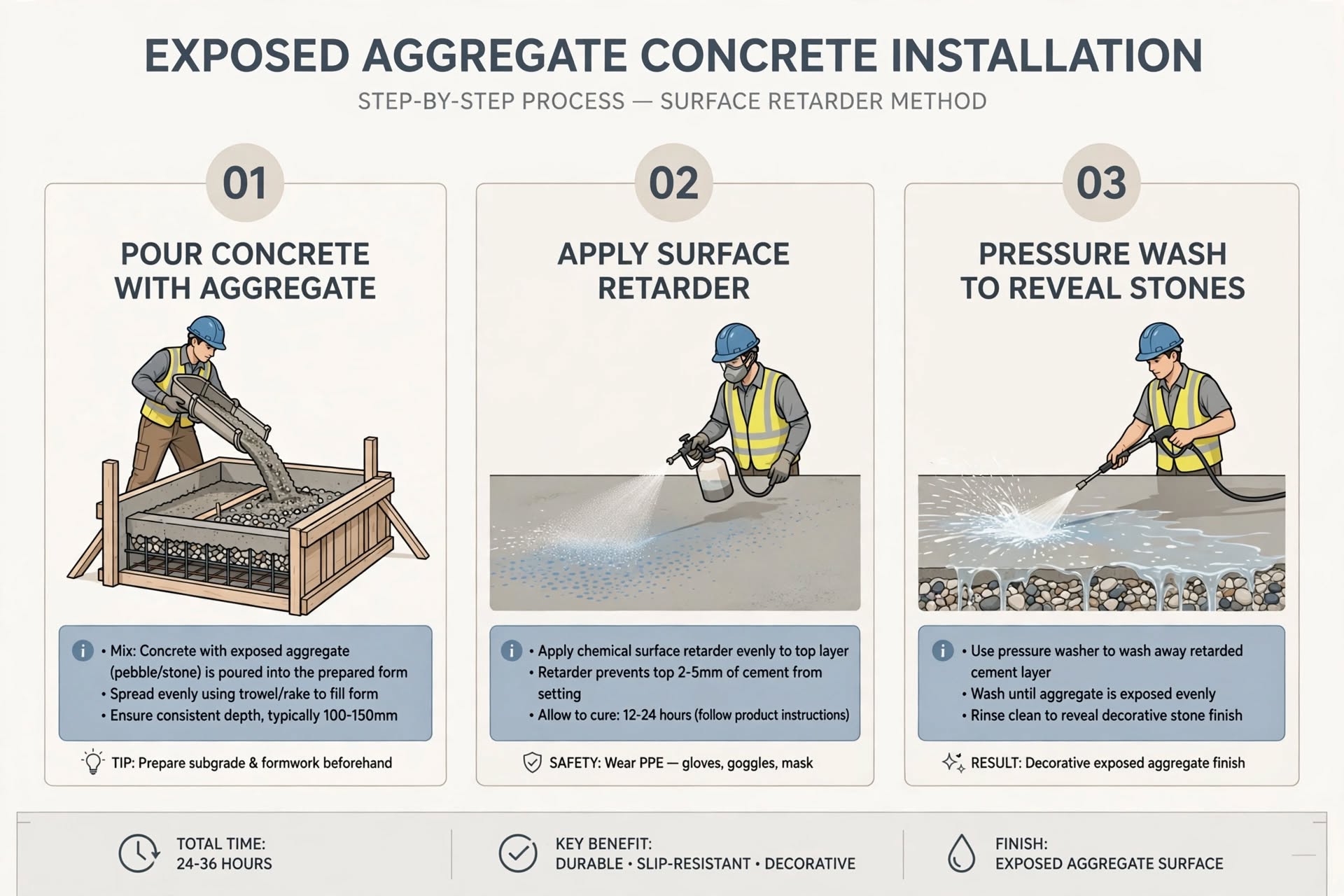
A chemical retarder and pressure washing reveal the decorative aggregate hidden just beneath the concrete’s surface.
Benefits of Exposed Aggregate Concrete
- Natural, customizable aesthetics — The choice of aggregate (river pebbles, crushed granite, colored glass, shells) lets you tailor the color, texture, and overall look to match your home’s style.
- Slip resistance — The textured, uneven surface provides significantly more traction than smooth, standard concrete, making it a practical choice for pool decks, walkways, and driveways exposed to rain.
- Durability — The exposed stones are typically harder than the surrounding cement paste, which means the surface often resists wear and abrasion better than plain concrete over time.
- Cost-effective compared to other decorative options — Since it requires relatively few additional materials and standard finishing tools, exposed aggregate can achieve a high-end, custom look without the cost of natural stone paving.
- Long lifespan — Well-installed and properly sealed exposed aggregate concrete can last up to 30 years, comparable to standard concrete’s typical lifespan.
Drawbacks to Consider
- More difficult to repair invisibly — Patching a crack or damaged section of exposed aggregate concrete is harder to blend seamlessly than a repair on smooth, plain concrete.
- Requires periodic resealing — The sealer that protects the surface and enhances the aggregate’s color needs to be reapplied every few years to maintain both appearance and durability.
- Textured surface can be harder to clean — Dirt and debris can settle into the surface texture more than on a smooth finish, sometimes requiring more frequent sweeping or pressure washing.
- DIY installation is difficult — While technically possible for small areas, achieving a consistent, professional-looking exposed aggregate finish by hand is time-consuming and easy to get wrong across a larger surface.
According to Angi’s guide to exposed aggregate concrete, the finish is sometimes referred to as “decorative concrete” or “pebble finish,” and it’s commonly recommended specifically for its combination of custom aesthetics and added slip resistance in outdoor applications.
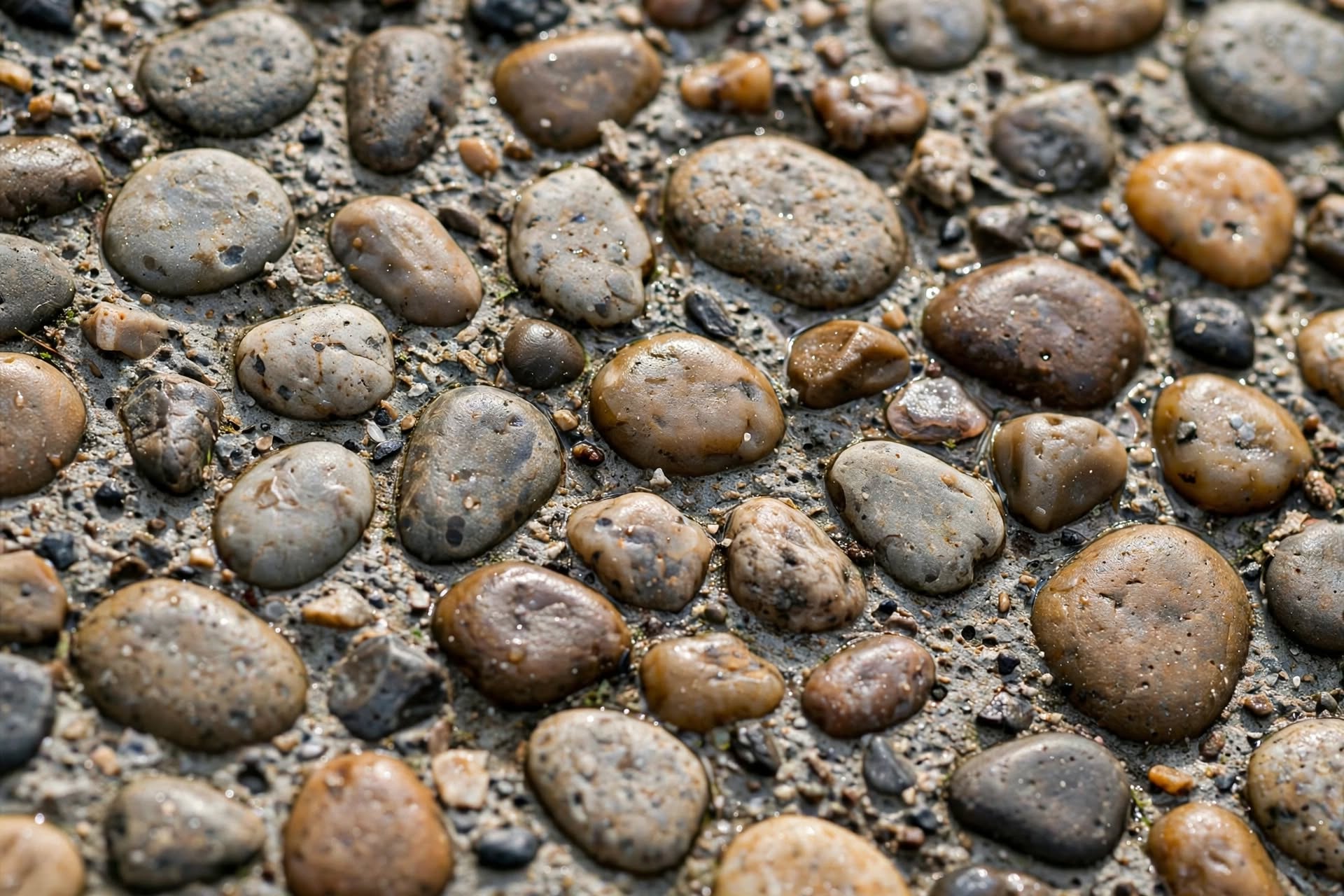
The exposed stones are typically harder than the surrounding cement paste, giving the surface added durability against wear.
Cost of Exposed Aggregate Concrete
Exposed aggregate concrete generally costs somewhat more than plain poured concrete, largely due to the added labor for the retarder application, washing, and sealing steps, plus the cost of decorative aggregate if it’s not sourced from standard materials already on hand. That said, it typically remains more affordable than natural stone paving or high-end pavers while delivering a comparably custom, upscale look. If you’re comparing concrete’s overall strength and cost against other building materials for a project, our guide on which is stronger, cement or concrete covers the basics of how concrete’s composition affects both.
Best Uses for Exposed Aggregate Concrete
- Driveways — A popular choice thanks to its durability under vehicle weight and improved traction in wet conditions.
- Patios and pool decks — The slip-resistant surface is especially valuable around pools and other areas prone to getting wet.
- Walkways and garden paths — Adds visual interest and texture to outdoor landscaping features. If you’re planning a broader garden refresh alongside a hardscaping project like this, our guide on what is porous concrete covers a related specialized concrete option worth knowing about for managing stormwater runoff in the same outdoor space.
- Commercial plazas and walkways — Common in shopping centers and public spaces where durability and low maintenance matter alongside appearance.
- Interior applications — Increasingly used indoors by designers who appreciate the same textured, natural aesthetic in flooring or accent surfaces.
Frequently Asked Questions
How long does exposed aggregate concrete last?
Exposed aggregate concrete can last up to 30 years when properly installed and maintained, which is comparable to the lifespan of standard concrete, though the textured surface may show wear slightly faster in very high-traffic areas.
Is exposed aggregate concrete more expensive than regular concrete?
Yes, generally. The additional labor for applying a surface retarder, washing, and sealing, along with the cost of decorative aggregate, makes it more expensive than plain poured concrete, though it typically costs less than natural stone paving.
Is exposed aggregate concrete slippery when wet?
No — quite the opposite. Its textured, uneven surface provides significantly better slip resistance than smooth concrete, which is part of why it’s a popular choice for pool decks and outdoor walkways.
Can I install exposed aggregate concrete myself?
It’s possible for small areas, but achieving a professional, consistent finish across a larger surface like a driveway is time-consuming and difficult to do by hand, since the entire surface must be evenly worked and washed before the retarder fully sets.
Does exposed aggregate concrete need to be sealed?
Yes. A sealer protects the surface from weather and wear and helps maintain the appearance of the exposed stones, and it typically needs to be reapplied every few years to keep performing effectively.
Planning an outdoor hardscaping project? Explore our guide on what is porous concrete, or browse more home and garden improvement guides on Ayaan Home Decor.
Last modified: September 7, 2026