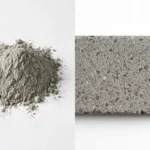
Regular concrete is designed to be as solid and impermeable as possible — which is exactly why standing water and runoff are such a common problem on driveways, sidewalks, and parking lots. Porous concrete flips that goal on its head, using the same basic ingredients to create a surface that’s engineered to let water pass straight through it.
Quick Answer: Porous concrete (also called pervious concrete, permeable concrete, or no-fines concrete) is a specialized type of concrete made with coarse aggregate, cement, and water, but with little to no sand. This creates a network of interconnected voids — typically 15% to 25% of the material’s total volume — that allows water to drain directly through the surface rather than pooling or running off. It’s most commonly used for driveways, walkways, parking lots, and other paved surfaces where stormwater management is a priority.
Here’s how it’s made, what it’s actually good for, and where its trade-offs make it a less obvious choice than standard concrete.
What Makes Porous Concrete Different
Standard concrete uses sand as a fine aggregate to fill the gaps between larger pieces of coarse aggregate (crushed stone or gravel), creating a dense, solid material. Porous concrete deliberately leaves most or all of that sand out:
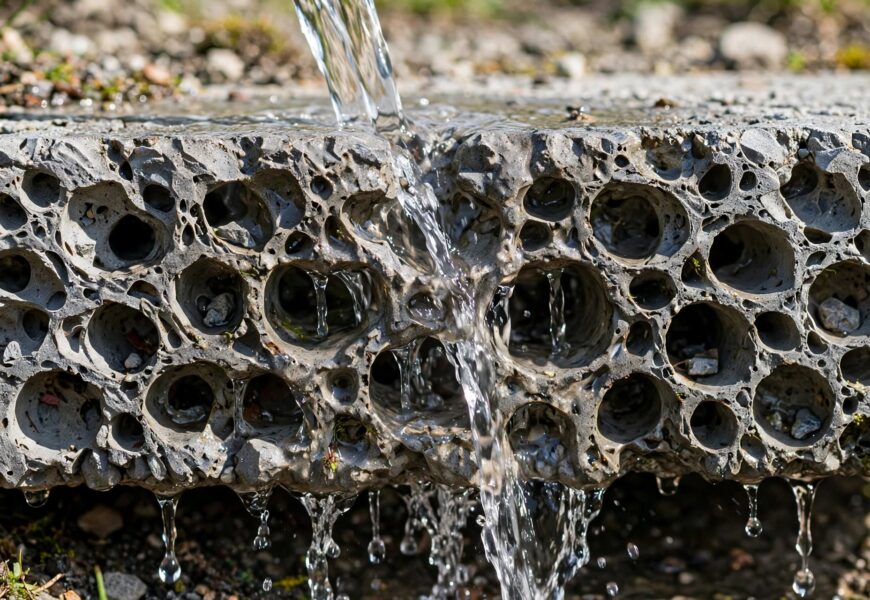
- Little to no fine aggregate (sand) means the coarse aggregate pieces are bonded together only at their contact points by a thin layer of cement paste, rather than being fully packed and surrounded.
- This creates an open, interconnected pore structure — often described as looking like a rough, honeycomb-textured surface — that gives conventional concrete its solid look but with visible gaps throughout.
- Void content typically runs 15% to 25% of the total volume, compared to just 3% to 7.5% in standard, non-porous concrete, according to industry testing standards.
How It Actually Drains Water
The interconnected voids in porous concrete function almost like a built-in drainage system:
- Water passes directly through the surface layer and into a prepared base layer underneath — typically a bed of crushed stone or gravel that provides additional storage capacity and structural support.
- A standard 5-inch-thick porous concrete surface can store roughly 1 inch of rainwater within its own void structure, increasing to as much as 3 inches when installed over a properly prepared 6-inch gravel sub-base.
- Drainage rates are genuinely fast — commonly 3 to 5 gallons per minute per square foot, which exceeds the flow rate needed to prevent runoff during most rain events.
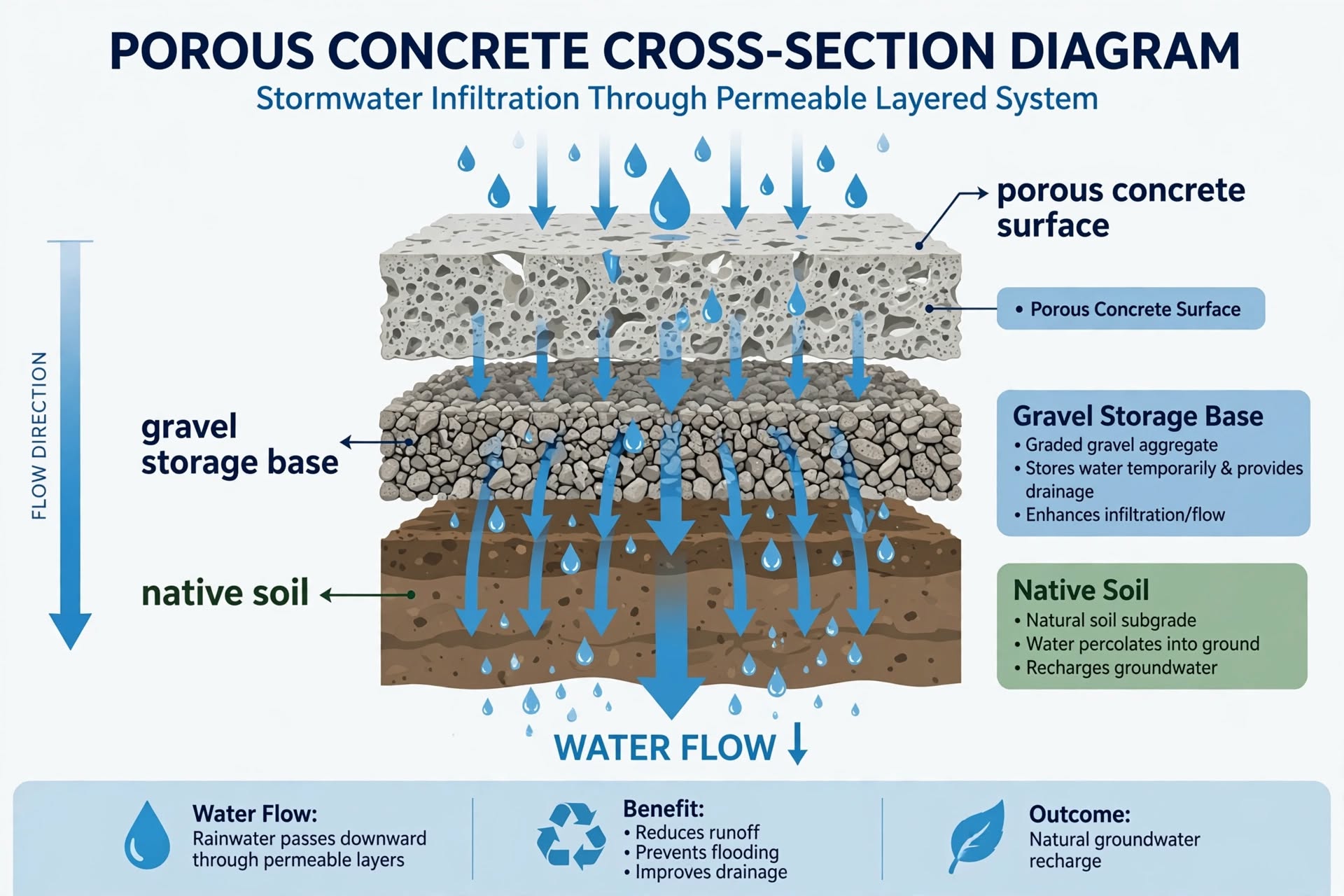
Water passes through porous concrete’s surface voids and into a gravel base layer before reaching the soil below.
Benefits of Porous Concrete
- Reduces stormwater runoff — By letting water infiltrate directly where it falls, porous concrete significantly reduces the volume of runoff that would otherwise overwhelm storm drains and contribute to flooding.
- Supports groundwater recharge — Water passes into the ground rather than being diverted away through storm sewers, helping replenish the local water table.
- Improves winter and rainy-day safety — Since water doesn’t pool on the surface, porous concrete reduces the freezing conditions that create ice, and lowers the risk of aquaplaning on wet pavement.
- Helps manage the urban heat island effect — The interconnected pore structure allows for evaporative cooling and better moisture regulation compared to solid, non-porous pavement.
- Can reduce noise — The open structure of porous pavement has been noted to help absorb sound compared to standard dense pavement.
Drawbacks and Limitations
- Lower compressive strength — Porous concrete’s compressive strength typically ranges from about 7 to 25 MPa (roughly 1,000–3,600 psi), which is meaningfully lower than standard concrete’s 3,500–5,000+ psi range, making it unsuitable for heavy structural loads.
- Higher upfront installation cost — Porous concrete can cost up to 25% more to install than conventional concrete, largely due to the specialized base preparation and mix design required.
- Requires ongoing maintenance — The voids that make porous concrete work can become clogged with dirt, debris, and fine sediment over time, requiring periodic vacuuming or pressure washing to maintain drainage performance.
- Not suitable for every site — Poor soil drainage conditions, certain climates, or heavy vehicle traffic can limit where porous concrete is a practical choice.
According to Branco Enterprises, while porous concrete costs more upfront, the lifecycle savings from reduced stormwater management infrastructure often make it the more cost-effective option once long-term site costs are factored in.
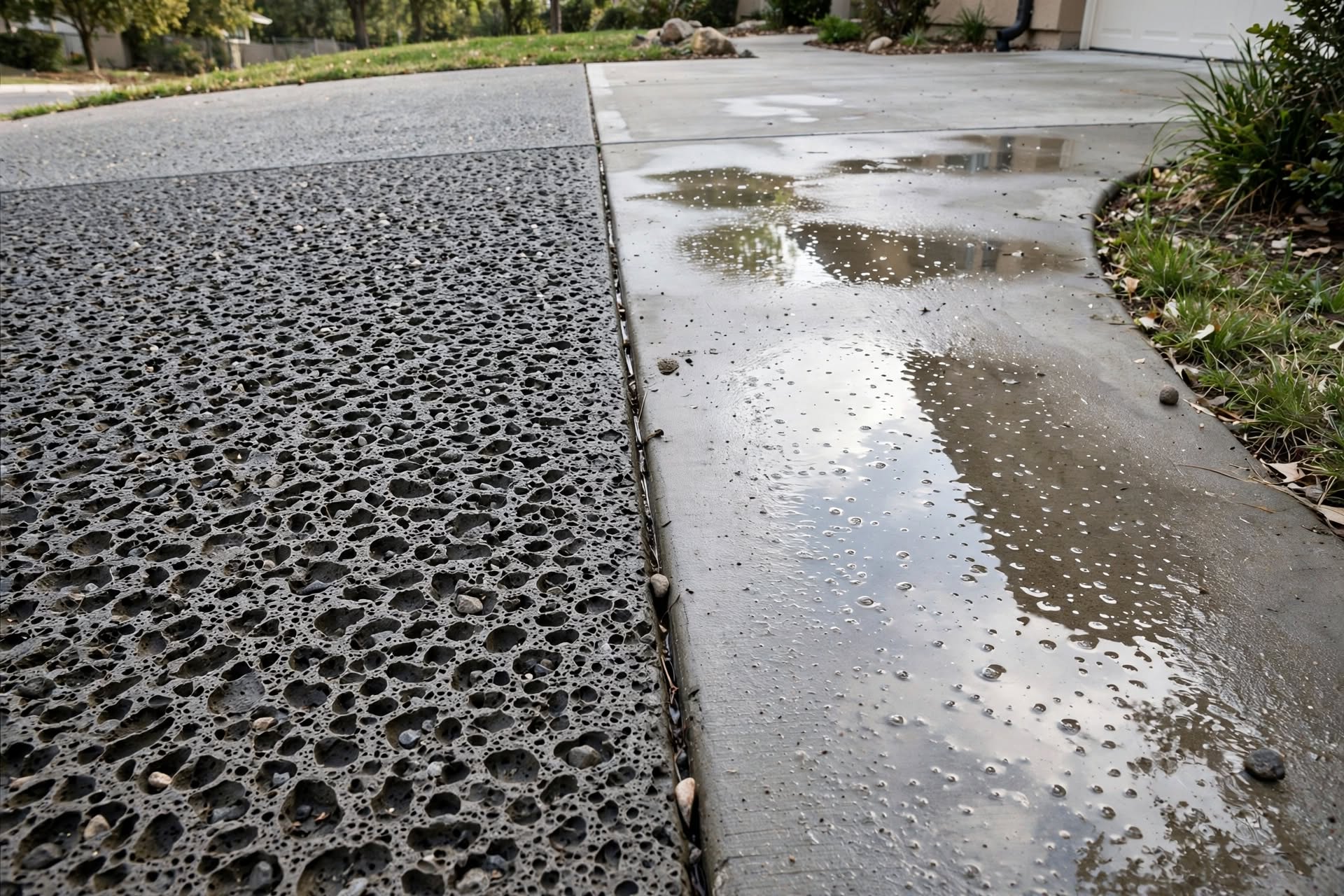
Porous concrete’s textured, open surface allows water to drain directly through it, unlike standard concrete where water pools and runs off.
Common Uses for Porous Concrete
- Residential driveways — Popular for homeowners looking to manage stormwater on their property while meeting local drainage requirements.
- Sidewalks and walkways — Reduces puddling and ice formation in pedestrian areas.
- Parking lots — Widely used in commercial settings to manage large paved surface runoff, sometimes required by local stormwater regulations.
- Patios and pool decks — Offers a slip-resistant, water-draining surface for outdoor living spaces.
- Low-traffic access roads — Suitable for areas that don’t experience heavy structural loading from large vehicles.
Because porous concrete has significantly lower compressive strength than standard concrete, our guide on which is stronger, cement or concrete is a useful companion read for understanding why aggregate content and mix design matter so much to a concrete surface’s structural performance.
Frequently Asked Questions
Is porous concrete as strong as regular concrete?
No. Porous concrete typically has a compressive strength of about 1,000 to 3,600 psi, compared to standard concrete’s 3,500 to 5,000+ psi, since removing sand from the mix reduces its density and structural strength in exchange for drainage capability.
How much more does porous concrete cost than regular concrete?
Porous concrete can cost up to 25% more to install than conventional concrete, primarily due to the specialized base preparation and mix design required, though it can offer long-term savings on stormwater management infrastructure.
Does porous concrete need special maintenance?
Yes. The void structure that allows drainage can become clogged with dirt and debris over time, so periodic vacuuming or pressure washing is recommended to maintain its permeability.
Can porous concrete be used in cold climates?
Yes, and it can actually improve winter safety, since water doesn’t pool and freeze on the surface the way it can on standard concrete. However, site-specific conditions and freeze-thaw cycles should be considered during design.
What’s the difference between porous concrete and pervious concrete?
Nothing — they’re the same material. “Pervious concrete,” “porous concrete,” “permeable concrete,” and “no-fines concrete” are all names used interchangeably for the same type of high-void, water-draining concrete.
Curious about other concrete topics? Explore our guides on which is stronger, cement or concrete and whether concrete cures underwater, or browse more home improvement guides on Ayaan Home Decor.
Last modified: September 7, 2026