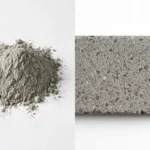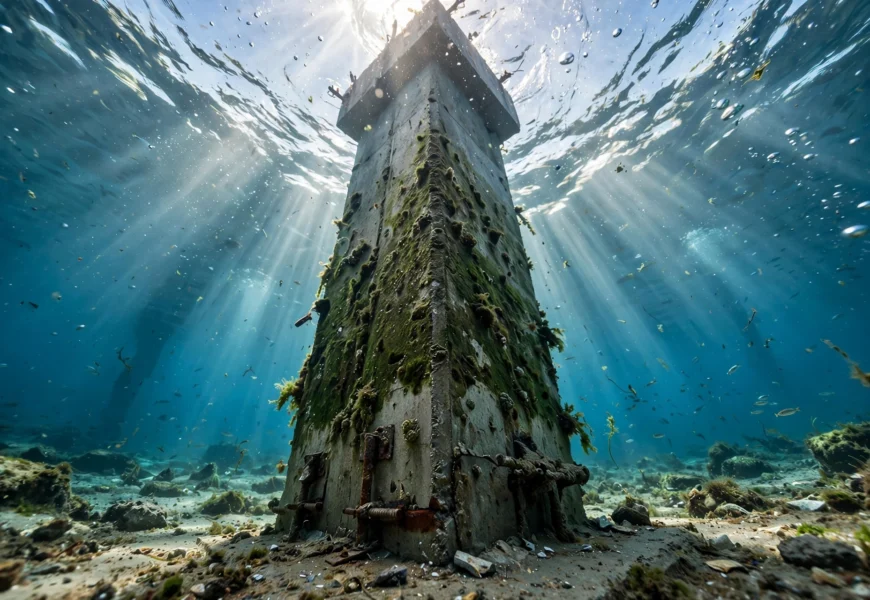
It seems counterintuitive at first: concrete is a construction material, and water is usually something you protect a job site from. But some of the largest concrete structures in the world — bridge piers, dam foundations, dock posts — are poured directly into water on purpose, and it works better than most people expect.
Quick Answer: Yes, concrete cures underwater, and it actually often ends up stronger than concrete cured in open air, since constant moisture supports the hydration reaction more consistently than air-curing does — some sources report underwater or continuously moist-cured concrete reaching roughly 50% greater strength than concrete left to cure without added moisture. The real risk with underwater concrete isn’t the water itself — it’s disturbance. If fresh, unset concrete is exposed to moving water or is placed through water rather than directly into position, the water can wash out cement paste and fine aggregate, weakening the mix or ruining its finish.
Here’s how the science works, what actually goes wrong with underwater concrete, and how it’s done correctly at both a DIY and large-scale construction level.
Why Water Actually Helps Concrete Cure
Concrete hardens through hydration — a chemical reaction between cement and water that forms calcium silicate hydrate, the compound responsible for concrete’s strength. This reaction needs sustained moisture to fully complete, which is exactly why standard concrete curing practice on dry land often involves keeping fresh concrete wet — hosing it down multiple times a day, covering it with wet burlap, or ponding water on its surface — for the first several days after pouring.
Submerging concrete in water essentially provides that ideal, continuous moisture supply automatically, without the risk of the surface drying out prematurely, which is one of the more common ways concrete cured in open air ends up weaker than it should be. According to the Concrete Society’s technical guidance, concrete hardens just as quickly underwater as it does on dry land, though lower water temperatures can somewhat slow the rate of strength development.
The Real Risk: Disturbance, Not Water Itself
If underwater curing isn’t the problem, what actually goes wrong with underwater concrete projects? The issue is almost always washout — the separation of cement paste and fine aggregate from the rest of the mix caused by water movement against or through the concrete before it sets.
- Placing concrete through moving water (rather than directly into position) lets water strip away the cement paste as the mix falls through it, weakening the final result and leaving a rough, inconsistent finish.
- Wave action, current, or turbulence around freshly placed, unset concrete can have the same washout effect even after it’s in position.
- Once concrete is set and stable, it becomes essentially unaffected by the surrounding water — properly mixed concrete is more than twice as dense as water and won’t float away, dissolve, or degrade from simple submersion.
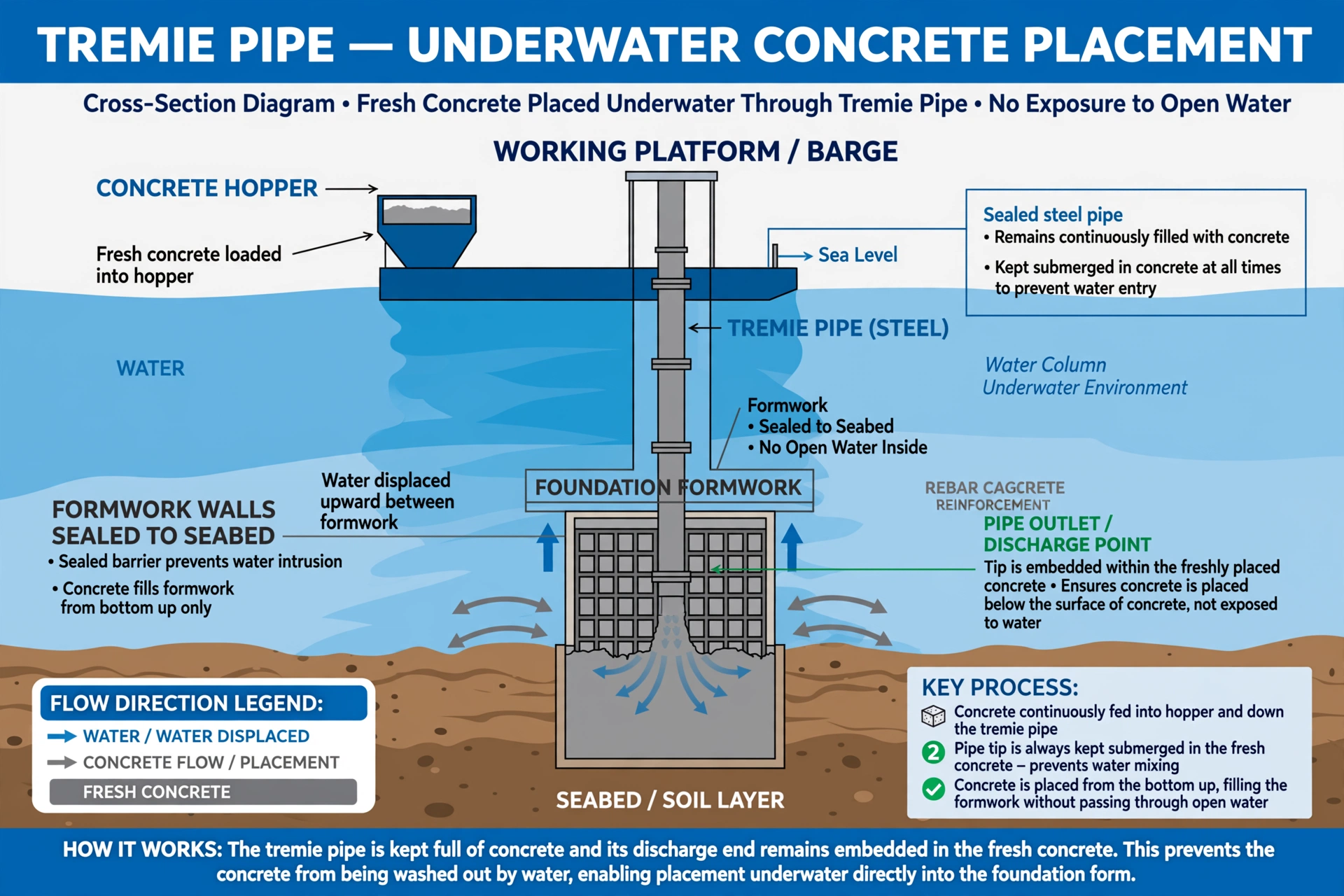
Specialized placement methods like tremie pipes deliver concrete directly into position, avoiding the washout that occurs when concrete falls through open water.
DIY-Scale Underwater Concrete (Setting a Post, for Example)
For small residential projects — like setting a post for a dock in wet ground or shallow water — underwater concrete work is more forgiving than it sounds:
- Standard concrete mix (like a bagged product) works fine; no specialized underwater formula is required for simple applications like setting a post.
- Mix to a stiff consistency before placing it, since a stiffer mix better resists washout and gives the concrete enough bulk to displace the surrounding water as it’s placed.
- Deliver it directly into position rather than pouring it from a height through open water, minimizing the distance the mix has to fall through water before settling.
- Let it cure undisturbed for at least a day before removing any bracing or disturbing the post, and remember that full 28-day strength timelines apply underwater just as they do on dry land.
According to Hunker’s guide to underwater post setting, standard concrete mix actually cures harder when immersed in water than it does in open air, which is part of why setting posts in unusually wet or high-water-table ground isn’t the problem many homeowners assume it is.
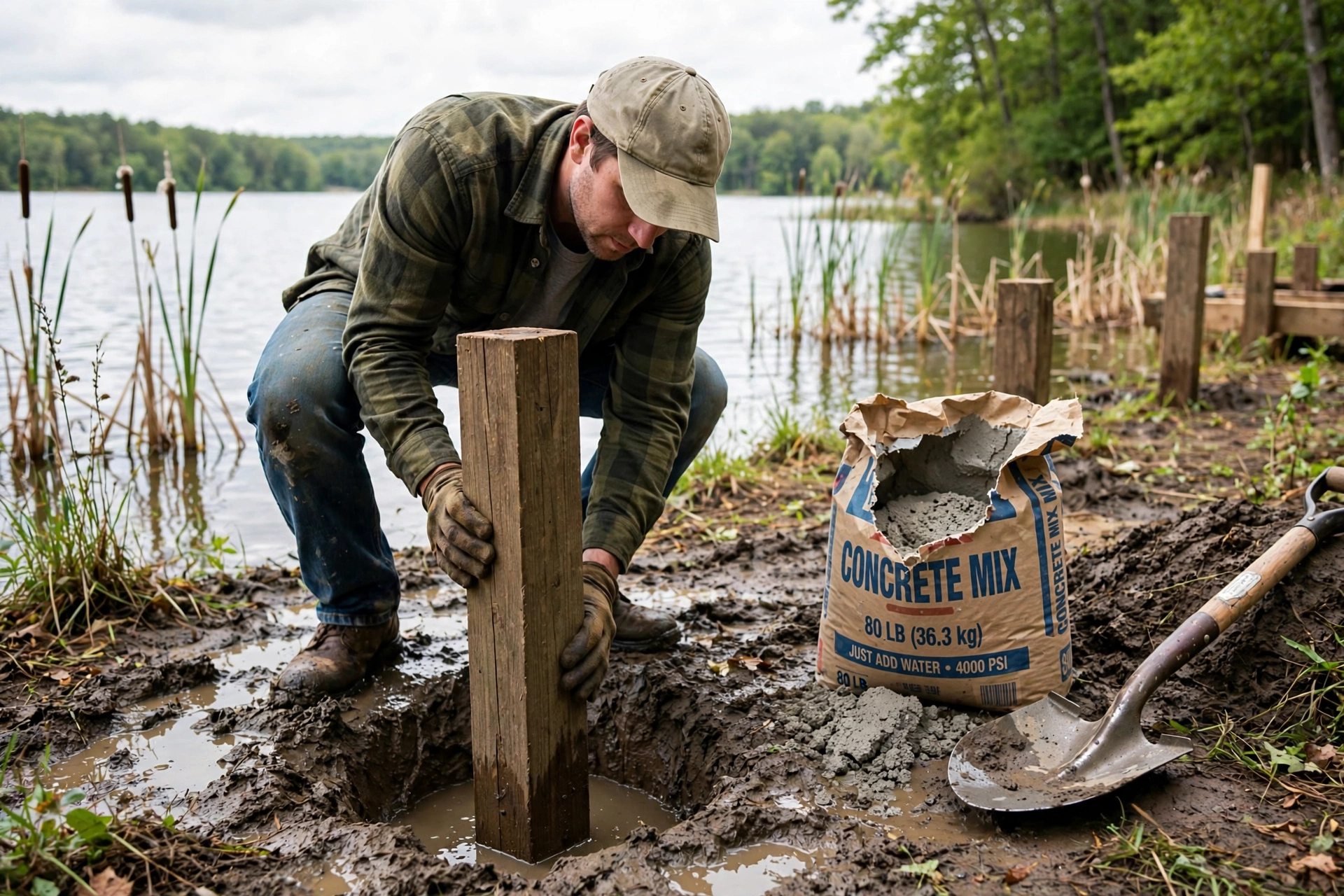
Standard bagged concrete mix works fine for setting posts in wet ground or shallow water, without needing a specialized formula.
Large-Scale Underwater Concrete (Bridges, Piers, Dams)
Major underwater concrete structures require far more specialized techniques than a DIY post, since the stakes and scale are significantly higher:
- Anti-washout admixtures are added to the mix specifically to prevent cement paste from separating out when the concrete contacts water.
- High-slump, highly cohesive mixes (often in the 150–180mm slump range) are used to keep the mix flowable enough to place, while resisting segregation.
- Tremie or pumped concrete placement delivers the mix directly into position through a pipe, avoiding the free-fall through open water that causes washout.
- Specialized formwork must contain the concrete mix and protect it from water currents during placement — a more demanding requirement than formwork used in a standard dry pour.
Underwater concrete repair — patching or restoring existing submerged structures — uses similarly specialized approaches, including cementitious grouts and jacketed forms, since access and working conditions are far more difficult than repairing concrete on dry land. If you’re dealing with concrete cracks on a smaller, residential scale rather than a submerged structure, our guide on whether hydraulic cement bonds to concrete covers a material specifically designed to set even in wet, actively leaking conditions.
Curing vs. Drying: An Important Distinction
A common misconception is that concrete needs to “dry out” to become strong — it doesn’t. Concrete gains strength through hydration, a moisture-driven chemical reaction, not evaporation. If concrete dries out too quickly during its early curing period, it actually weakens and becomes more prone to cracking, which is exactly why moist curing methods (including underwater curing) tend to outperform concrete left to cure in dry, open air. This is a related but distinct consideration from cold-weather concrete work, where our guide on whether concrete will set in cold weather covers how temperature — rather than moisture — affects the same underlying hydration process.
Frequently Asked Questions
Does concrete get stronger underwater?
Often, yes. Continuous underwater immersion provides the sustained moisture concrete’s hydration reaction needs, and some sources report moist-cured or underwater concrete reaching roughly 50% greater strength than concrete cured without added moisture.
Can you pour concrete directly into water?
For small DIY applications like setting a post, yes, using a stiff mix delivered directly into position. For larger structural projects, concrete needs specialized placement methods (like tremie pipes) and anti-washout admixtures to prevent the mix from separating as it enters the water.
How long does concrete take to cure underwater?
The same general timeline applies underwater as on dry land — concrete typically reaches its designed strength around 28 days, regardless of whether it cured in air or underwater.
What ruins concrete when it’s placed in water?
The main risk is washout — cement paste and fine aggregate separating from the mix due to water movement, either from pouring concrete through open water or from wave action and current disturbing it before it sets. Once concrete is set and stable, ordinary water exposure doesn’t damage it.
Do you need special concrete for an underwater repair?
Yes, typically. Underwater concrete repair usually requires specialized cementitious grouts, forms, or jackets designed for the specific access and placement challenges of working below the waterline, rather than standard concrete mix used for dry-land repairs.
Working with concrete as part of a home project? Explore our guides on whether hydraulic cement bonds to concrete, whether concrete will set in cold weather, and what a subfloor is, or browse more home improvement guides on Ayaan Home Decor.
Last modified: August 25, 2026