
Curtains do more work in a living room than almost any other decor element — they control light, add softness, frame the view, and can make ceilings feel taller or a window feel bigger than it actually is. Yet they’re also one of the easiest things to get wrong. Curtains that are too short, hung too low, or too narrow for the window are one of the most common reasons a fully furnished living room still looks slightly “off.”
The good news is that arranging curtains well comes down to a handful of repeatable rules, not personal taste alone. Here’s how to get it right, from rod placement to fabric choice.
Step 1: Get the Rod Height Right
The single biggest mistake in living rooms is mounting the curtain rod too close to the top of the window frame. Designers consistently recommend hanging the rod as close to the ceiling as possible — or at least in the upper third of the space between the window frame and the ceiling. According to Havenly’s design team, this draws the eye upward and makes the entire room feel taller, even if the window itself is a standard size.
As a general guideline:
- In rooms with 8-foot ceilings, mount the rod 4–6 inches above the window frame.
- In rooms with higher or vaulted ceilings, you can go even higher — as close to the ceiling as the wall allows.
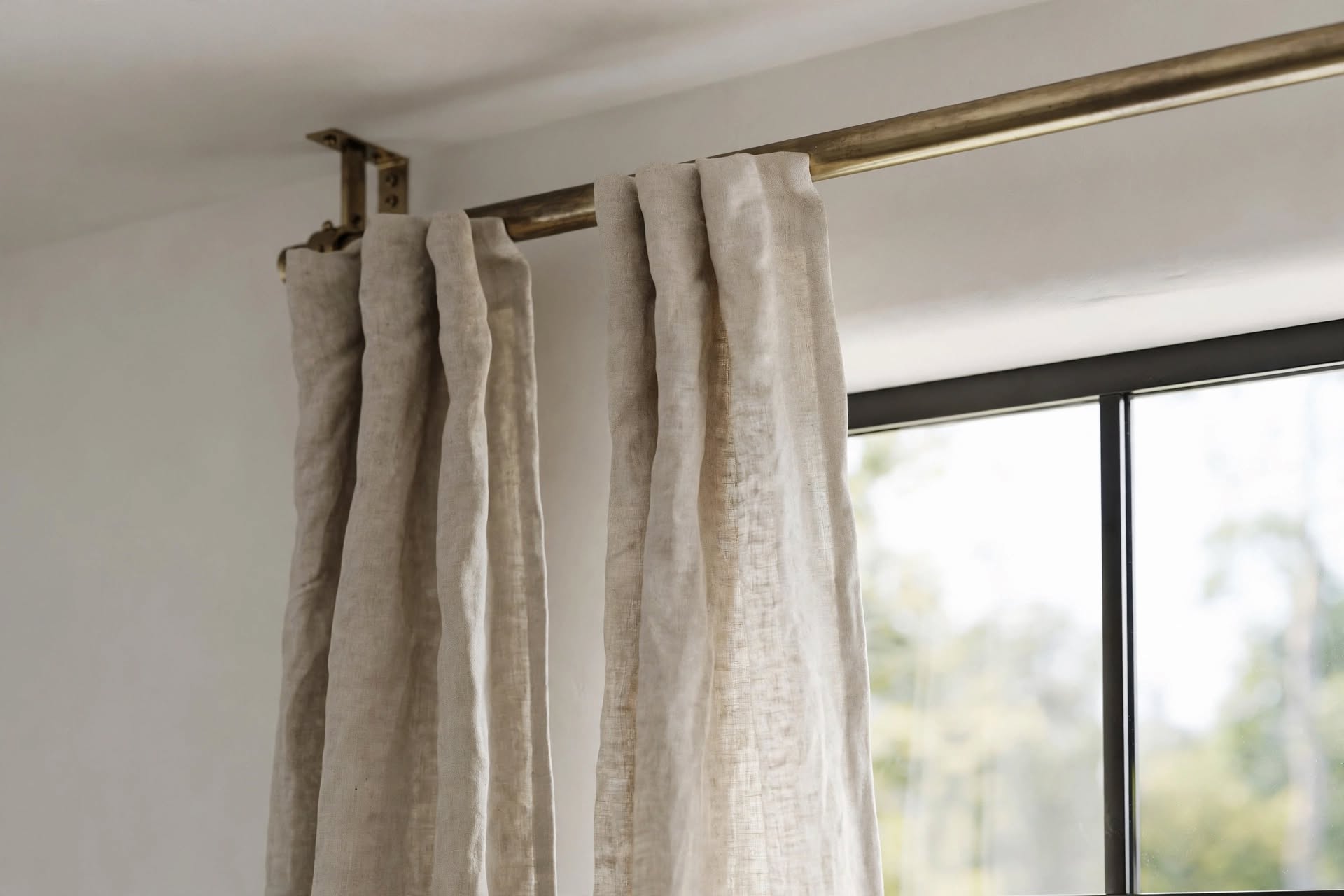
Mounting the rod near the ceiling — not the window frame — is what makes a room feel taller.
Step 2: Go Wider Than the Window
Just as important as height is width. Crate & Barrel’s curtain guide recommends extending the rod 3 to 6 inches beyond each side of the window frame, and further still — 6 to 15 inches — if you want a more dramatic, expansive look. This does two things: it lets the curtains fully clear the glass when open (so you’re not blocking any natural light), and it visually widens the window itself.
For a living room with multiple windows close together, it’s usually cleaner to hang one continuous rod across all of them rather than a separate rod per window — this reads as one unified treatment instead of a cluttered row of panels.
Step 3: Choose the Right Length
There are three acceptable curtain lengths for a living room, and each creates a different mood:
- Kissing the floor — the hem just grazes the floor with no gap and no bunching. This is the cleanest, most modern option and suits most living rooms.
- Floating — the hem sits half an inch to an inch above the floor. This looks slightly more casual and is easier to keep looking neat if you have pets or young kids.
- Puddling — several extra inches of fabric pool on the floor. This is a more traditional, formal look and works best in living rooms that aren’t high-traffic areas.
Avoid the in-between length where curtains stop a few inches short of the floor — this “high-water” look is one of the fastest ways to make a room feel unfinished, no matter how nice the fabric is.
Step 4: Match Fabric Weight to Function
Before choosing a pattern or color, decide what job the curtains actually need to do in your living room:
- Sheer or lightweight linen — best if you want to keep the room bright and simply soften the window, without much privacy or light control.
- Light-filtering fabric — a middle ground that diffuses harsh sunlight while still letting the room feel airy.
- Blackout or heavier drapery — best for living rooms that face a busy street, get intense afternoon sun, or double as a media/TV room where light control matters.
A common and highly effective approach is to layer two: sheers close to the window for daytime softness, with a heavier drape panel on the outside that can be drawn for privacy or a movie night.
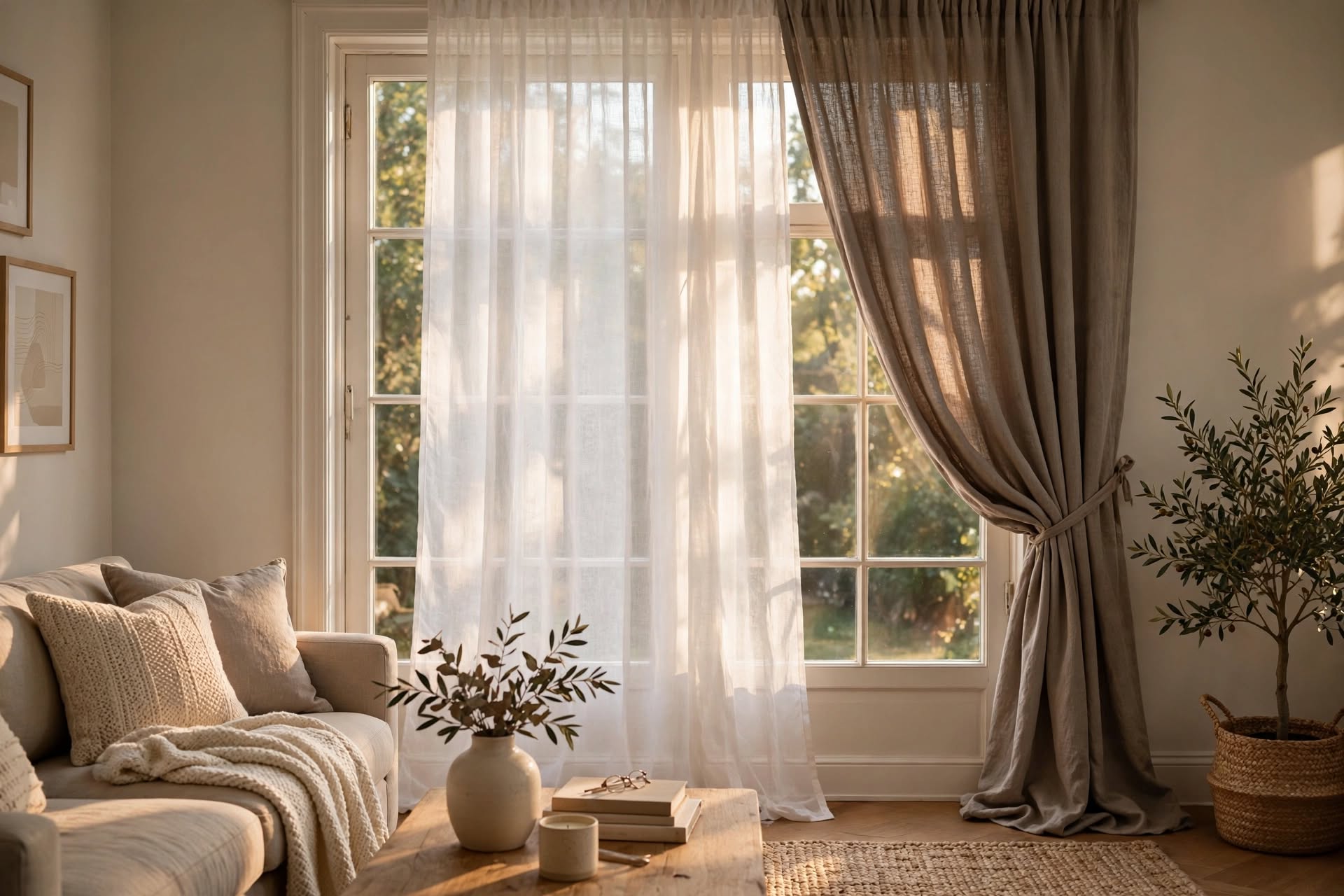
Layering a sheer panel with a heavier drape gives you both daytime light and evening privacy.
Step 5: Arrange Multiple Windows and Panels With Intention
If your living room has more than one window, consistency matters more than variety. Use the same curtain style, color, and hanging height across every window in the room, even if the windows are different sizes — this keeps the space feeling cohesive rather than pieced together.
For a single wide window or sliding door, centered panels on either side (rather than one panel pushed all the way to one edge) tend to look more balanced and give you the option to fully open the view when you want it.
Step 6: Finish With the Right Hardware
The curtain rod and rings are a visible design detail, not just a functional afterthought. As a general rule, pick a finish that echoes something else already in the room — a matte black rod to match black light fixtures, or a brass rod to complement warm metal accents elsewhere. Decorilla’s design team notes that heading style (pinch pleat, grommet, tab top, ripplefold) also changes the whole feel of a curtain, from tailored and formal to relaxed and casual, so it’s worth choosing a heading style that matches the rest of your living room’s tone before you commit to a fabric.
A Quick Living Room Curtain Checklist
- Rod mounted near the ceiling, not the window frame
- Rod extends at least 3–6 inches beyond the window on each side
- Length chosen intentionally: kissing, floating, or puddling — never in between
- Fabric weight matched to light and privacy needs
- Consistent style and height across all windows in the room
- Hardware finish coordinated with other metals in the space
Curtains are one of the most cost-effective ways to change how a living room feels, but they work best alongside the rest of the room’s proportions — including any mirrors, art, or furniture nearby. If you’re also styling a mirror in the same room, our guide on how to decorate a round mirror covers placement and framing choices that pair well with a freshly arranged window.
See How It Would Actually Look in Your Living Room
Fabric swatches and rod heights are easier to get right when you can see them in your actual room, not just in theory. Upload a photo of your living room to Ayaan Decor and get an AI-generated design mockup showing exactly how different curtain styles, colors, and arrangements would look in your space before you buy anything.
Sources referenced:
- Havenly — How to Hang Curtains Like a Designer
- Crate & Barrel — How to Hang Curtains: A Curtain Hanging Guide
- Decorilla — How to Hang Curtains for Perfectly Styled Window Treatments