“High-traffic” covers a lot of ground — a living room sees different wear than a staircase, and a staircase wears differently than an entryway where shoes track in dirt every day. Choosing the right carpet means matching the fiber, construction, and even the padding underneath to how that specific space actually gets used.
Quick Answer: The best overall carpet for high-traffic areas is a dense, low-pile nylon carpet in a loop (Berber) or tight cut-pile construction with a stain-resistant treatment. Nylon consistently ranks as the most durable fiber for busy spaces, while triexta and wool are strong alternatives. Beyond fiber choice, matching carpet density and padding to the specific area — entryway, hallway, stairs, or living room — makes a meaningful difference in how long it lasts.
Here’s a full breakdown of what to look for, plus specific recommendations by area.
What Makes a Carpet Handle High Traffic Well
Four factors determine how a carpet performs under constant use:
- Fiber type — the single biggest factor in long-term durability and stain resistance
- Pile style — low, tightly constructed piles outperform tall, plush ones in busy areas
- Density and twist — tightly packed, tightly twisted fibers resist crushing and matting far longer
- Padding — an often-overlooked factor that significantly affects how well the carpet above it holds up
Best Carpet Fibers for High-Traffic Areas
| Fiber | Durability | Stain Resistance | Cost | Notes |
|---|---|---|---|---|
| Nylon | Excellent | Very good | The most recommended fiber across nearly every flooring source | |
| Triexta | Very good | Excellent | Built-in stain resistance, holds appearance well over time | |
| Wool | Very good | Good (needs treatment) | Naturally resilient, bounces back from crushing | |
| Modern polyester | Good | Very good | –– $ | Newer polyester blends perform better than older versions, good color retention |
| Olefin (polypropylene) | Fair | Excellent | –– $ | Best for moisture-prone, low-to-moderate traffic areas |
| Sisal / coir (natural fiber) | Good | Poor–Fair | Extremely tough, but harder to clean and not ideal near spill-prone areas |
Nylon remains the fiber most consistently recommended by flooring professionals for high-traffic residential and commercial spaces, largely due to its resistance to matting and crushing over years of use. If you’re specifically furnishing a family room or living area, our more detailed guide to the best carpet for a high-traffic family room breaks down fiber and pile choice for that particular room.
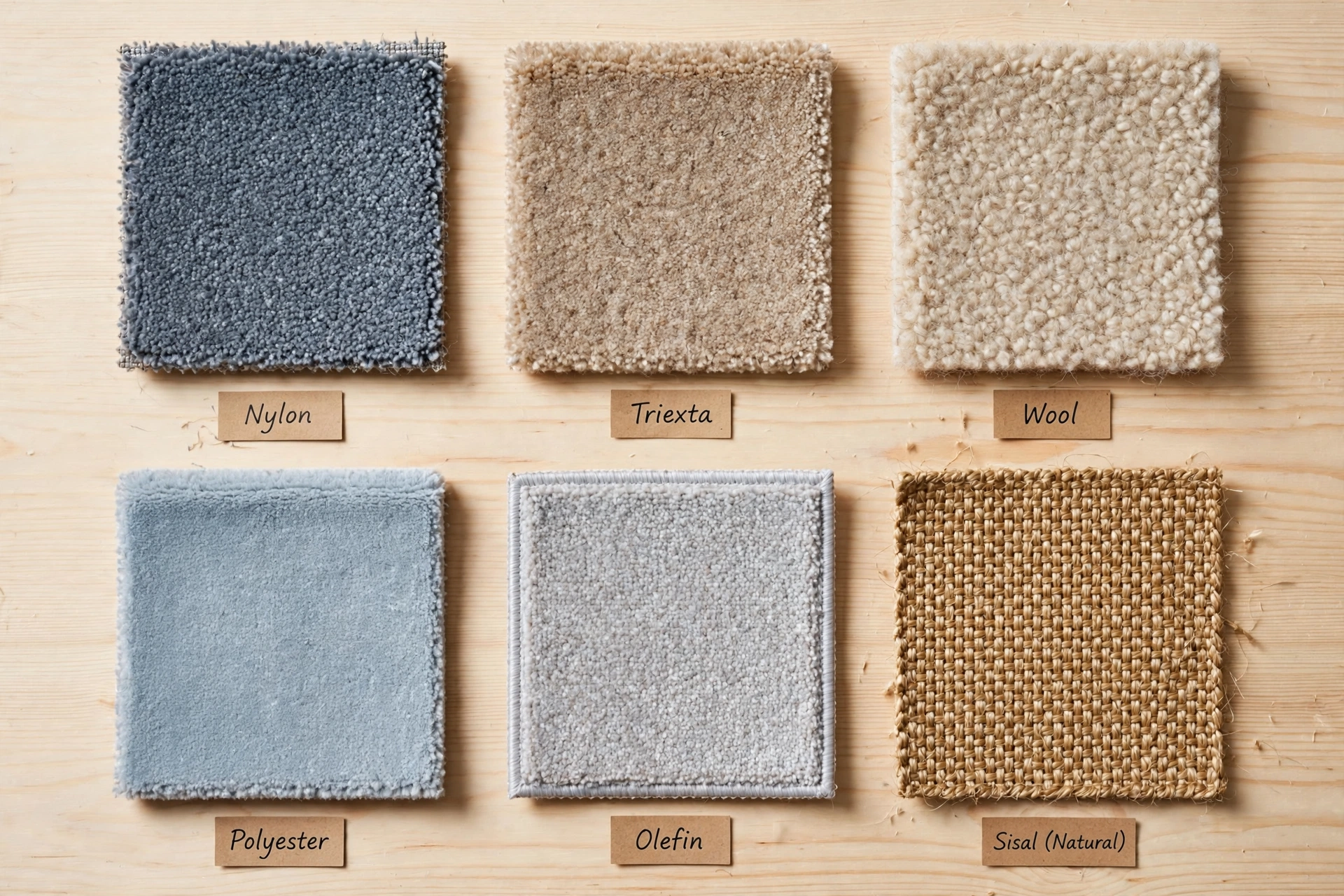
Nylon, triexta, and wool lead the pack for durability, while sisal offers a natural-fiber alternative for tough, low-spill areas.
Pile Style: Low and Tight Wins
Regardless of fiber, pile construction plays a major role in how well a carpet resists wear:
- Loop pile (Berber) — Tight, uncut loops are among the most crush-resistant constructions available, making them a top choice for hallways, stairs, and entryways.
- Low-pile cut pile — Short, densely packed fibers stay firm underfoot and resist flattening better than taller cut piles.
- Medium pile — A middle ground that balances comfort with reasonable durability; suitable for moderate-traffic living areas.
- High pile, plush, or shag — Comfortable, but these show foot traffic patterns and crush far more quickly; best reserved for bedrooms or formal, rarely used rooms.
Don’t Overlook Padding
Padding is one of the most under-discussed factors in high-traffic carpet performance. A high-quality, appropriately dense pad absorbs impact and reduces stress on the carpet’s backing, which directly extends the life of the carpet above it — even a great carpet will wear out faster over a thin, low-density pad. For high-traffic areas, look for a firmer, denser pad rather than the thickest or softest option; a pad that’s too soft actually allows more flex and crushing with every step.
Best Carpet by Specific High-Traffic Area
Not every high-traffic space has the same needs. Here’s how to match carpet choice to the room:
- Entryways and mudrooms: Prioritize stain resistance and easy cleaning above all — nylon or triexta with a tight loop pile handles dirt, mud, and moisture tracked in from outside far better than a plush pile.
- Hallways: A low-pile, dense nylon or Berber carpet resists the concentrated wear of a narrow, frequently walked path.
- Stairs: Loop pile or a tight cut-pile with strong twist retention is essential — stairs see intense, repetitive wear on the nose of each step, and a plush pile will flatten there quickly.
- Living rooms and family rooms: Balance durability with comfort — a low-to-medium pile nylon or triexta carpet in a medium or multi-toned color works well here. See our family room carpet guide for a deeper breakdown.
- Home offices: Chair casters add extra wear beyond foot traffic — a tight, low-pile loop carpet (or a chair mat over any carpet type) helps prevent premature flattening.
- Commercial or shared spaces: Solution-dyed nylon or olefin loop carpet tiles are common in offices and commercial settings for their durability, easy spot-replacement, and consistent performance under heavy daily use.
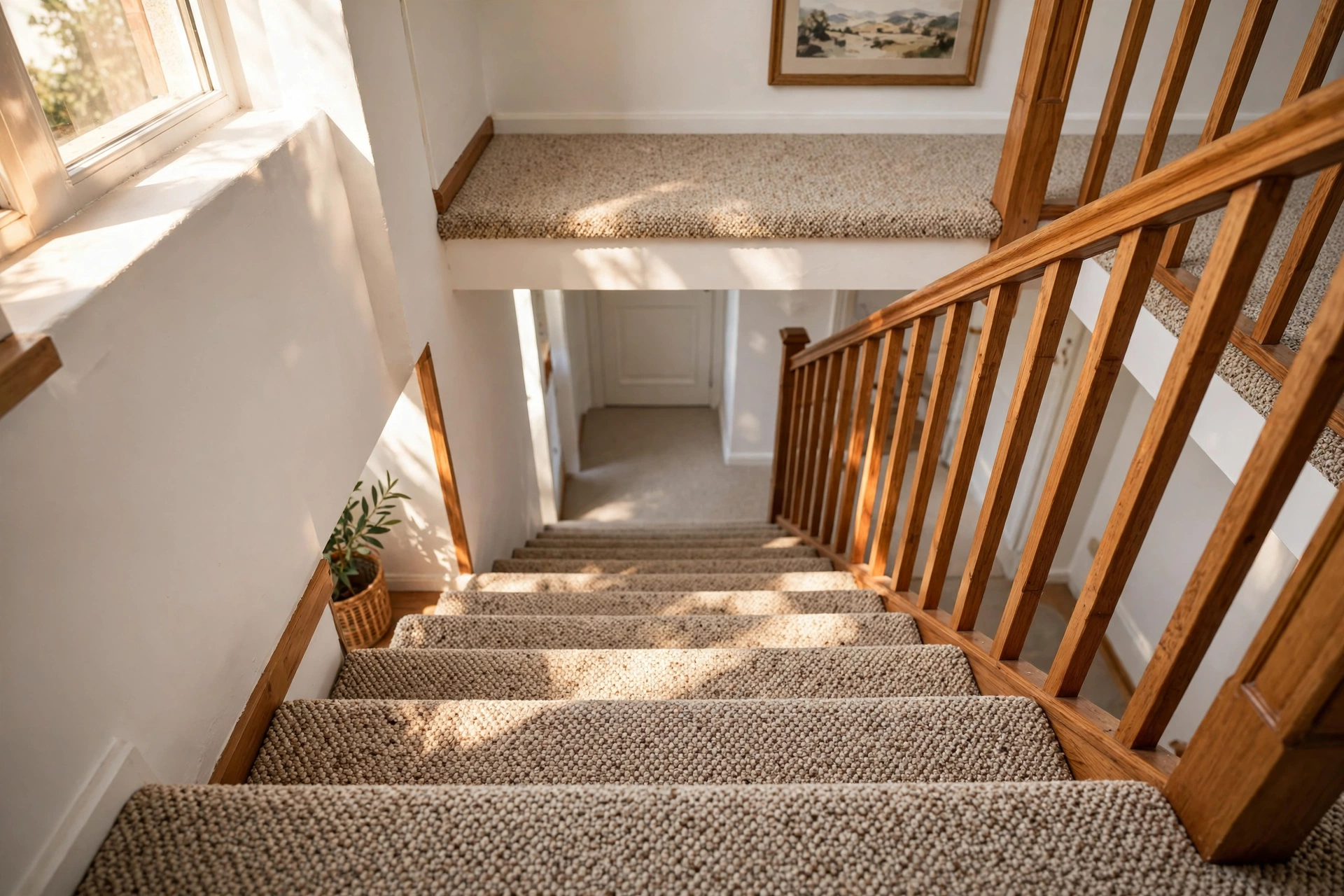
Loop-pile Berber carpet resists the concentrated wear that stairs experience on each step’s edge.
Color and Face Weight Also Matter
Two carpets with identical fiber and pile construction can still perform differently in appearance over time based on color and face weight:
- Medium-toned, multi-toned, or textured colors hide dirt, crumbs, and traffic wear far better than solid light or dark shades.
- A higher face weight (roughly 40–60 oz for high-traffic residential use) generally indicates more fiber and better durability — but only when comparing carpets of the same fiber type. Our guide on what face weight means in carpet explains exactly how to read this spec when comparing options.
Maintenance Tips for High-Traffic Carpet
- Vacuum high-traffic paths 2–3 times per week — grit and dirt act like sandpaper on fibers if left to grind in underfoot.
- Use walk-off mats at entryways to catch dirt and moisture before it ever reaches the carpet.
- Rotate or add area rugs and runners over the busiest paths to spread out wear.
- Schedule professional deep cleaning every 12–18 months, more often in the highest-traffic zones like entryways and hallways.
- Treat spills immediately, even on stain-resistant fibers — our guide to removing coffee, milk, and other carpet stains covers the exact steps for common spills.
Common Mistakes to Avoid
- Choosing the same carpet for every room without considering how each specific area is actually used
- Prioritizing softness over durability in genuinely high-traffic zones like entryways and stairs
- Skimping on padding to save money, which shortens the lifespan of even a high-quality carpet
- Ignoring natural fiber limitations — sisal and coir are extremely tough but stain easily and are difficult to clean, making them a poor fit for spill-prone entryways or dining areas despite their durability
Frequently Asked Questions
What is the most durable carpet for high-traffic areas?
Nylon is the most consistently recommended fiber for high-traffic areas, thanks to its strong resistance to crushing, matting, and fading over time. Triexta and wool are close alternatives depending on budget and priorities.
Is Berber carpet good for high-traffic areas?
Yes. Berber’s tight loop-pile construction is one of the most wear-resistant carpet styles available, making it especially well-suited to hallways, stairs, and entryways.
Does padding really matter for carpet durability?
Yes. A denser, appropriately firm pad reduces stress on the carpet’s backing with every step, which meaningfully extends the life of the carpet above it — especially in high-traffic areas.
What carpet is best for stairs specifically?
Loop pile or a tight, low cut-pile carpet with strong fiber twist works best on stairs, since the nose of each step experiences concentrated, repetitive wear that flattens plush piles quickly.
Is natural fiber carpet like sisal good for high-traffic areas?
Sisal and coir are extremely durable against foot traffic, but they stain easily and are harder to clean than synthetic fibers, making them better suited to dry, low-spill high-traffic areas rather than entryways or dining spaces.
Shopping for carpet in more than one room? Explore our guides on the best carpet for a family room, understanding carpet face weight, and more flooring comparisons on Ayaan Home Decor.
Last modified: July 31, 2026