When planning to paint your home, one common question that often comes up is whether wall paint and trim paint are the same. At first glance, paint might seem like just paint—but in reality, there are important differences between the two that can significantly impact the final look and durability of your space.
In this detailed guide, we’ll break down the differences between wall paint and trim paint, their uses, and how to choose the right one for your project, with insights similar to those shared by experts like Sherwin-Williams and Benjamin Moore.
What Is Wall Paint?
Wall paint is specifically designed for large surface areas like interior walls and ceilings. It is formulated to provide smooth, even coverage while hiding imperfections.
Key Features of Wall Paint:
- Usually comes in matte, eggshell, or satin finishes
- Helps conceal minor surface flaws like dents or patches
- Easy to apply and touch up
- Designed for low to moderate wear and tear
Wall paint is ideal for spaces like bedrooms, living rooms, and hallways where the focus is on aesthetics rather than durability.
What Is Trim Paint?
Trim paint is used for smaller but high-impact areas such as:
- Door frames
- Window frames
- Baseboards
- Moldings
These areas experience more contact, so trim paint is made to be tougher and more durable.
Key Features of Trim Paint:
- Typically comes in semi-gloss or high-gloss finishes
- More resistant to scratches, scuffs, and stains
- Easy to clean
- Provides a smooth and polished look
Brands like Dulux highlight that glossier finishes are best suited for trim because they are easier to maintain.
Main Differences Between Wall Paint and Trim Paint
Understanding the differences will help you achieve a professional-looking finish.
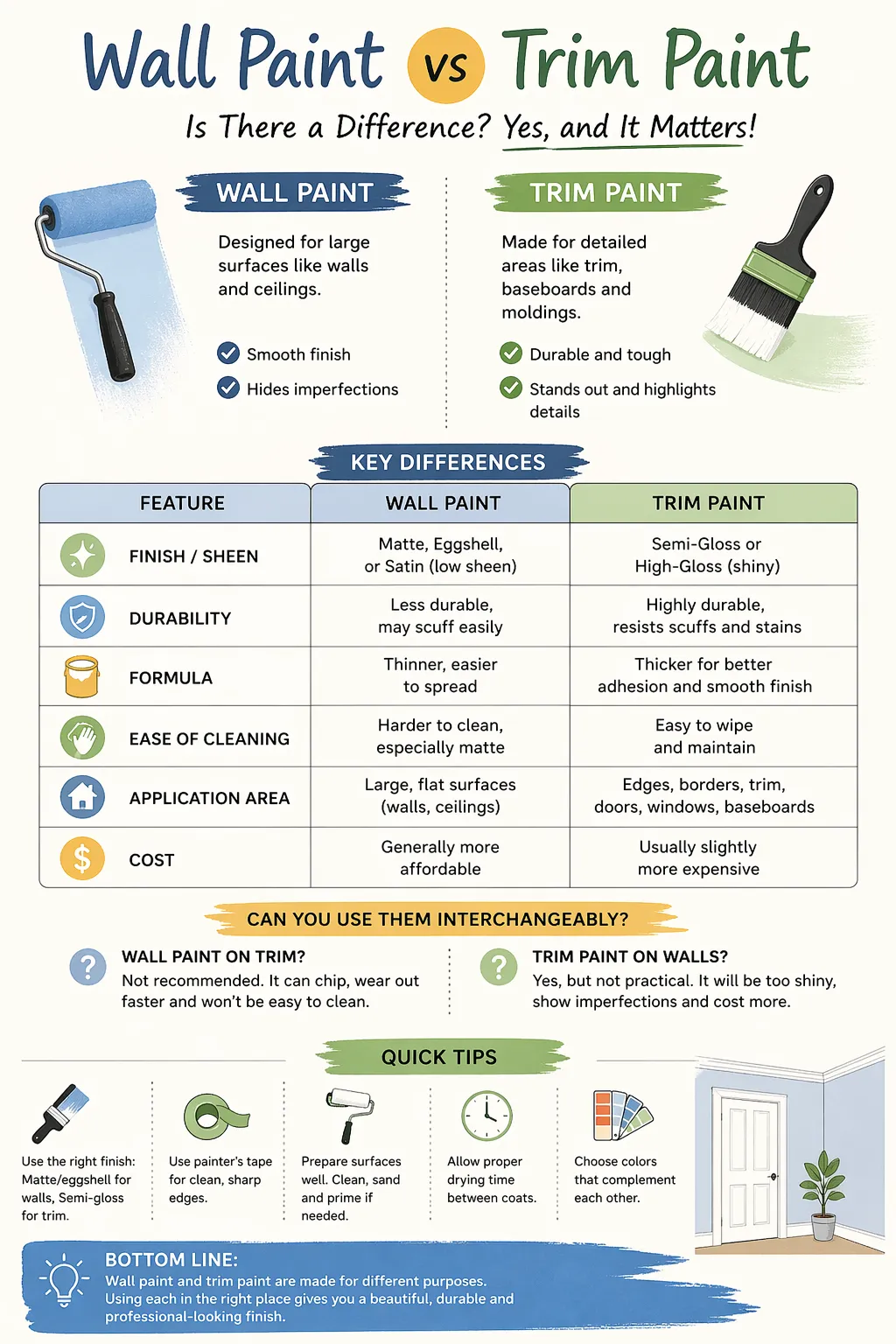
1. Finish and Sheen
One of the biggest differences is the level of shine.
- Wall Paint: Matte or low sheen (absorbs light)
- Trim Paint: Glossy or semi-gloss (reflects light)
👉 Glossy finishes on trim create contrast and make details pop.
2. Durability
Trim areas are touched more often, so durability matters.
- Wall Paint: Less durable, may scuff easily
- Trim Paint: Highly durable and long-lasting
👉 Trim paint is built to handle frequent cleaning and contact.
3. Thickness and Formula
Trim paint has a thicker consistency compared to wall paint.
- Wall Paint: Thinner and easier to spread
- Trim Paint: Thicker for better adhesion and smoother finish
👉 This helps trim paint stick better to wood and detailed surfaces.
4. Ease of Cleaning
- Wall Paint: Harder to clean, especially matte finishes
- Trim Paint: Easy to wipe and maintain
👉 Trim paint is ideal for areas that get dirty quickly.
5. Application Area
- Wall Paint: Large flat surfaces
- Trim Paint: Edges, borders, and detailed sections
Using the right paint in the right place ensures better results.
Can You Use Wall Paint on Trim?
Technically, yes—but it’s not recommended.
If you use wall paint on trim:
- It may chip or wear out faster
- Cleaning becomes difficult
- The finish may look dull and uneven
👉 The trim won’t stand out as it should.
Can You Use Trim Paint on Walls?
Yes, but it’s usually not practical.
If you apply trim paint on walls:
- The surface may look too shiny
- Imperfections will become more visible
- It can be more expensive
👉 Glossy walls can feel overwhelming in large spaces.
Also read: What is the difference between ceramic floor and wall tiles?
Choosing the Right Paint for Your Home
Here are some quick tips to help you choose:
For Walls:
- Use matte or eggshell finish for bedrooms
- Use satin finish for kitchens and bathrooms
For Trim:
- Use semi-gloss for most homes
- Use high-gloss for a premium, polished look
Color Considerations
While many people choose white trim, you can experiment with colors.
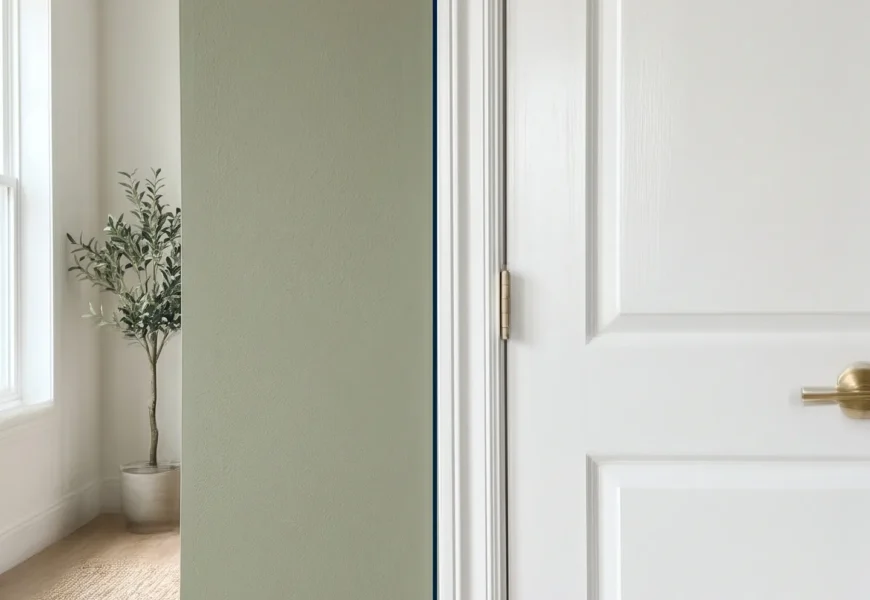
- White trim + colored walls = classic contrast
- Matching trim and wall color = modern look
- Dark trim = bold and dramatic
👉 The finish still matters even if the color is the same.
Pro Tips for Best Results
- Always clean surfaces before painting
- Use painter’s tape for clean edges
- Apply primer if needed
- Use separate brushes/rollers for wall and trim
- Allow proper drying time between coats
Common Mistakes to Avoid
- Using the same paint for everything
- Ignoring finish differences
- Skipping surface preparation
- Choosing gloss without considering lighting
👉 These mistakes can ruin the overall appearance.
Final Thoughts
Yes, there is a clear difference between wall paint and trim paint. While wall paint focuses on coverage and aesthetics, trim paint is all about durability and detail.
Using the correct type of paint in the right area ensures:
- Better longevity
- Easier maintenance
- A more professional and polished look
If you want your home to look well-finished and visually appealing, don’t treat all paint the same. The small details—like properly painted trim—make a big difference.
Also read: What is the difference between floor tile and wall tile?
Last modified: April 22, 2026