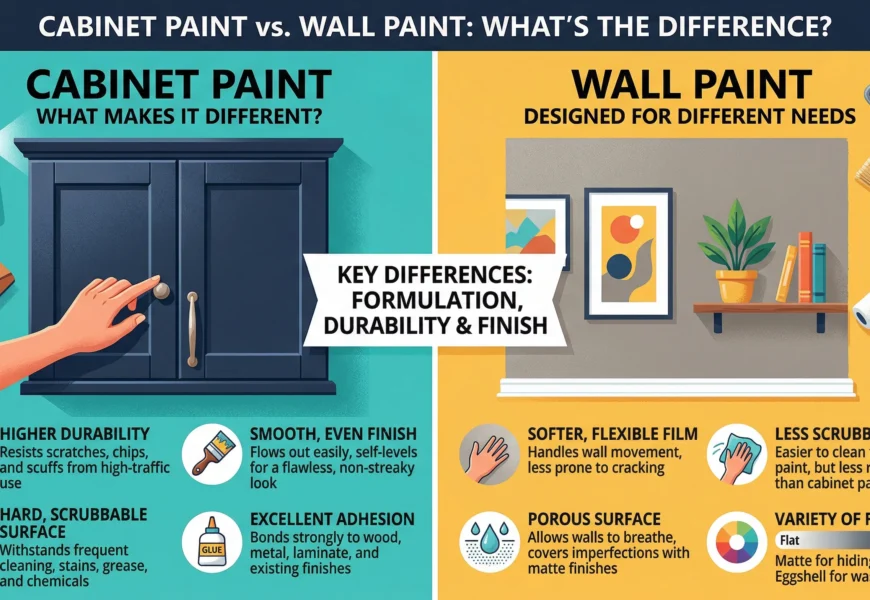
When you are about to renovate your kitchen or bathroom, you have likely found yourself in the paint section and wondered why there is so much can with the label of cabinet paint when plain wall paint looks cheaper and easier. The fact is that, these two paints appear to be similar in the shop, yet, they are constructed to do absolutely different tasks. Misplacement may make what seemed to be a satisfying DIY project on the weekend a re-do a year later. The cabinet paint is hard enough to endure doors that are slamming hundreds of times a day, and the paint at the wall is designed to resist large and mostly untouched surfaces. We should simplify it using simple English so that you can choose the one that works and achieve lasting results.
What Is Wall Paint?
The home painting hero is the wall paint. It is typically a water-based latex or acrylic, which is used on large flat surfaces such as walls and ceilings. Since walls are not touched, bumped, or wiped on at all times, wall paint is designed to be easy to apply, provide good coverage, and conceal minor imperfections.
The majority of the wall paints are of lower sheen, either flat, matte, or eggshell. These finishes do not reflect light but scatter it, and this makes the rooms feel comfortable and conceals roller scars or bumps in the drywall. They are breathable, i.e. they allow the moisture to evaporate hence you do not trap humidity behind the paint. Washing is easy: a cloth and a mild soap will suffice, but over scrubbing may ruin the finish.
Wall paint is quick to dry, has low odor, and is cheaper per gallon since a lot of it is required in large areas. It can be used in living rooms, bedrooms or any other room where the primary objective is to have a fresh, even colour that does not require heavy daily use. However place it on kitchen cabinets or bathroom vanities and you will soon find yourself having chips, scratches and grease stains appearing much sooner.
What Is Cabinet Paint?
Cabinet paint is a heavy-duty type that is designed to be used in furniture, trim, doors, and most notably in kitchen or bathroom cabinets. Manufacturers pack it with additional resins and binders- the glue that holds the color together and hardens and toughens the paint film. Others are acrylic latex, others are water-based alkyd (a new hybrid that is like oil paint but can be washed with water), and some are actually oil-based.
The result? A finish that can stand the test of life. The cabinets are seized, knocked, sprayed with water and wiped with cleaning elements on a daily basis. Cabinet paint is made to withstand all that. It also brushes or sprays itself level, resulting in a super-smooth and professional looking surface rather than a brush-stroke being visible.
Cabinet paint is typically available in more glossy finishes: satin, semi-gloss, or gloss. These glossier finishes form a tighter less porous surface, which does not allow moisture, grease, and stains to penetrate. Semi-gloss on kitchens is popular because it is not too shiny and not too dull in appearance, yet it is easy to clean without making your cabinets look like a mirror and reflecting all your fingerprints.
The Key Differences
The largest disparity is durability. The binder to pigment ratio is much greater in cabinet paint and it forms a more flexible film that is not easily cracked or peeled. Wall paint contains less binder, therefore, it remains soft and more pliable to walls- however, the softness results in that it scratches and cracks when applied to cabinets.
Sheen matters too. An increase in gloss on cabinet paint would result in increased cleanability. A damp cloth and a little mild soap can be used to wipe spaghetti sauce or coffee splatters and you do not have to worry about getting the paint off. Wall paint with low sheen is more susceptible to stains and may appear to be dull or spoiled with repeated cleaning.
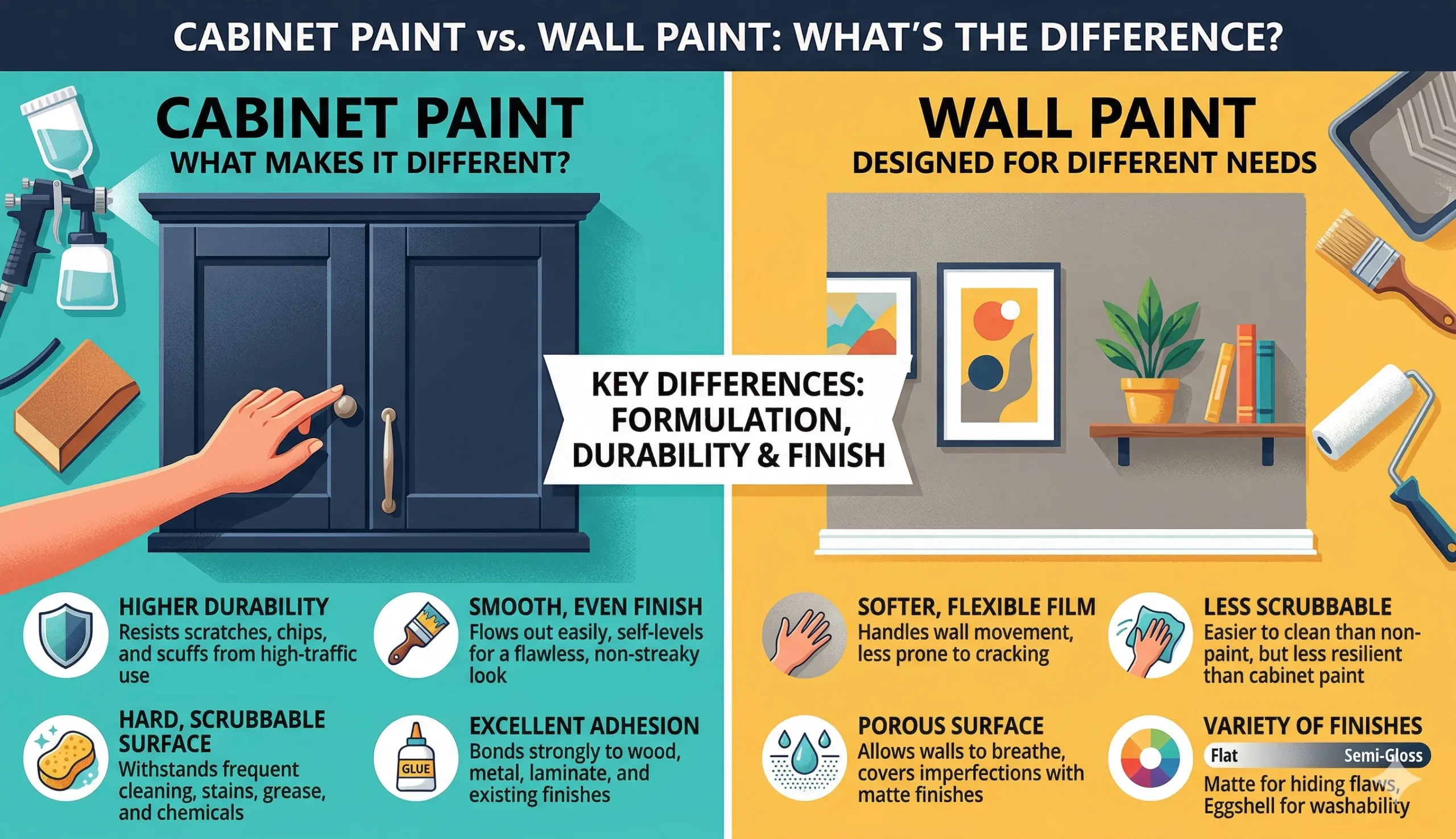
Another large one is moisture resistance. Bathrooms and kitchens are damp. Cabinet paint is resistant to steam, splashes and condensation. Moisture can cause bubbles or peeling on the walls over time and this is due to the fact that the wall paint may absorb the moisture.
Application is also different. Large surfaces are covered with wall paint fast. The paint used on the cabinet is usually very sensitive to proper preparation; a cleaning, a little sanding and a good primer are required to ensure that the paint adheres to the slick surface such as laminate or old paint. However, as it is applied it smooths out perfectly, particularly when sprayed. Majority of the cabinet paints dry harder with time thus providing years of protection.
Cabinet paint is more costly in the short run and occasionally cost two times more than basic wall paint. However, it can tend to save money over time because it is a cheaper affair that requires fewer touch-ups. Cabinet paint work should last 5-10 years and more in normal wear and tear but a cabinet wall paint job may require some maintenance in 2-3 years.
Also read our article on Can wall paint be applied on floor?
Pros and Cons
Cabinet paint pros: Extremely durable, easy to clean, smooth professional finish, resists moisture and stains. Cons: Higher cost, longer drying time between coats, needs more careful prep.
Wall paint pros: Affordable, quick to apply, great coverage on walls, low odor options. Cons: Chips and scratches easily on cabinets, harder to clean, not moisture-resistant enough for kitchens.
Can You Use One for the Other?
Technically, yes—but it’s rarely a good idea. You can use cabinet paint on walls if you want super-durable walls (great for kids’ rooms or high-traffic hallways), but it’s overkill and more expensive. The higher sheen might also create glare you don’t want on big walls.
Never use regular wall paint on cabinets unless you enjoy repainting every couple of years. It simply won’t hold up to daily use, no matter how many coats you add. The paint will wear, chip at edges, and look tired fast.
Tips for Success
Always prep your cabinets properly: remove doors and hardware, clean with degreaser, sand lightly, and use a primer made for the surface (wood, laminate, or metal). Apply two or three thin coats of cabinet paint, sanding lightly between coats for that glass-smooth look. Work in a dust-free area and give it plenty of drying time—rushing is the enemy of a great finish.
If you’re painting both walls and cabinets, do the cabinets first. That way you can see the final cabinet color and sheen before choosing wall paint to complement it.
Conclusion
Cabinet paint and wall paint may look alike on the shelf, but they’re engineered for totally different lives. Wall paint keeps your rooms beautiful and affordable. Cabinet paint protects the busiest surfaces in your home so they stay looking sharp year after year. Pick the right one for the job, take your time with prep, and you’ll love the results every time you open a drawer or wipe down a counter.
FAQs
1. Can I use regular wall paint on my kitchen cabinets?
No, it’s not recommended. Wall paint isn’t tough enough for daily handling, moisture, or cleaning. It will chip, scratch, and show wear quickly. Spend a little extra on cabinet paint for results that last.
2. What’s the best sheen for cabinet paint?
Semi-gloss is the sweet spot for most kitchens—it’s durable, easy to wipe clean, and doesn’t show every tiny flaw like high-gloss does. Satin works well if you want a softer look; gloss is great for a modern, sleek vibe but highlights imperfections.
3. Do I really need primer for cabinets?
Yes! Primer helps the paint stick, blocks stains from old finishes, and gives a smoother final look. Skipping it is the fastest way to get peeling paint later.
4. How long does cabinet paint last?
With good prep and normal use, a quality cabinet paint job can look great for 5–10 years or more. Regular cleaning and quick wipe-ups of spills help it last even longer.
5. Is cabinet paint worth the extra money?
Absolutely. It costs more per can, but you use less of it, and it saves you time and hassle down the road. Cheap wall paint on cabinets usually means repainting sooner.
6. Oil-based or water-based cabinet paint—which is better?
Water-based (acrylic or alkyd) is easier to work with, cleans up with soap and water, and has less smell. Modern formulas are just as durable as old oil-based paints. Use oil-based only if you need maximum hardness in very high-wear spots and don’t mind longer dry times and stronger odor.
Also read our article on Can floor mat be applied on bricks?
Last modified: April 7, 2026