“Curtains” sounds like a simple category, but once you start shopping for them, the number of styles, headings, and fabric options can be overwhelming — pinch pleat, eyelet, tab top, sheer, blackout, thermal, and more, each suited to a different look and function. Picking the wrong one isn’t just a style miss; it can mean a curtain that doesn’t block enough light, doesn’t hang the way you expected, or clashes with the rest of the room.
Quick Summary: Curtains vary by heading style (pinch pleat, eyelet, rod pocket, tab top), panel type (single vs. pair), and fabric (linen, velvet, sheer, blackout, thermal) — and each combination changes how a room looks and functions. This guide breaks down every major type and helps you match the right one to your room’s needs.
This guide breaks curtains down the way it actually matters when you’re choosing: by heading style, by how the panels are sold, and by fabric and function.
Curtains by Heading Style
The “heading” is how the top of the curtain is finished and attached to the rod — and it has a bigger effect on the overall look than most people expect.
- Pinch pleat (tailored pleat): Fabric is stitched and pinched into folds at the top, creating a formal, structured drape. This is the most traditional and widely used heading for living rooms and dining rooms.
- Rod pocket: A sewn-in sleeve at the top lets the rod thread directly through the fabric, creating soft, evenly gathered folds. It has a slightly vintage, classic look and is one of the simplest styles to hang.
- Eyelet (grommet): Metal rings are set into the top of the fabric, and the rod passes through them directly. This creates clean, uniform folds and reads as more modern and streamlined than pleated styles.
- Tab top: Fabric loops sewn along the top allow the rod to pass through without any hardware. It gives a casual, relaxed look and works well in informal spaces like a cabin, sunroom, or kids’ room.
- Pencil pleat: Tight, narrow folds that resemble a row of pencils standing side by side — a heading style that sits between the formality of pinch pleat and the simplicity of rod pocket.
- Ripplefold: A newer style that creates smooth, continuous S-shaped waves across the entire width of the curtain, often used with a track system rather than a traditional rod. It’s a favorite in modern and minimalist interiors.
Curtains by Panel Type
Beyond the heading, curtains are also categorized by how they’re sold and hung:
- Single-panel curtains: One panel that covers the entire window and is pulled to one side when opened. They work well in smaller windows or rooms with limited wall space on either side.
- Panel pair curtains: Sold in twos, with one panel on each side of the window, meeting in the middle when closed. This is the most common setup for living rooms and bedrooms and is usually held open with tiebacks.
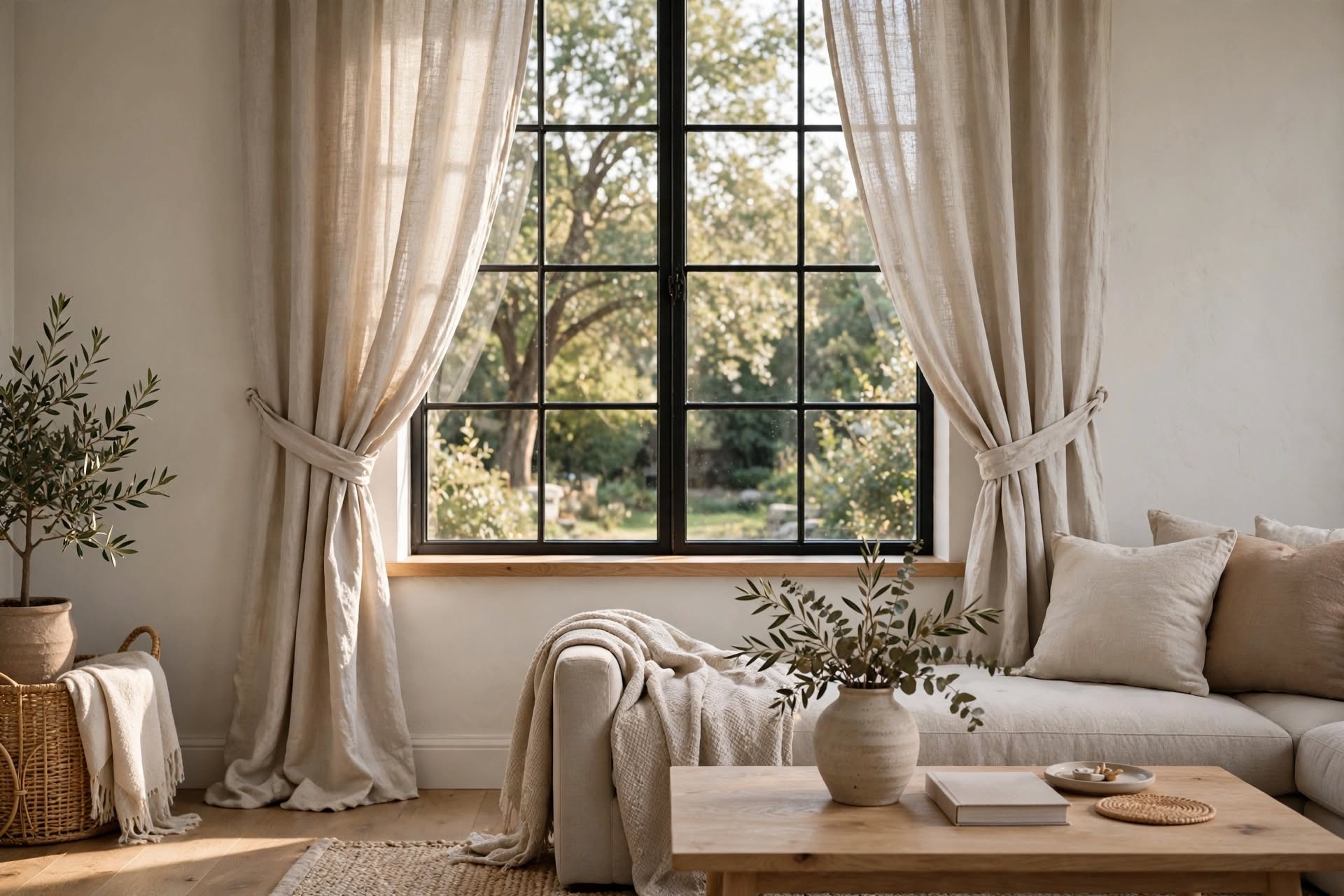
Panel pair curtains are the most common setup for living rooms and bedrooms.
Curtains by Fabric and Function
This is often the most important decision, since fabric determines what a curtain actually does for the room:
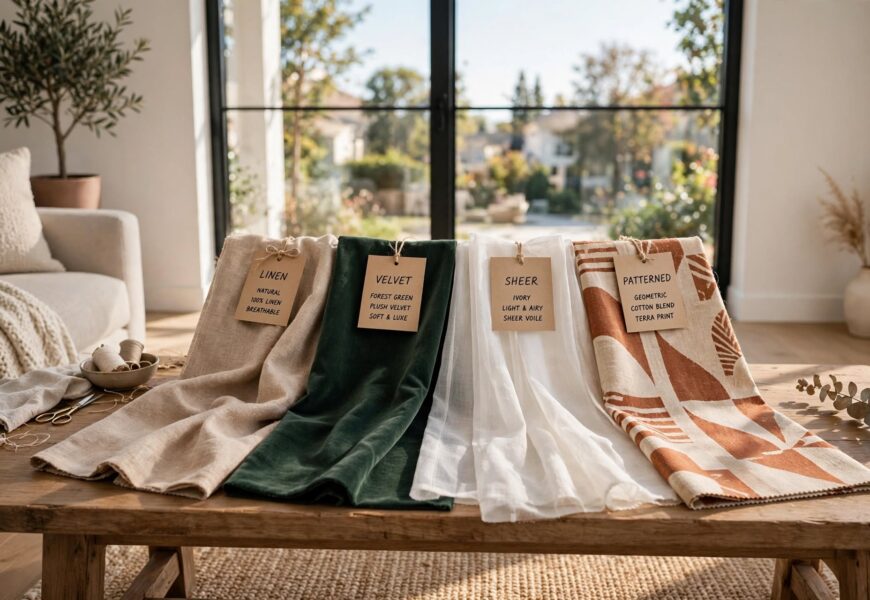
- Sheer curtains: Lightweight and semi-transparent, sheers filter light and add softness without blocking much of it or offering real privacy. They’re often layered with a heavier curtain rather than used alone.
- Linen curtains: A breathable, textured, mid-weight fabric that filters light while adding a relaxed, natural look — one of the most popular choices for living rooms right now.
- Velvet curtains: A heavier, more formal fabric that adds a luxe texture and can help block light, heat, cold, and noise, making it a strong choice for bedrooms and formal living rooms.
- Silk curtains: Refined and light with a natural sheen, silk drapes elegantly and helps regulate temperature, though it needs gentler care — best suited to formal dining rooms or bedrooms rather than high-traffic areas.
- Polyester and blended curtains: Durable, affordable, and easy to maintain, these resist wrinkling and fading, which makes them a practical choice for high-traffic rooms or households with kids and pets.
- Blackout curtains: Made with an added lining or thick weave that blocks the vast majority of outside light. Ideal for bedrooms, nurseries, and media rooms where light control matters more than fabric texture.
- Thermal curtains: Designed with insulating layers that help regulate a room’s temperature, keeping it warmer in winter and cooler in summer — a practical pick for rooms with large or older, less energy-efficient windows.
How to Choose the Right Type for Your Room
With this many options, the fastest way to narrow it down is to answer three questions before you look at color or pattern:
- What job does this curtain need to do? Privacy and light-blocking (blackout, velvet), softening light and adding texture (linen, sheer), or purely decorative framing (sheer, lightweight panels)?
- How formal does the room feel? Pinch pleat and silk lean formal; rod pocket, tab top, and linen lean casual.
- How much maintenance are you willing to do? Polyester and blends are the most forgiving; silk and velvet need more careful care.
A living room with big windows and afternoon sun, for example, is often best served by linen or a light-filtering fabric in a pinch pleat or eyelet heading — enough structure to look intentional, without going as heavy as full blackout.
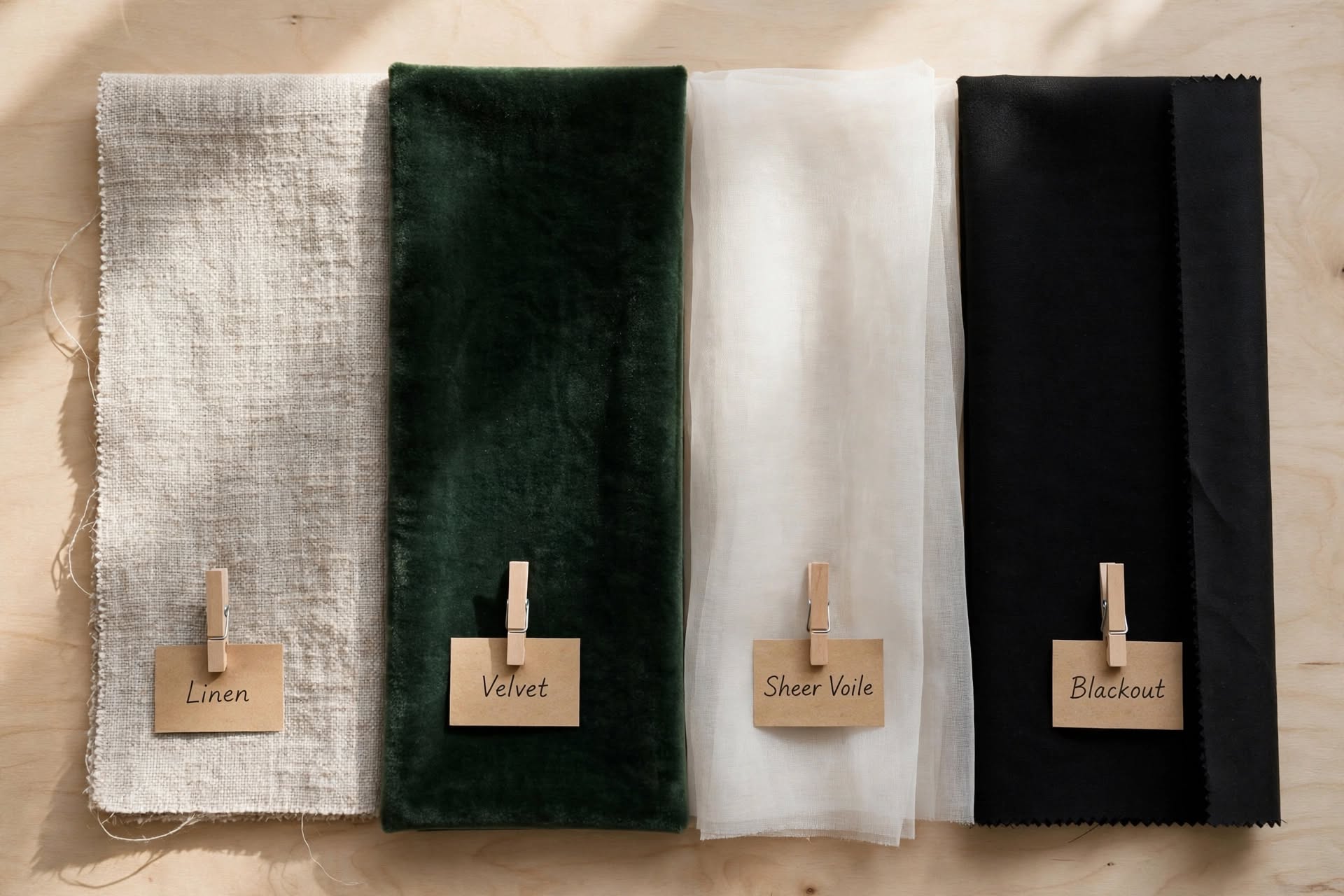
Fabric weight is usually a bigger decision than color or pattern.
A Quick Reference: Matching Curtain Type to Room
- Living room: Linen or light-filtering fabric, pinch pleat or eyelet heading, panel pair
- Bedroom: Blackout or velvet, pinch pleat or rod pocket, panel pair
- Kitchen: Polyester or blend, tab top or rod pocket, single panel or café-length
- Nursery: Blackout, rod pocket or eyelet, panel pair
- Home office / media room: Blackout or thermal, ripplefold or eyelet, panel pair
Once you’ve settled on a curtain type, how you hang and arrange it matters just as much as the fabric itself. Our guide on how to arrange curtains for a living room covers rod height, width, and length in detail so the style you choose here actually looks the way it’s supposed to once it’s up.
See Different Curtain Styles in Your Own Room First
Fabric swatches look different under a store’s lighting than they will on your actual window. Upload a photo of your room to Ayaan Decor and get an AI-generated design mockup showing how different curtain types, colors, and headings would really look in your space before you commit to a purchase.
Sources referenced:
- Home Depot — Types of Curtains
- Kwik-Hang — Curtain Style Guide: 15 Types of Curtains For Your Home
- ZigZagZurich — Types of Curtains: Styles, Functions & Fabrics