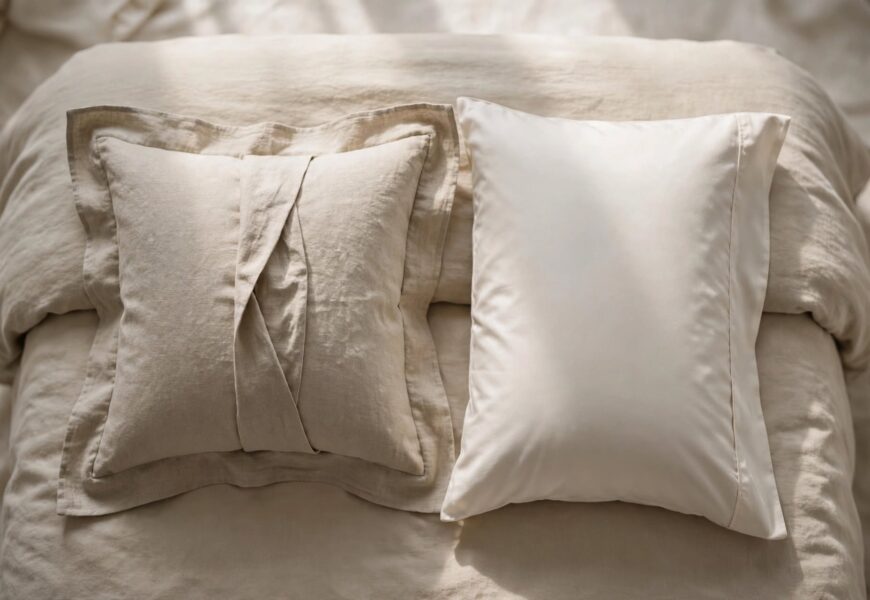
Walk into a bedding aisle — or scroll a bedding page online — and you’ll spot “pillowcase” and “pillow sham” listed a few inches apart, often on pillows that look nearly identical. It’s an easy mix-up, and most people only notice the difference once they’ve bought a sham expecting to sleep on it, or bought a plain pillowcase expecting it to look like the styled photo on a hotel bed. Once you know what each one is actually built for, though, the confusion disappears fast — and it changes how you shop for both.
The short answer: a pillowcase is functional bedding you sleep on every night, while a pillow sham is decorative bedding that sits on top of or in front of your sleeping pillows to dress up the bed. The two differ in where they open, how they’re constructed, what they’re made from, and — most importantly — what they’re actually meant to do.
Quick Answer: Sham vs. Pillowcase at a Glance
| Pillowcase | Pillow Sham | |
|---|---|---|
| Main purpose | Protects the pillow, made for sleeping | Decorative — dresses up the bed |
| Opening | Open at one end (or a flat back seam) | Closed on all sides, opens at the back |
| Closure | Usually none, or a simple flap | Overlap, buttons, ties, or a hidden zipper |
| Border | Flat or plain hem | Bordered “flange” on 3–4 sides |
| Material | Cotton, percale, sateen, linen, silk | Matches or complements the duvet cover/coverlet |
| Sizes | Standard, Queen, King | Standard, Queen, King, Euro |
| Do you sleep on it | Yes, every night | Not usually — removed before bed |
| Where it sits | Directly under your head | In front of or on top of sleeping pillows |
What Is a Pillowcase?
A pillowcase is the simplest, most functional piece of bedding you own. It’s a fabric sleeve, open at one end, that slides directly over your sleeping pillow. Its job is entirely practical: it keeps sweat, oil, and dust off the pillow itself and gives you a soft surface to actually rest your head on.
Because pillowcases are meant for nightly use, they’re judged on comfort first. Cotton percale, sateen, linen, and silk are the most common materials — each with a different hand-feel, breathability, and price point. A well-made pillowcase can still be beautiful (hemstitching, contrast piping, and embroidered cuffs are common upgrades), but decoration is secondary to how it feels against your skin and how easily it washes.
What Is a Pillow Sham?
A pillow sham is a decorative pillow cover, and it’s built with a completely different goal in mind: making the bed look finished, not making the pillow comfortable to sleep on. Shams are placed in front of your regular sleeping pillows — the ones already tucked into pillowcases — to add layering, color, and texture to the headboard area.
The construction gives it away instantly. Instead of an open end, a sham closes on the back with an overlap of fabric, buttons, ties, or a concealed zipper, so the entire pillow insert disappears inside a clean, seamless front. Most shams also have a flange — a flat, bordered edge, sometimes 2 to 4 inches wide — running along three or four sides, which is what gives them that polished, tailored look you see in hotel rooms and styled bedrooms. Shams are typically sold in sets designed to match a duvet cover or coverlet, and they come in a few standard sizes: Standard, Queen, King, and the larger square Euro sham, which is often propped against the headboard behind the smaller pillows.
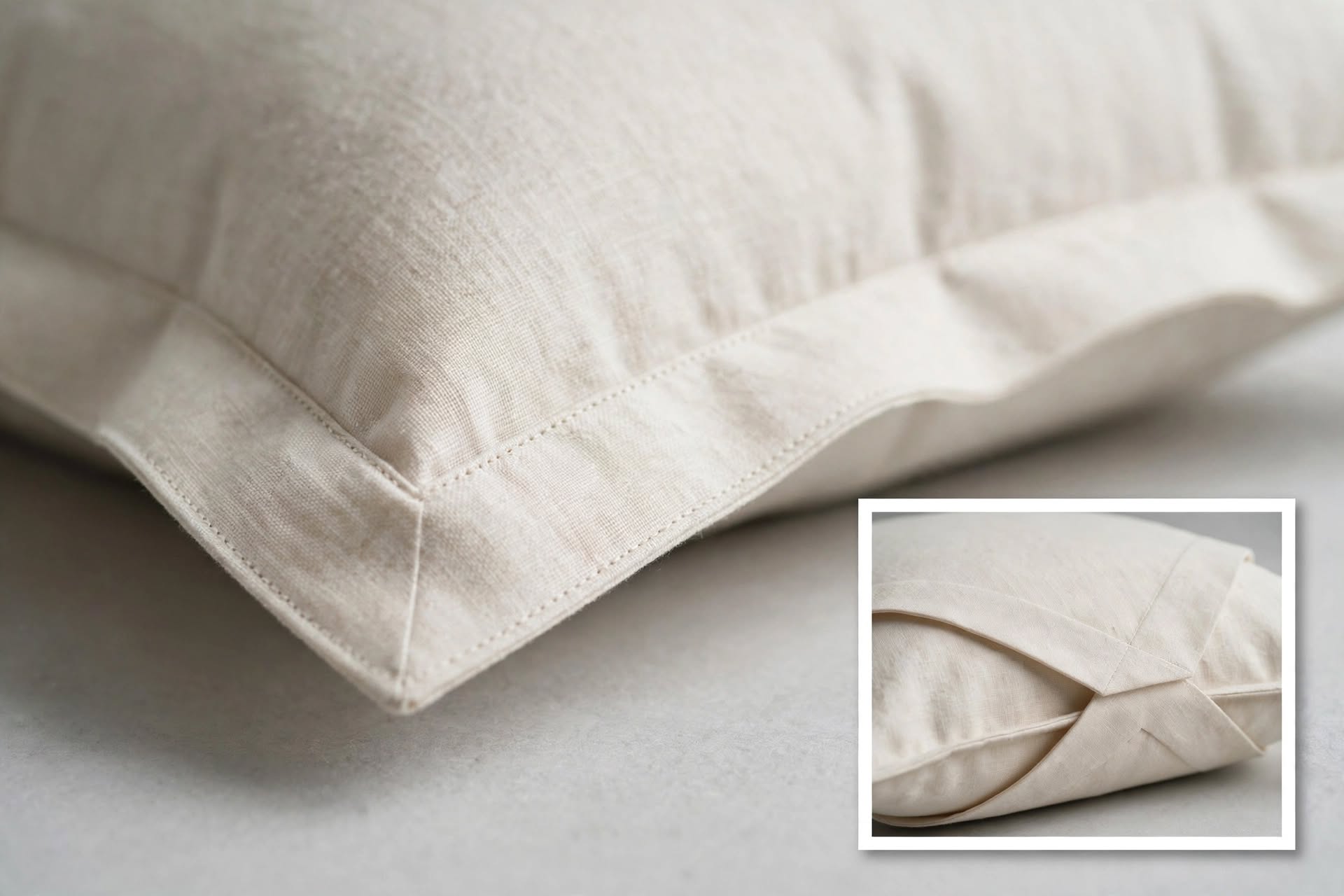
The flange border and back closure are the easiest ways to identify a pillow sham.
You technically can sleep on a sham — nothing stops you — but most people pull them off the bed at night, since the flange and firmer insert aren’t designed for comfort the way a pillowcase is.
Sham vs. Pillowcase: The Key Differences Explained
1. Purpose: Functional vs. Decorative
This is the difference that drives everything else. A pillowcase exists to be slept on and washed often. A sham exists to be looked at — it’s part of the bed’s overall styling, the same way a coverlet or duvet sets the tone for the room.
2. Opening and Closure
Pillowcases open at one end, with little more than a simple hem or tuck-in flap. Shams close at the back, using an overlap, buttons, ties, or a hidden zipper, so the seam never shows from the front. That back closure is the fastest way to tell the two apart if you’re unsure which one you’re holding.
3. Flange and Trim
Shams almost always have a flange — a flat border framing the pillow — sometimes finished with embroidery, cording, or a contrast fabric. Pillowcases are cut closer to the pillow’s actual shape and rarely have this bordered edge.
4. Material and Fabric Matching
Pillowcases are chosen for how they feel: cotton percale, sateen, linen, and silk are the standard options, each behaving a little differently — linen and cotton in particular have very different textures, weight, and breathability. Shams are chosen to match the room: they’re usually cut from the same or a coordinating fabric as the duvet cover, coverlet, or drapery.
5. Sizing
Pillowcases are sold in Standard, Queen, and King, matched to your actual sleeping pillows. Shams follow the same sizing but add a fourth option — the large, square Euro sham — which is used purely for propping and layering rather than sleeping.
6. Where They Sit on the Bed
Pillowcases sit closest to your head, under any decorative layers. Shams sit in front of or on top of the pillowcase-covered pillows, closest to the headboard, forming the back row in a layered bed-making look.
Do You Need Both?
For a fully styled bed, yes — most bedding sets are designed around using both together. The pillowcases do the actual sleeping work underneath, while the shams (often Euro shams at the back, standard or king shams in front) build the layered, hotel-style look on top. You don’t strictly need shams; plenty of comfortable, good-looking beds use only pillowcases. But if you’re going for a finished, magazine-style bedroom, shams are what add that last 10% of polish — similar to how the right duvet or comforter choice pulls the whole bed together.
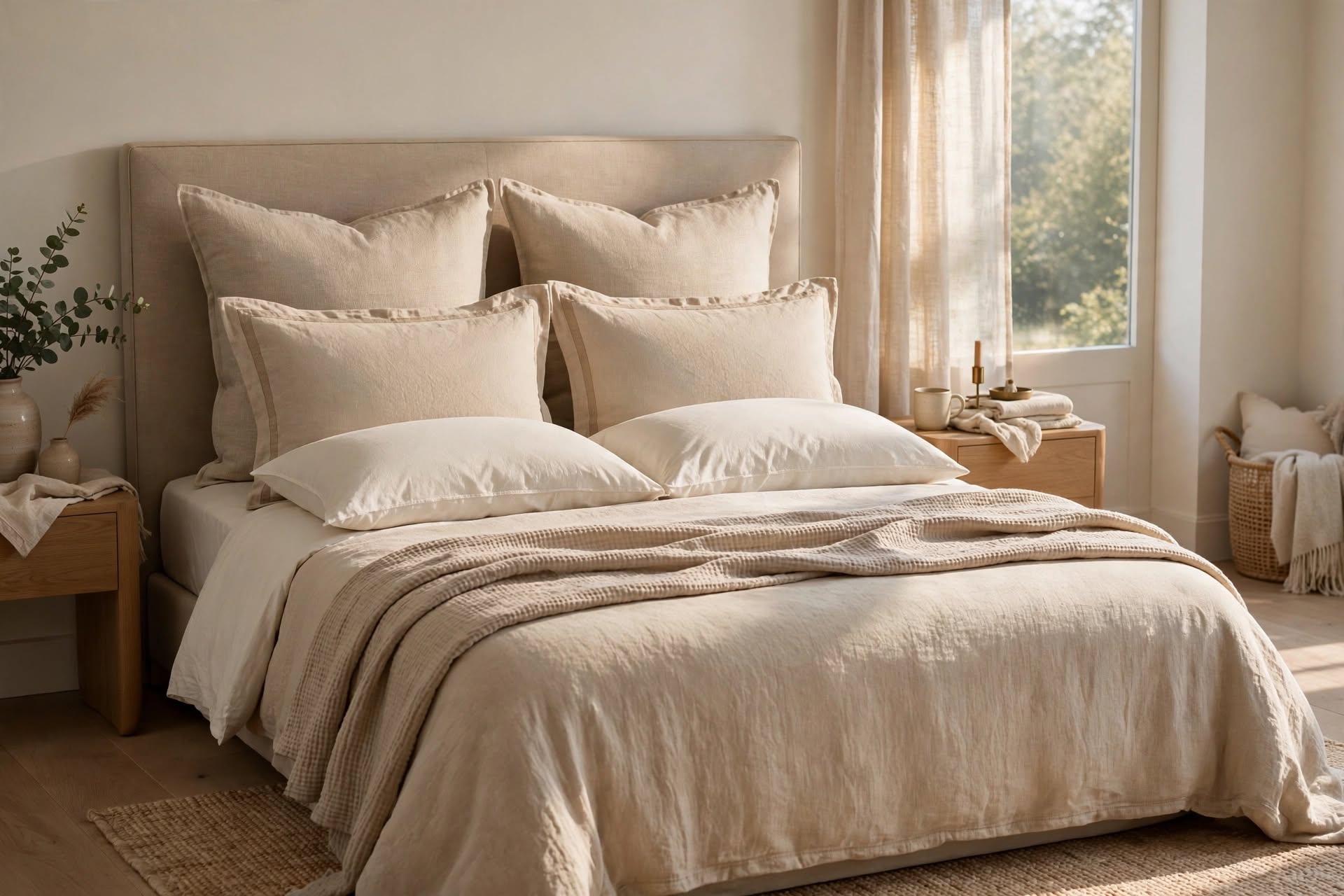
A layered bed typically combines Euro shams, standard shams, and pillowcases in that order.
How to Choose Between Them When Shopping
- Buying for sleep? Prioritize the pillowcase — check the fabric, thread count, and weave over the print or color.
- Buying to style the bed? Focus on the sham’s flange width, closure type, and how well it coordinates with your duvet cover or coverlet.
- Buying a full set? Look for bedding collections sold with matching shams and pillowcases already coordinated, which saves the guesswork of pairing separate pieces.
- Not sure you’ll use the sham? Buy one Euro sham for the back layer before committing to a full set — it’s the single piece that adds the most visible styling impact.
Frequently Asked Questions
What is the main difference between a sham and a pillowcase?
A pillowcase is functional bedding you sleep on, opening at one end. A pillow sham is decorative bedding that closes at the back with a flange border, meant to be displayed rather than slept on.
Can you sleep on a pillow sham?
You can, but it isn’t what shams are designed for. Their firmer insert, back closure, and bordered flange make them less comfortable than a pillowcase, so most people remove shams from the bed before sleeping.
Do you put a pillowcase under a sham?
Yes, typically. The sleeping pillow is covered with a pillowcase first, then the whole thing is slipped inside the sham, or the sham-covered decorative insert is simply placed in front of the pillowcase-covered pillows.
What size sham do I need for a standard pillow?
A Standard sham (roughly 20″ x 26″) fits a standard sleeping pillow. Queen and King shams fit their respective pillow sizes, while the square Euro sham (about 26″ x 26″) is used for large decorative pillows rather than everyday sleeping pillows.
Are pillow shams and pillowcases interchangeable?
Not really. A sham’s back closure and flange make it awkward for everyday sleeping use, and a plain pillowcase won’t give you the tailored, bordered look a sham provides. They’re designed to work together, not replace each other.
The Bottom Line
The sham vs. pillowcase question comes down to one simple split: pillowcases are for sleeping, shams are for styling. Once you’re shopping with that distinction in mind, picking the right pieces for your bed — and knowing exactly why a hotel bed looks the way it does — gets a lot easier. If you’re planning a full bedroom refresh around your bedding choices, Ayaan Decor’s AI-powered design service can help you pull the whole room together, from wall color to the last throw pillow.
Last modified: September 15, 2026