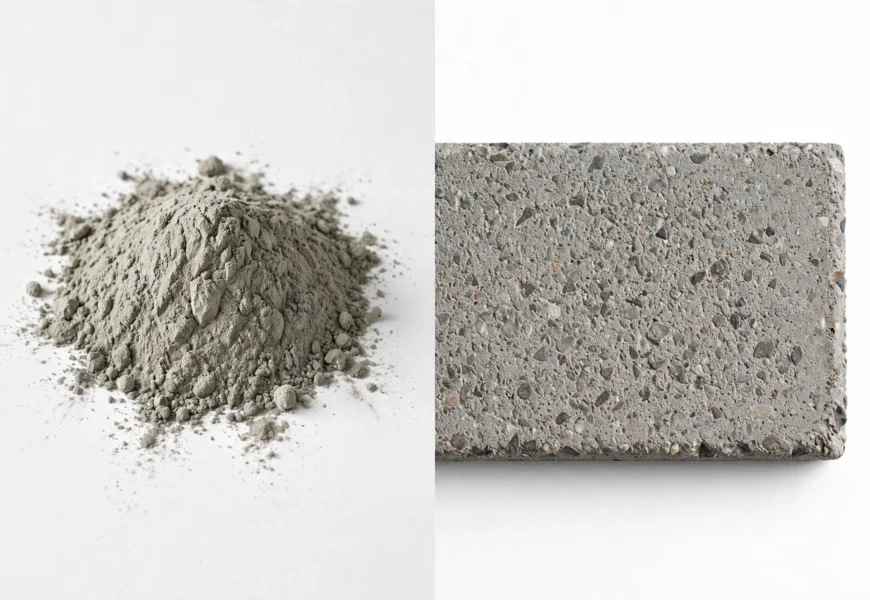
This question trips people up because cement and concrete get used interchangeably in everyday conversation — “pouring cement” and “pouring concrete” usually mean the same thing to most people. But they’re not the same material, and the strength difference between them is significant enough to matter for any real project.
Quick Answer: Concrete is substantially stronger than cement alone. Cement is a fine, brittle binding powder that becomes a paste when mixed with water — on its own, it’s unsuitable for structural use. Concrete is a composite material made by mixing that cement paste with aggregates like sand and crushed stone, and those aggregates are what give concrete its real structural strength, typically in the range of 3,500 to 5,000+ psi compressive strength, depending on the mix. In short: cement is an ingredient, and concrete is the much stronger building material made from it.
Here’s why the aggregates make such a big difference, and which material actually fits which project.
Cement Is an Ingredient, Not a Building Material
The core confusion clears up once you understand what each term actually refers to:
- Cement is a fine powder made by heating limestone, clay, and other minerals together, then grinding the result into powder. Mixed with water, it forms a paste with strong binding and adhesive properties — but cement is rarely, if ever, used entirely on its own for structural work.
- Concrete is a composite building material made by combining that cement paste with aggregates — typically sand and crushed stone or gravel. A standard concrete mix is often roughly 10–15% cement, 60–75% aggregate, and the remainder water and air, though exact ratios vary by application.
Cement is, in effect, the glue. Concrete is the actual building material that glue helps create.
Why Concrete Is So Much Stronger
Cement paste alone is brittle and comparatively weak — it lacks the bulk and internal structure needed to resist real structural loads. Aggregates change that dramatically:
- Aggregates provide bulk strength and rigidity that cement paste alone can’t achieve, essentially acting as a strong internal skeleton that the cement paste binds together.
- Concrete’s compressive strength typically ranges from about 3,500 to 5,000+ psi, depending on the mix design, while cement paste alone is far weaker and much more prone to cracking under load.
- The water-to-cement ratio also plays a major role in the final strength of concrete — a lower water content generally produces stronger, more durable concrete, since excess water weakens the hardened cement paste holding the aggregate together.
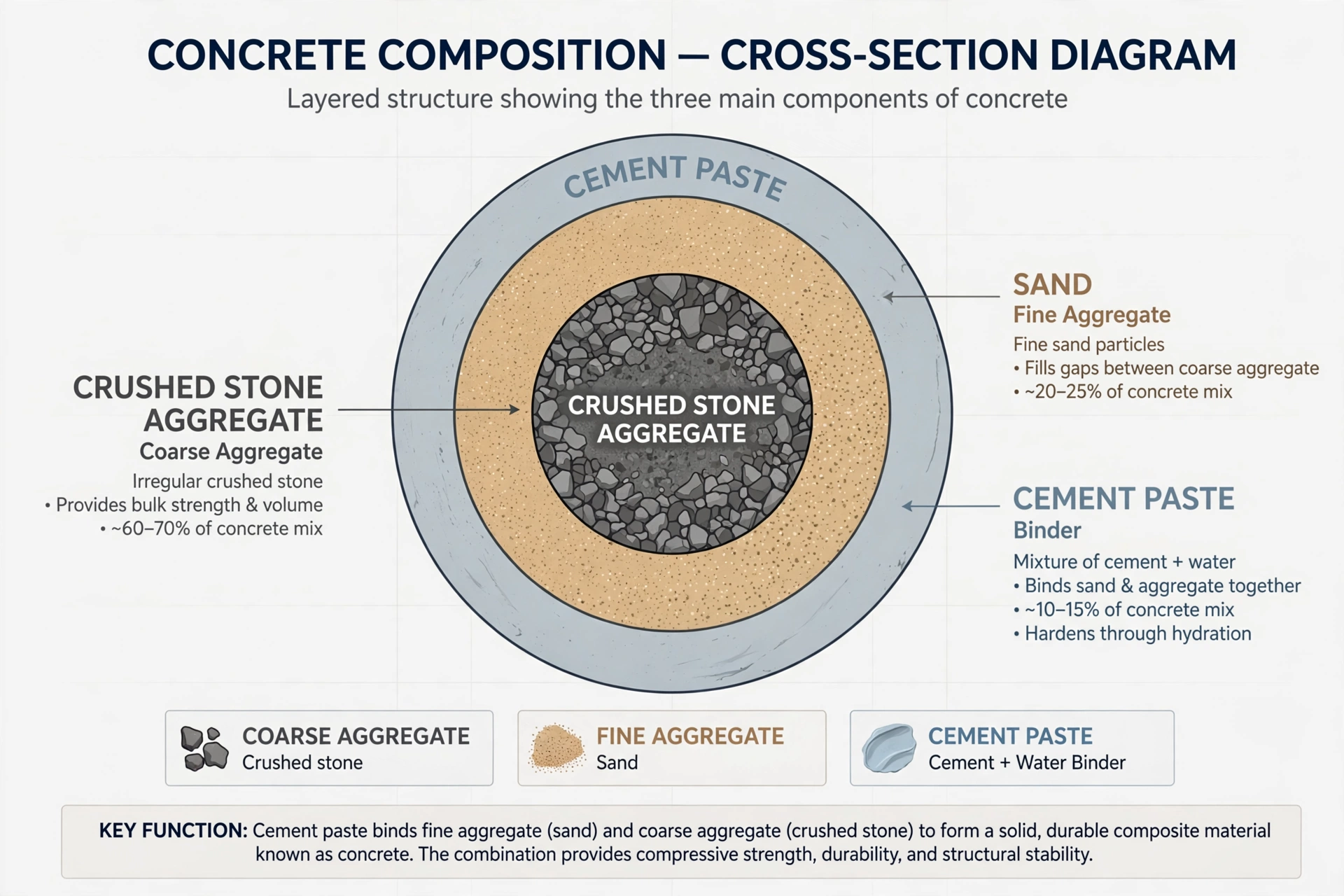
Aggregates like sand and crushed stone give concrete its structural strength, while cement paste binds everything together.
Compressive Strength vs. Tensile Strength
It’s worth understanding that “strength” isn’t a single number — concrete specifically has very different performance depending on the type of force applied:
- Compressive strength (resistance to being squeezed) is concrete’s strong suit, and it’s the number most commonly referenced when comparing concrete mixes (measured in psi or MPa).
- Tensile strength (resistance to being pulled apart) is comparatively low for plain concrete, which is why reinforced concrete — concrete embedded with steel rebar — is used for most structural applications that face significant tensile or bending forces, like beams, slabs, and bridges.
This distinction matters because plain, unreinforced concrete (and cement alone, even more so) isn’t well-suited to every kind of structural stress, regardless of its compressive strength numbers.
Cement vs. Concrete: Best Use Cases
| Factor | Cement | Concrete |
|---|---|---|
| Structural strength | Low; brittle alone | High; 3,500–5,000+ psi typical |
| Setting/working time | Faster | Slower |
| Cost | Cheaper per unit, but rarely used alone | More affordable overall since it’s usable on its own |
| Common uses | Repairing cracks, small patches, mortar, stepping stones | Driveways, foundations, walkways, structural elements |
| Durability | Limited when used alone | Decades-long lifespan in most applications |
If you’re dealing with a small crack repair rather than a full structural project, our guide on whether hydraulic cement bonds to concrete covers exactly this kind of cement-based patch work in more detail.
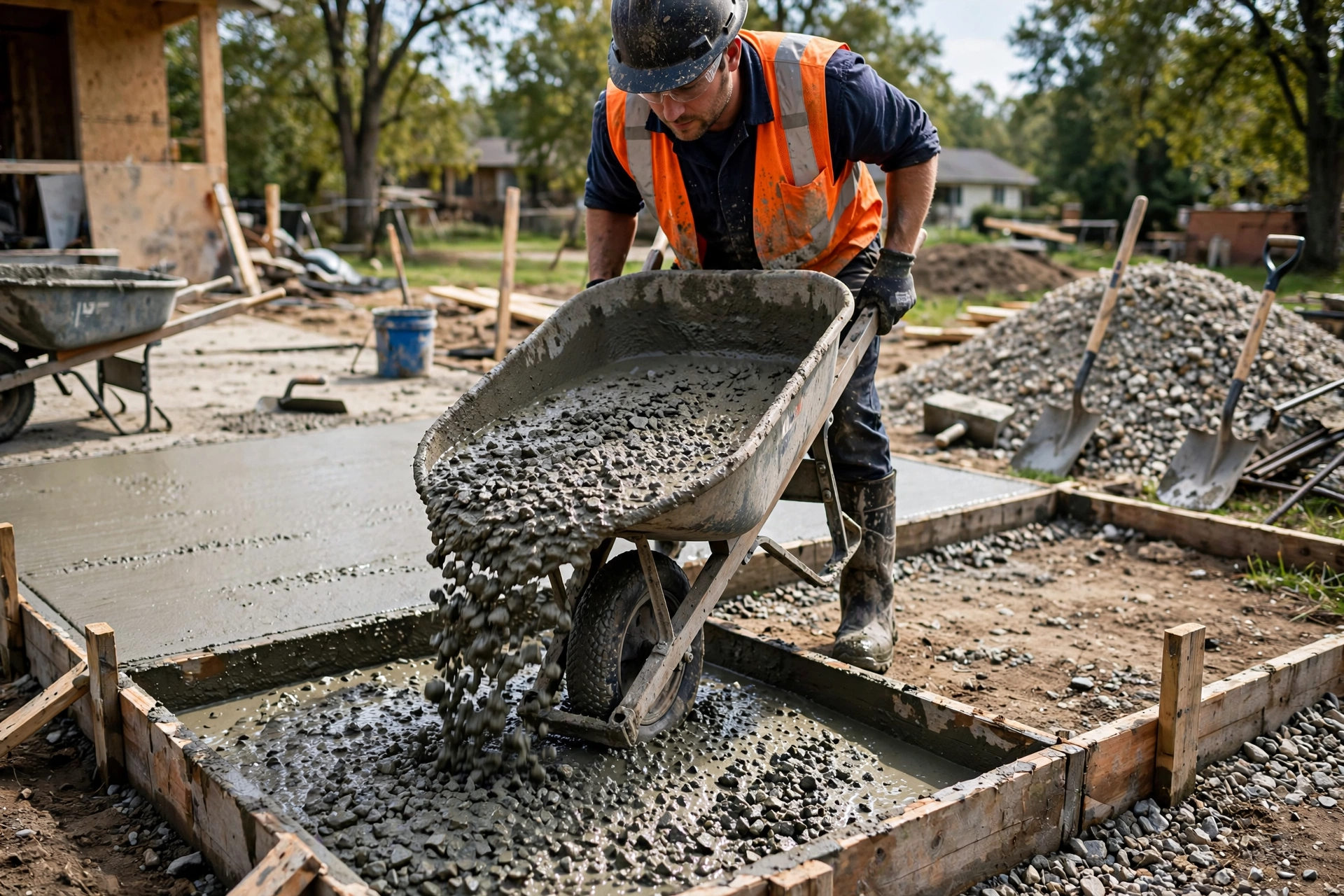
Concrete’s added aggregates make it the standard choice for structural, load-bearing projects like driveways and foundations.
When Cement Alone Actually Makes Sense
Despite concrete’s strength advantage, cement (or cement-based products like mortar) genuinely is the better choice for certain smaller-scale jobs:
- Repairing small cracks in existing concrete or masonry
- Garden stepping stones or decorative cement tiles, where structural load-bearing isn’t a major concern
- Mortar work, which is cement mixed with fine sand for bonding bricks or stone
- Fast-setting patch jobs where cement’s typically quicker setting time is an advantage over waiting on a full concrete cure
For anything load-bearing or exposed to significant weight or traffic — driveways, foundations, walkways, patios — concrete is almost always the right call, precisely because of the strength aggregates provide. If you’re planning concrete work in colder conditions, our guide on whether concrete will set in cold weather covers how temperature affects the curing process either way.
Frequently Asked Questions
Is cement or concrete better for a driveway?
Concrete is the correct choice for a driveway. Its aggregate content gives it the compressive strength and durability needed to handle vehicle weight and daily wear, which plain cement alone cannot provide.
Why do people confuse cement and concrete?
Because cement is concrete’s primary binding ingredient, and the terms are casually used interchangeably in everyday speech — “pouring cement” almost always actually refers to pouring concrete, since cement alone is rarely used for structural work.
What makes concrete stronger than cement?
The aggregates (sand and crushed stone) mixed into concrete provide structural bulk and rigidity that cement paste alone lacks, typically resulting in a compressive strength of 3,500 to 5,000+ psi for concrete compared to cement paste’s much lower strength on its own.
Is reinforced concrete stronger than regular concrete?
Yes, particularly for tensile strength. Steel rebar embedded in reinforced concrete compensates for plain concrete’s relatively low tensile strength, making it the standard choice for structural elements like beams and load-bearing slabs.
Can cement be used alone for a structural project?
No. Cement alone is brittle and lacks the strength needed for structural applications. It’s best suited for smaller-scale jobs like crack repairs, mortar work, or decorative projects, while concrete is required for anything load-bearing.
Working on a concrete project at home? Explore our guides on whether hydraulic cement bonds to concrete and whether concrete cures underwater, or browse more home improvement guides on Ayaan Home Decor.
Last modified: August 25, 2026