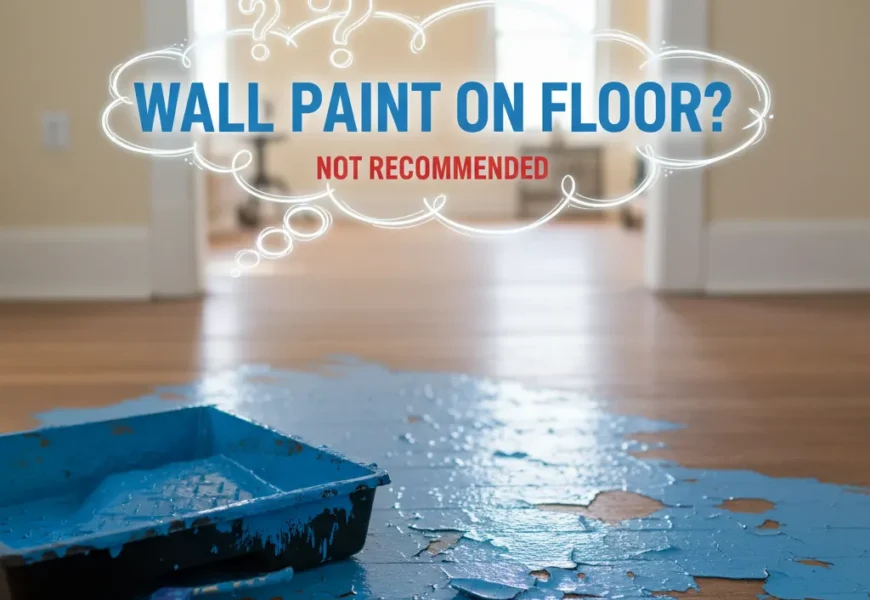
Are you thinking, “I have leftover wall paint in the garage—why not just slap it on?” as you gaze at your worn-out concrete garage floor, old kitchen tile, or scuffed wooden porch? Many homeowners think about using this alluring do-it-yourself method to save time and money. After all, wall paint is easily accessible, available in an infinite variety of colors, and appears to be simple to use. But can wall paint be applied on floor surfaces safely and effectively?
The short answer is: No, you should not use standard interior wall paint on floors. In low-traffic areas, it might appear respectable for a few weeks or months, but under real-world foot traffic, furniture movement, and cleaning, it nearly always fails. The science behind why wall paint doesn’t work on floors, the hidden dangers, when (if at all) it might work, and the top professional-grade substitutes that produce long-lasting effects are all covered in this thorough 2026 guide. Whether you’re remodeling a basement, garage, or interior space, this post will assist you in selecting the best product and avoiding expensive errors.
Wall Paint vs. Floor Paint: Key Differences You Need to Know
To understand why wall paint isn’t suitable for floors, you must first grasp how these two products are formulated differently.
Wall paint (typically latex or acrylic emulsion) is designed for vertical surfaces like drywall and plaster. It prioritizes smooth application, rich color depth, low splatter, and easy cleanup. Its formulation creates a softer, more flexible film once cured—perfect for walls that rarely face abrasion.
Floor paint, on the other hand, is engineered for horizontal surfaces under constant stress. It contains higher levels of resins (often acrylic-alkyd hybrids or epoxy additives), making it tougher, more abrasion-resistant, and better at bonding to porous or smooth substrates like concrete, wood, tile, or vinyl. Floor paints also offer superior scratch and stain resistance, plus options for anti-slip finishes.
Here’s a quick comparison table for clarity:
- Durability: Wall paint = soft cure, flakes/scuffs quickly; Floor paint = hard, traffic-resistant film.
- Adhesion: Wall paint struggles on concrete (traps moisture) or tile; Floor paint bonds strongly, often without primer.
- Flexibility & Thickness: Wall paint thinner and less elastic; Floor paint thicker, more flexible to handle expansion/contraction.
- Color Range: Wall paint = unlimited custom tints; Floor paint = limited but practical shades (grays, beiges, deep tones).
- Application: Wall paint = brush/roller only; Floor paint = often sprayable or rollable with thinner as primer/sealer.
Manufacturers like Rust-Oleum explicitly warn: “Can You Paint Tile Floors With Wall Paint? … choose a paint that’s specially designed for floors.” Using the wrong type leads to premature failure.
The Risks of Applying Wall Paint on Floors
Trying to cut corners with wall paint can backfire dramatically. Here are the most common problems reported by DIYers and professionals:
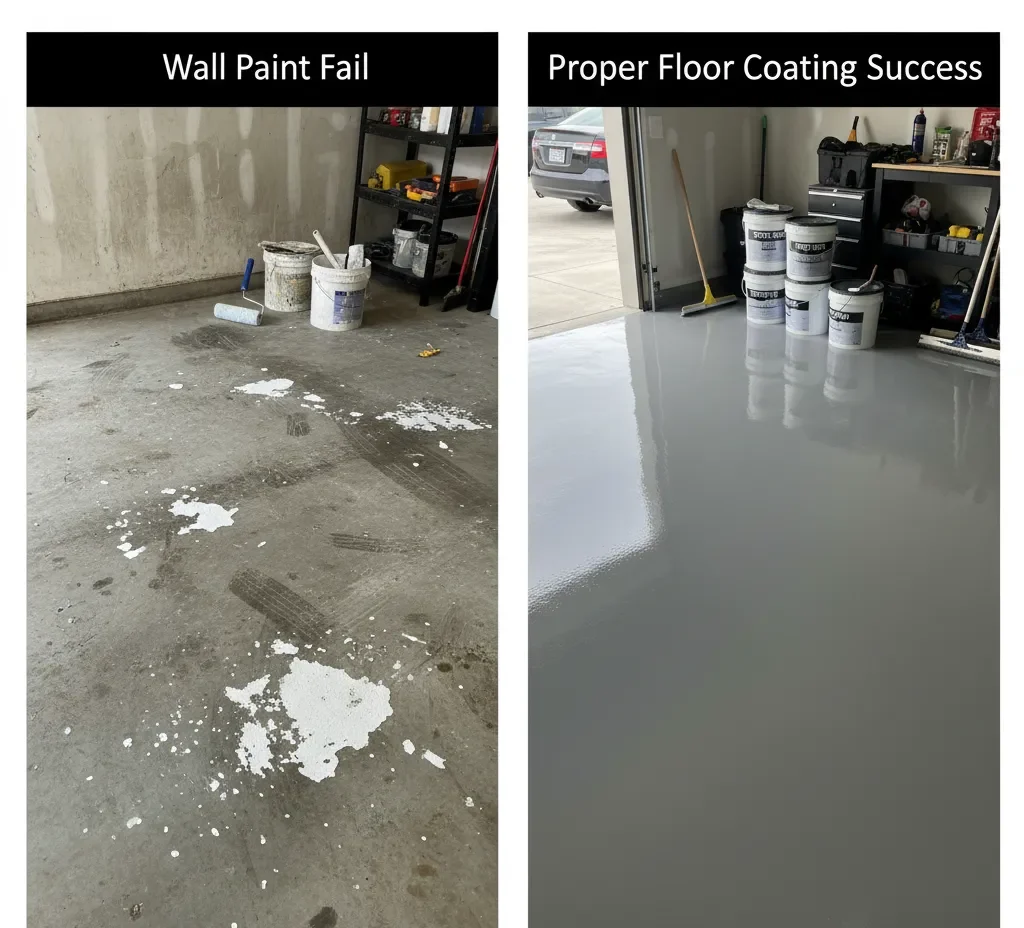
- Rapid Peeling, Chipping, and Flaking — Wall paint lacks the adhesion and hardness needed for foot traffic. On concrete, moisture vapor from the slab pushes against the paint film, causing bubbles and delamination within months.
- Poor Longevity in High-Traffic Areas — Even with primer, wall paint wears down in garages, kitchens, or hallways. Scuff marks, shoe prints, and furniture drags appear fast.
- Safety Hazards — Flaking paint creates trip hazards. Glossy wall paint can become dangerously slippery when wet. Some finishes also trap dirt, making floors harder to clean.
- High Maintenance & Costly Redos — What starts as a cheap project turns expensive when you repaint every 6–12 months. Removing failed paint requires sanding or chemical strippers.
- Moisture and Mold Issues (Especially Concrete) — Concrete is porous. Wall paint seals in vapor, leading to efflorescence, cracking, or mold growth underneath.
Real-world example: Reddit users and DIY forums frequently share horror stories of basements painted with wall paint that “looked great for a month, then peeled everywhere.” One homeowner called it a “DiWHY disaster.”
When Might Wall Paint “Work” on a Floor? (Rare Exceptions)
In very specific low-traffic scenarios, some experienced DIYers have had short-term success:
- Low-traffic bedrooms or closets.
- Using high-quality latex wall paint + bonding primer + 2–3 coats + water-based polyurethane topcoat.
- Non-porous surfaces like sealed wood or vinyl (still not ideal).
Even then, experts strongly advise against it. Products like Benjamin Moore or Sherwin-Williams porch & floor enamels are formulated exactly for these jobs and last 5–10+ years with proper prep.
Best Alternatives to Wall Paint for Floors in 2026
Don’t settle for failure—choose floor-specific solutions that deliver professional results:
1. Porch & Floor Enamel Paints (Best for Wood, Concrete, Tile)
- Rust-Oleum HOME Floor Coating or Porch & Floor Paint
- Benjamin Moore INSL-X Tough Shield
- KILZ Porch & Patio Latex Floor Paint These one-coat wonders resist stains, scratches, and traffic. Many require no primer and work on multiple surfaces.
2. Epoxy Floor Coatings (Best for Garages & Heavy Use) One-part or two-part epoxy kits (e.g., Rust-Oleum EpoxyShield, Seal-Krete) create a rock-hard, chemical-resistant surface. Perfect for basements and garages. New 2026 formulas cure faster and offer anti-slip additives.
3. Concrete Stains & Dyes (Breathable Natural Look) Penetrating acid stains or water-based dyes let concrete “breathe” while adding color. Top with a clear sealer for protection.
4. Specialty Tile & Laminate Coatings Rust-Oleum or Valspar tile floor kits transform ugly tile without removal.
Pro Tip: Look for low-VOC, low-odor formulas for indoor use. Brands like ECOS or AFM Safecoat offer non-toxic options for sensitive households.
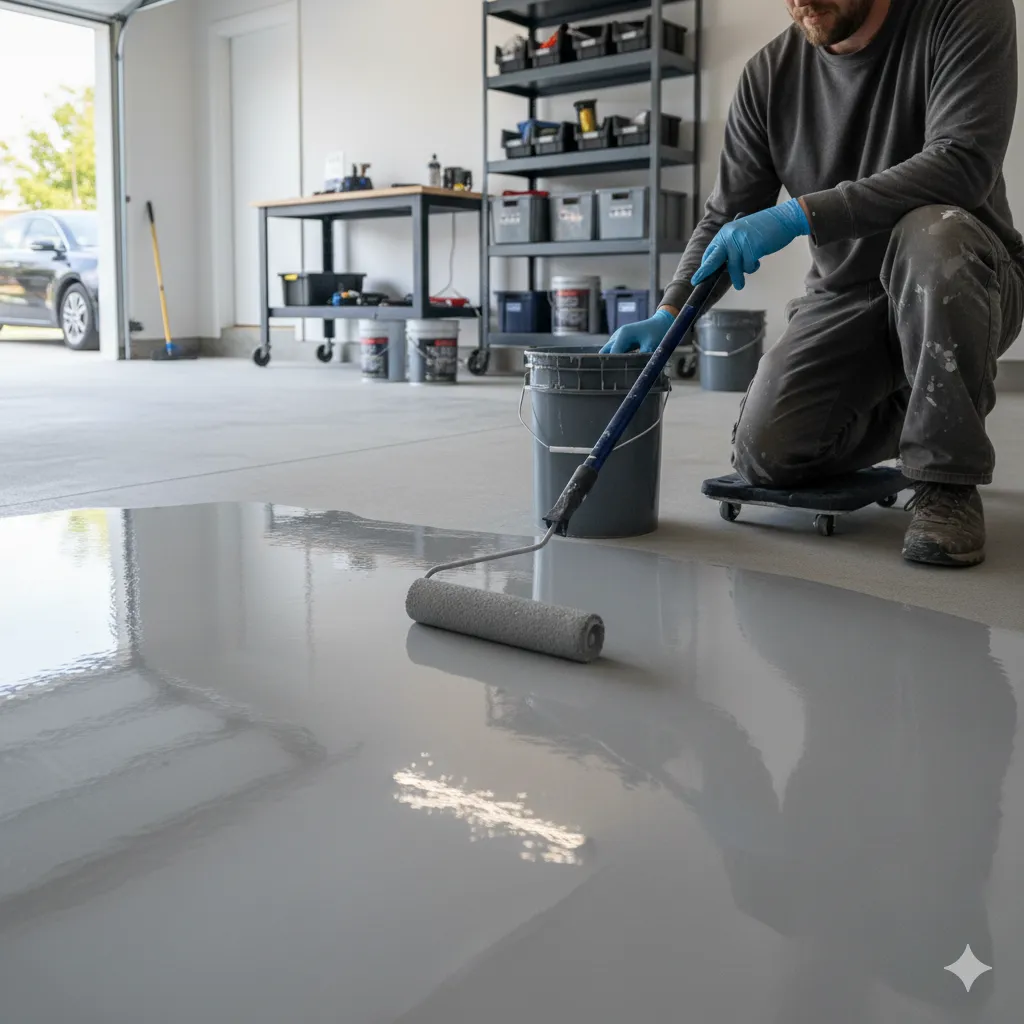
Step-by-Step Guide: How to Paint Floors the Right Way
Proper preparation is 80% of success. Here’s the professional method:
- Clean Thoroughly — Use a degreaser (Krud Kutter) to remove wax, oil, and dirt. Power wash if outdoors.
- Test Adhesion — Apply a small patch, wait 12–24 hours, and do the tape test.
- Repair & Prep — Fill cracks, sand glossy areas, etch concrete if needed.
- Protect Surroundings — Tape baseboards and cover walls.
- Apply Floor Paint — Roll in 4×4 ft sections, maintain a wet edge. One or two coats + topcoat.
- Cure Properly — 24 hours light foot traffic, 72 hours furniture, 7 days full cure.
Total time: 1–2 days for most rooms. Cost: $50–150 per gallon covers 300–400 sq ft.
Cost Comparison: Why Proper Floor Paint Saves Money Long-Term
Wall paint: $30–50/gallon + frequent repaints = higher lifetime cost. Floor paint/epoxy: $60–120/gallon but lasts 5–15 years with minimal maintenance. ROI is clear—especially when you factor in labor and frustration.
Final Tips for Success in 2026
- Always check manufacturer labels for “porch & floor” or “floor coating.”
- Work in good ventilation and wear protective gear.
- For high-moisture areas, consider breathable stains over paint.
- If unsure, consult a local paint store professional or hire a pro for epoxy jobs.
Conclusion: Skip the Wall Paint Experiment
Can wall paint be applied on floor? Yes in theory, but you’ll regret it. Purchase epoxy coatings or purpose-built floor paint from reputable companies like Rust-Oleum, Benjamin Moore, or KILZ to save time, money, and headaches. Your floors will remain safer for many years to come, look better, and last longer.
Are you prepared to alter your area? Ask for “floor-specific coating” at your neighborhood Lowe’s, Home Depot, or internet paint store. Your floors and your future self will appreciate it.
Last modified: March 10, 2026