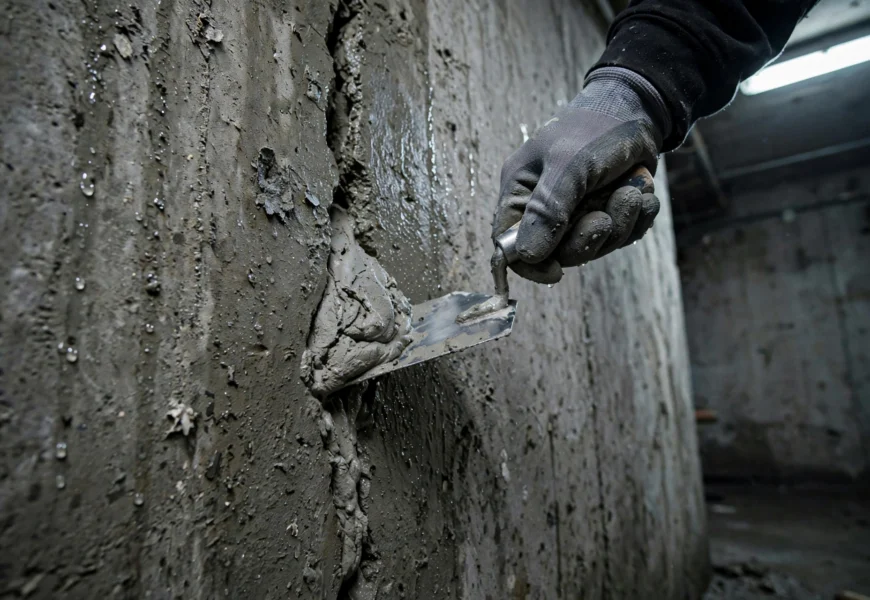
Search this question and you’ll find two confident, opposite answers: some sources call hydraulic cement a reliable, fast-bonding repair material, while others call it a weak, temporary patch that fails within a couple of years. Both are partially right — the honest answer depends on what kind of bond you’re expecting and how the repair is actually done.
Quick Answer: Yes, hydraulic cement bonds to concrete, and it does so quickly — often within minutes — through a combination of chemical hydration and slight expansion that mechanically locks it into a properly prepared crack or hole. However, that bond is not as strong or permanent as a true structural repair. Hydraulic cement adheres best to clean, roughened, and slightly dampened concrete, and it performs well for sealing active water leaks in cracks and small voids. It’s a weaker, more temporary solution for structural cracks that experience ongoing movement, where the rigid patch can eventually crack or loosen.
Here’s how the bond actually works, how to get the strongest possible result, and when hydraulic cement isn’t the right tool for the job.
How the Bond Actually Works
Hydraulic cement hardens through a chemical reaction with water (hydration), the same basic process that hardens standard concrete. But two things make its bond to existing concrete somewhat different from concrete bonding to itself:
- Expansion, not shrinkage — Unlike regular Portland cement, which shrinks slightly as it cures, hydraulic cement contains expansive clays that cause it to swell slightly as it hardens. This expansion helps it mechanically lock into a crack or void, rather than relying purely on chemical adhesion to the surrounding surface.
- Mechanical interlock over chemical bond — Much of hydraulic cement’s holding power comes from being packed tightly into a properly shaped opening (often undercut or chiseled into a reverse “V” shape) so the hardened, expanded material is physically wedged in place, not just glued to the surface.
This is part of why surface preparation matters so much — a smooth, dusty, or poorly shaped repair area gives hydraulic cement far less to physically grip onto.
How to Get the Strongest Possible Bond
If you’re using hydraulic cement for a repair, these steps significantly affect how well it bonds:
- Clean the area thoroughly — Remove all dust, debris, and loose material from the crack or hole, since dust is one of the most common causes of a weak bond.
- Widen and undercut the opening — Chiseling the crack into a slightly wider shape at the back than the front (a reverse “V”) gives the hardened cement more surface area to mechanically lock into.
- Dampen the surrounding concrete — Lightly spritzing the surface with water — not soaking it — helps the fresh hydraulic cement bond better than applying it to bone-dry concrete.
- Pack it in firmly — Hydraulic cement should be worked to a stiff, “peanut butter”-like consistency and pressed firmly into the opening rather than spread thinly across a surface.
- Work quickly — With a working time of often just 3 to 10 minutes, only mix small batches at a time to avoid the material setting before it’s properly packed in.
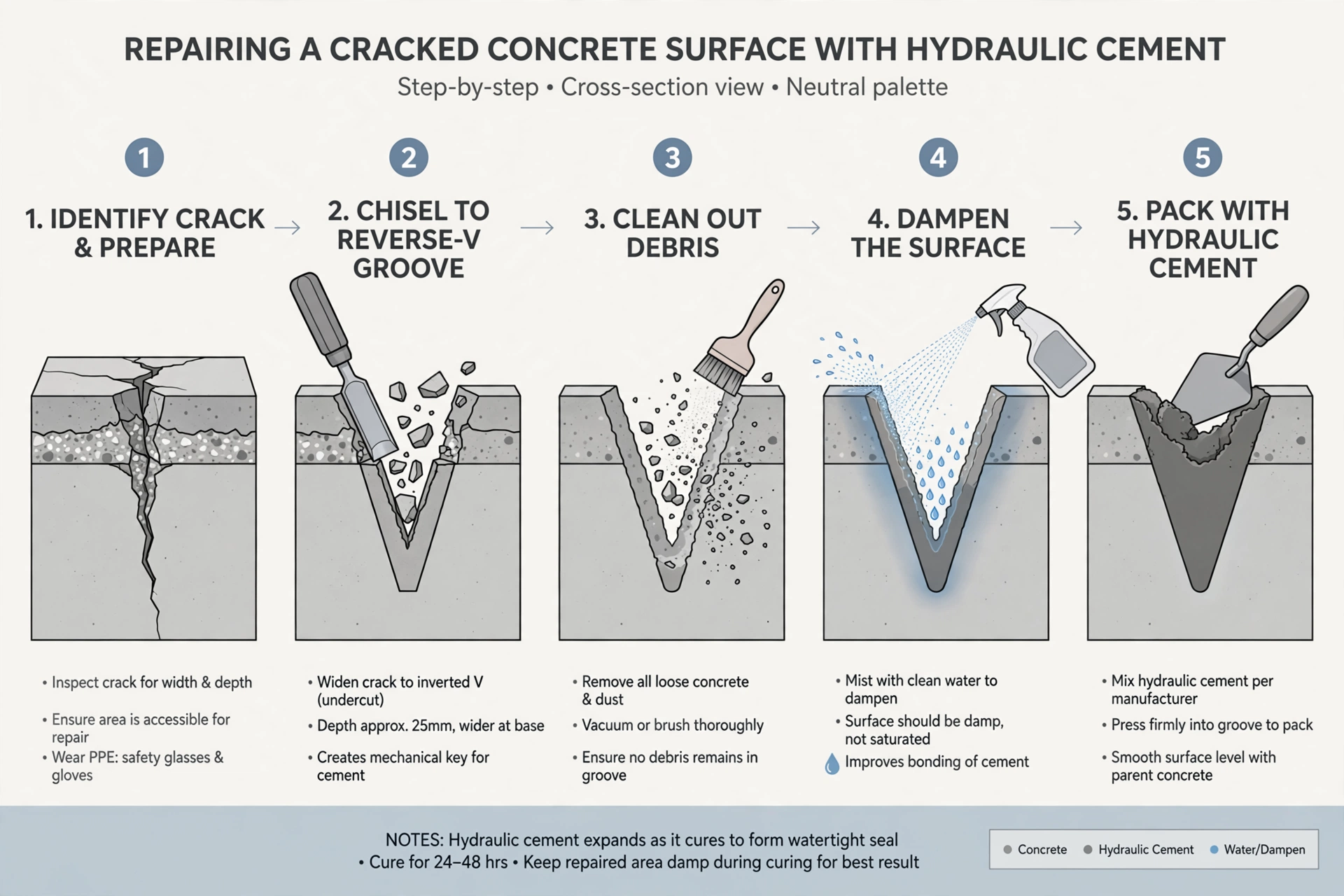
Undercutting the crack and packing the cement in firmly are two of the most important steps for a strong bond.
Why Some Experts Call the Bond “Weak”
Not everyone in the industry is enthusiastic about hydraulic cement, and their concerns are worth taking seriously:
- It lacks structural strength on its own. Cement alone — without sand and aggregate — has relatively low structural strength compared to full concrete, which is why it’s generally recommended only for sealing and patching, not structural repair.
- It’s rigid, not flexible. If the surrounding concrete continues to shift or crack due to settling or temperature changes, a rigid hydraulic cement patch can crack again at the same spot, since it can’t flex with ongoing movement the way some specialized crack-repair products can.
- It’s typically a surface-level patch. Especially on the interior side of a foundation wall, hydraulic cement usually seals only the visible surface of a crack rather than penetrating all the way through to the exterior, where water pressure originates.
- Lifespan can be limited. Some industry sources estimate a typical hydraulic cement patch lasts only a couple of years before showing signs of failure, particularly in high-pressure or actively moving cracks.
According to U.S. Waterproofing’s basement repair analysis, the material’s lack of structural strength and inability to reach the true source of a leak from the interior side are two of its most significant limitations as a permanent basement waterproofing solution.
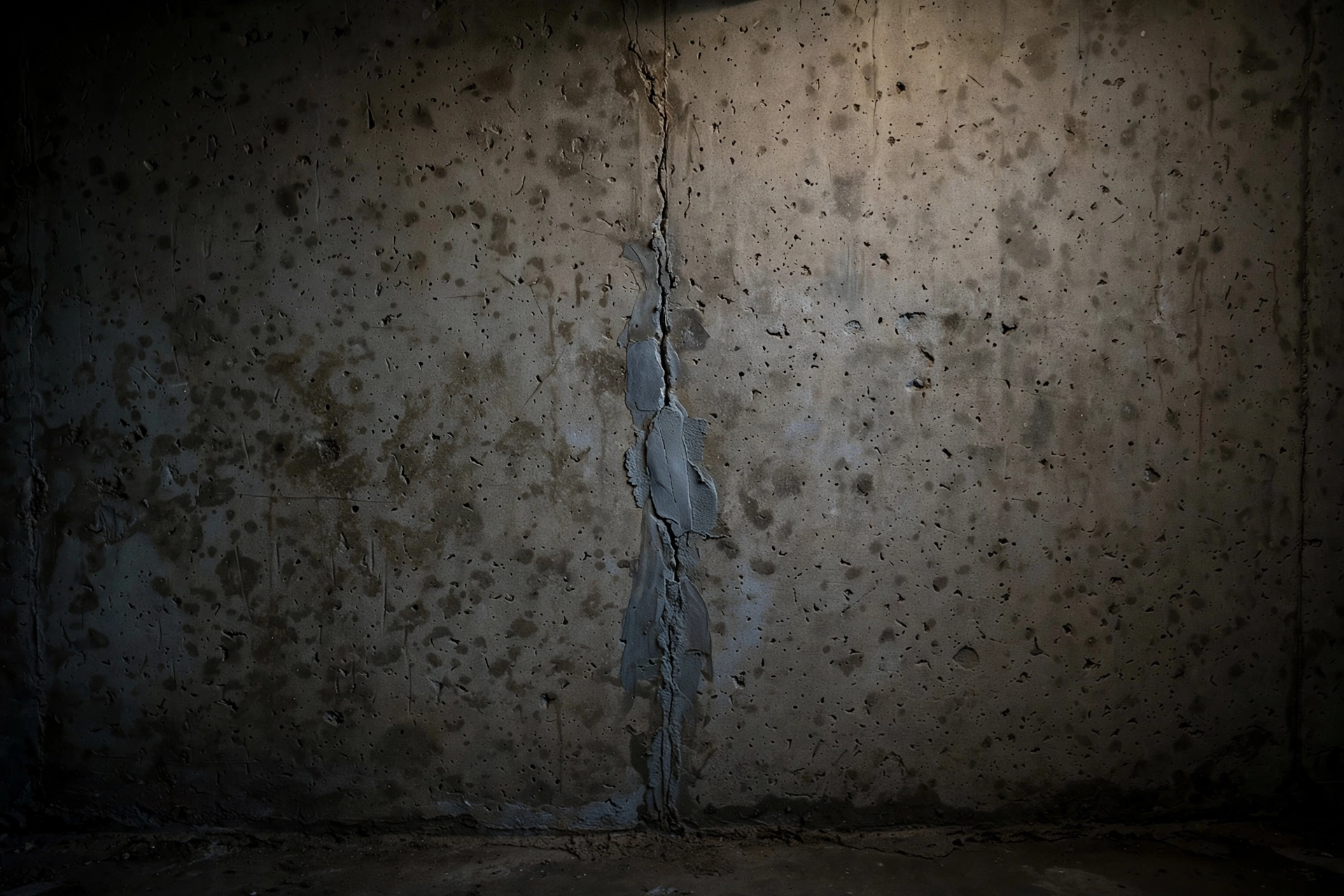
Hydraulic cement performs well for stopping active water leaks, but structural cracks may need a different long-term solution.
When Hydraulic Cement Is (and Isn’t) the Right Choice
Good use cases:
- Stopping an active water leak quickly, especially around pipe penetrations or small holes
- Sealing hairline cracks and small, stable voids that aren’t actively moving
- Emergency, temporary fixes where a fast, water-tight seal is needed immediately
Better handled with a different repair method:
- Structural cracks that continue to widen or shift over time, which are typically better served by flexible epoxy or polyurethane injection systems designed to move with the concrete
- Long-term basement waterproofing, where an exterior membrane or professionally installed drainage system addresses the water’s source rather than just patching a symptom
- Any repair where the surrounding concrete is actively deteriorating, since hydraulic cement bonds far better to sound, stable material than to crumbling or compromised concrete
According to This Old House’s basement repair guide, proper surface preparation is what “guarantees a strong bond between the hydraulic cement and the existing concrete or masonry” — reinforcing that the material’s real-world performance depends heavily on how carefully it’s applied, not just the product itself.
If you’re dealing with concrete as part of a subfloor for a flooring project rather than a foundation repair, our guide on what a subfloor is covers how concrete slab subfloors are typically prepared before flooring goes down.
Frequently Asked Questions
Does hydraulic cement bond well to old, cured concrete?
Yes, it bonds to old concrete, though the strength of that bond depends heavily on surface preparation — cleaning, roughening, and slightly dampening the surface significantly improves adhesion compared to applying it to dusty or bone-dry concrete.
Is hydraulic cement a permanent fix for concrete cracks?
Not typically for structural or actively moving cracks. It works well as a fast, effective seal for stable cracks and active leaks, but its rigid nature means it can crack again if the surrounding concrete continues to shift.
Can hydraulic cement be applied to wet or leaking concrete?
Yes, this is one of its defining advantages — hydraulic cement is specifically designed to set and cure even in wet or actively leaking conditions, unlike standard Portland cement or mortar.
How long does a hydraulic cement patch typically last?
Estimates vary, but some industry sources suggest a typical patch may only last a couple of years, especially in high-pressure areas or where the surrounding concrete continues to move or crack.
What should I use instead of hydraulic cement for a structural crack?
For cracks experiencing ongoing movement, a flexible epoxy or polyurethane injection system is generally considered a stronger, more permanent solution than a rigid hydraulic cement patch.
Working on a concrete subfloor as part of a flooring project? Read our guide on what a subfloor is, check our guide on the cost to remove carpet and install hardwood if a concrete subfloor is part of a bigger renovation, or explore more home improvement guides on Ayaan Home Decor.
Last modified: August 24, 2026